


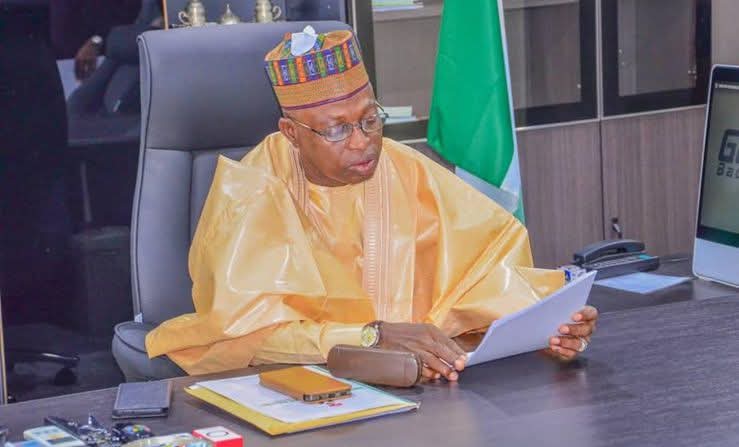
The Minister of State for Housing and Urban Development, Abdullahi Yusuf Atah, has empowered over 100 economically vulnerable non-indigenes living in Kano State with cash support to help them improve their livelihoods.
This was contained in a statement signed by the minister’s media aide, Seyi Olorunsola on Wednesday.
According to the statement, the initiative reflects the minister’s commitment to grassroots engagement, social inclusion and poverty reduction.
He also explained that the gesture was informed by his conviction that governance must translate into tangible relief for ordinary Nigerians, irrespective of ethnic origin, faith, or state of birth.
“This is a modest but deliberate effort to make life a little better for the ordinary Nigerian, especially those who live and work outside their ancestral homes and are often most exposed to economic shocks,” he said.
“Every Nigerian deserves dignity, opportunity, and a fair chance to survive and thrive,” he added.
Atah explained that government alone cannot shoulder the burden of addressing poverty across the country all at once.
He urged those who are privileged to see it as a civic and moral duty to support the less privileged.
“Eradicating poverty requires a collective crusade that cuts across government, individuals, and communities,” he noted.
The Minister explained that his empowerment programme is consistent with his long-standing approach to public service, which he said, prioritises identifying vulnerable segments of society and exploring practical ways to support and encourage them.
He said over the years, he has remained actively engaged with grassroots communities in Kano State, listening to their challenges and responding with targeted interventions.
Atah announced that the End-of-Year empowerment programme is not a one-off event, but part of a broader philosophy that seeks to progressively narrow the gap between the haves and the have-nots through compassion, shared responsibility, and collective action.
“The beneficiaries were drawn from low-income groups who have consistently contributed to the social and economic life of the state but often lack access to structured support systems,” the statement added
The beneficiaries commended the minister for his inclusive approach.