


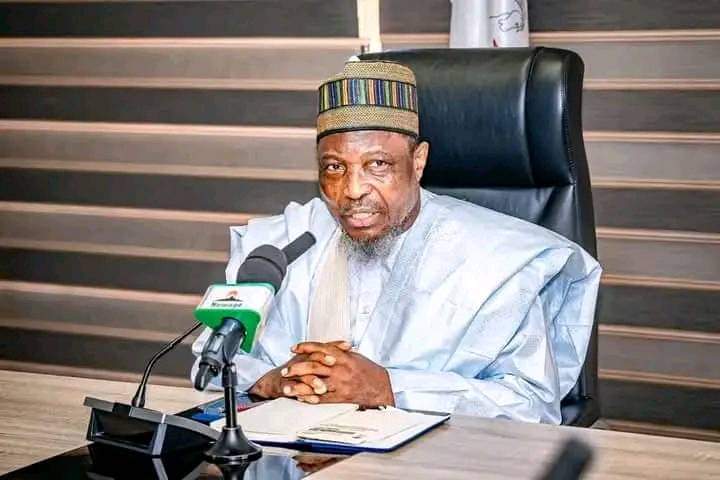
By Sagiru Abdullahi Kwanar Huguma
Leadership, when anchored on vision, integrity, and service, has the power to redefine institutions and inspire confidence among the people.
In the year under review, one public servant has distinguished himself through purposeful leadership and impactful reforms Professor Abdullahi Pakistan, Chairman of the National Hajj Commission of Nigeria (NAHCON). His stewardship, marked by discipline, innovation, and commitment to public service, justifiably earns him the recognition as Man of the Year.
Professor Abdullahi Pakistan assumed leadership at a time when expectations were high and challenges were complex.
The administration of Hajj, one of the most sensitive and logistically demanding religious obligations, requires precision, transparency, and constant coordination with multiple stakeholders, including state pilgrims boards and authorities in the Kingdom of Saudi Arabia. Under his leadership, NAHCON has demonstrated renewed focus on efficiency, accountability, and the welfare of Nigerian pilgrims.
One of the defining features of Professor Pakistan’s tenure is his emphasis on institutional reform. By strengthening internal processes and promoting professionalism, he has helped reposition NAHCON as a more responsive and credible institution.
His leadership style reflects a deep understanding that public trust is earned through consistency, fairness, and visible results.
Equally commendable is his people-centered approach. The welfare, safety, and spiritual comfort of Nigerian pilgrims remain central to his agenda. Through strategic planning and engagement with relevant partners, efforts have been intensified to ensure smoother Hajj operations, improved service delivery, and better coordination throughout the pilgrimage process. These efforts have contributed to restoring confidence among pilgrims and stakeholders alike.
Beyond administration, Professor Abdullahi Pakistan embodies servant leadership. His calm disposition, consultative approach, and respect for due process have earned him respect across religious, administrative, and policy circles. He leads not for personal acclaim, but with a clear sense of responsibility to Allah, the Nigerian Ummah, and the nation at large.
In a period when leadership credibility is increasingly scrutinized, Professor Pakistan’s record stands out.
His work at NAHCON reflects the values of dedication, transparency, and faith-driven service. It also demonstrates how effective leadership can positively transform institutions entrusted with sacred national responsibilities.
As Nigeria looks ahead to future Hajj operations and broader institutional development, the example set by Professor Abdullahi Pakistan offers a compelling model. His contributions within the year have not only strengthened NAHCON but have also reaffirmed the importance of principled leadership in public service.
For these reasons, Professor Abdullahi Pakistan rightly deserves the title Man of the Year a game changer whose leadership continues to leave a lasting and positive imprint on one of Nigeria’s most vital religious institutions.