
By Muhammad A. Bello, fsdu, fsi, mspsp
Analyzing the political chances of Rabiu Musa Kwankwaso as we move toward the 2027 general elections requires a look at his dual identity: he is both a kingmaker in Kano and a wildcard on the national stage.
As of early 2026, Kwankwaso remains one of the most consequential figures in Northern Nigerian politics. Here is an analysis of his future prospects based on current political realignments.
The Kano fortress is his primary level. Kwankwaso’s greatest asset is his absolute grip on Kano State through the Kwankwasiyya movement. The 2023 electoral victories in the state is the proof of concept. Despite being a fourth-party candidate, he won Kano by a landslide, proving that he can neutralize both the APC and PDP in Nigeria’s most populous voting bloc.
What is in the offing is the 2027 strategy. Against this backdrop, in 2026, he has been vocal about his influence, stating that any political alliance must recognize him as a principal. He famously noted that Kano’s votes alone could outweigh entire regions, making him the beautiful bride that every major party wants to court. These pitches are the potential pathways for 2027
As it stands, Kwankwaso is currently navigating three distinct strategic paths:
His re-entry into APC, which was highly probable has now become strewn with controversy with the relocation of his longtime political protege, Gov. Abba Kabir Yusuf to the ruling APC. Hitherto, reports in 2025 and early 2026 suggest high-level negotiations between Kwankwaso and President Bola Tinubu. But the latter has hinted at returning to the APC under strong terms. For Tinubu, bringing Kwankwaso back secures the North-West; for Kwankwaso, it provides a path back to federal power, potentially as a running mate or a super-ministerial Czar.
The mega-opposition alliance may be another option. There is persistent talk of a merger with Peter Obi (Labour Party) and Atiku Abubakar (PDP). However, Kwankwaso has made it clear: he will only join an alliance where he is the Presidential or Vice-Presidential candidate. His refusal to play second fiddle to anyone other than a sitting president remains his biggest hurdle in opposition unity.
He may likely try a solo run in the NNPP, which is the Third Force. While he claims the NNPP is the party to beat, a solo run in 2027 risks repeating 2023—winning Kano but failing to secure the required 25% in two-thirds of the states.
Critics of the strategic schism theory argue that the defection of Gov. Abba Kabir Yusuf to the APC is a genuine collapse of the
mentor-protégé relationship. They point to the loss of state resources and the potential fragmentation of the Red-Cap base as proof that Kwankwaso’s influence is waning. However, in the complex ecosystem of Kano politics, “conflict” is often a prelude to consolidation. Whether this is a full-scale political divorce or a tactical bifurcation will be determined
by one factor: the cognitive loyalty of the Kano voter in 2027.
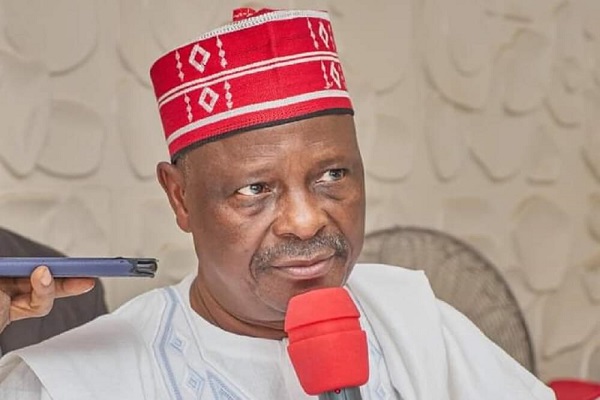
The structural viability of these paths is dictated by a paradoxical mix of grassroots potency and geographic limitation. On one hand, Kwankwaso possesses an almost unrivaled strength in his disciplined, ideological base. The red cap movement is not merely a political affiliation. It is a non-kinetic social contract built on decades of populist welfare and educational investments. This insurgent style of campaigning—reaching voters directly in the most remote corners of the North—allows him to bypass traditional media gatekeepers and maintain a sovereign voting bloc that can be moved en masse to whichever platform he chooses.
However, this strength is precisely what defines his primary weakness: regional over-concentration. While he is a titan in the North-West, his brand struggles to achieve a national resonance that translates into votes in the south or the Middle Belt. This geographic bottleneck is compounded by his perceived rigidity as a negotiator. In a political landscape that demands fluid alliances, his president-or-nothing stance often transforms him from a potential partner into a strategic obstacle. Furthermore, as 2027 approaches, the challenge of age and the shifting energies of a younger, Third Force electorate mean that his traditional populist model must evolve or risk being outpaced by newer political disruptions.
The dilemma for him now is that of being a kingmaker or king. Now, the consensus among analysts is that while Kwankwaso may struggle to win the Presidency on a standalone ticket, he also decides who wins. If he aligns with Tinubu, the APC becomes nearly invincible in the North. On the other hand, if embraces a similar alignment with Peter Obi or Atiku, the APC’s path to a second term becomes extremely narrow.
In any case, Kwankwaso’s political future depends on his willingness to compromise. If he insists on the Presidency, he remains a regional power broker. If he accepts a strategic partnership within a mega party (APC or a new merger), he could become the Vice President or the most powerful political figure in the North for the next decade.
Bello resides in Abuja and can be reached via: bello.muhammad@gmail.com