

By Hannatu Sulaiman Abba
The day I was told I was totally blind, it felt as though my entire future had been stolen from me.
In that single moment, my dream of becoming a world-class aerospace engineer disappeared. Science, technology, aircraft, engines—everything I had built my identity around—vanished into darkness. That was the first great irony of my life.
In 2010, I was a Level 500 student in the Department of Electrical Engineering at Bayero University, Kano. While my course mates were celebrating the end of lectures and preparing for their final examinations, my own battle had just begun. I was diagnosed with glaucoma.
As others rejoiced, I was moving from one place to another, desperately searching for money to save my sight. Each hospital visit carried fear. Each diagnosis came with a cost I could not afford. While my classmates dreamed of graduation, I was negotiating survival.
By 2015, my life had changed forever. Before then, I imagined myself working with aircraft—contributing to the world through science and technology, solving problems, and building solutions.
Then glaucoma entered my life and slowly took everything I could see. I went through six surgeries. Six times, I held on to hope. Six times, I believed my sight would return.
I never imagined I would become totally blind. I was not born blind. This was not my destiny.
This was a disease—and a failure of access.
Each surgery cost ₦500,000 for just one eye. Due to financial constraints, treatment was delayed. And in that delay, my sight was lost. Not because medicine failed—but because support came too late.
Yet, I refused to let blindness steal my future completely. I enrolled in a special school in Tudun Maliki to learn rehabilitation—to read and write using Braille.
I told myself, “This is just a pause. I will return to my dream.” I believed education would still make room for me.
But I was wrong.
There was no provision for Science, Technology, Engineering, or Mathematics (STEM) for students like me. No adaptive laboratories. No accessible materials. No inclusive pathways for visually impaired learners who wanted to study STEM.
I tried everything. I pushed myself. I searched for solutions. But the academic system failed me. And it is not just my story, Abdulrazak emphasized.
What Has Changed So Far?
Despite existing education policies designed to support persons with disabilities, weak implementation of inclusive education in Kano State continues to deny visually impaired students meaningful access to Science, Technology, Engineering, and Mathematics (STEM). The consequences are visible from primary school classrooms to tertiary institutions, where years of neglect have narrowed academic choices and crushed long-held ambitions.
A School with a Proud Legacy, Now Struggling
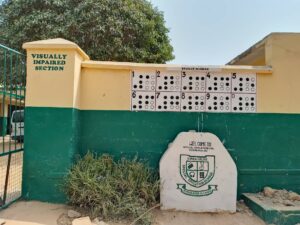
Tudun Maliki Special Education School in Kano State stands as a symbol of both promise and decline. Established in 1958 as a rehabilitation centre for juvenile delinquents, the institution was transformed in 1977 into a special education school for children with hearing and visual impairments.
For decades, Tudun Maliki was regarded as a model institution—offering boarding and day facilities and producing high-achieving graduates. Most notably, the school produced Nigeria’s first visually impaired professor, the late Professor Jibril Diso, whose success demonstrated what inclusive education can achieve when properly supported.
Today, however, that legacy is under serious threat.
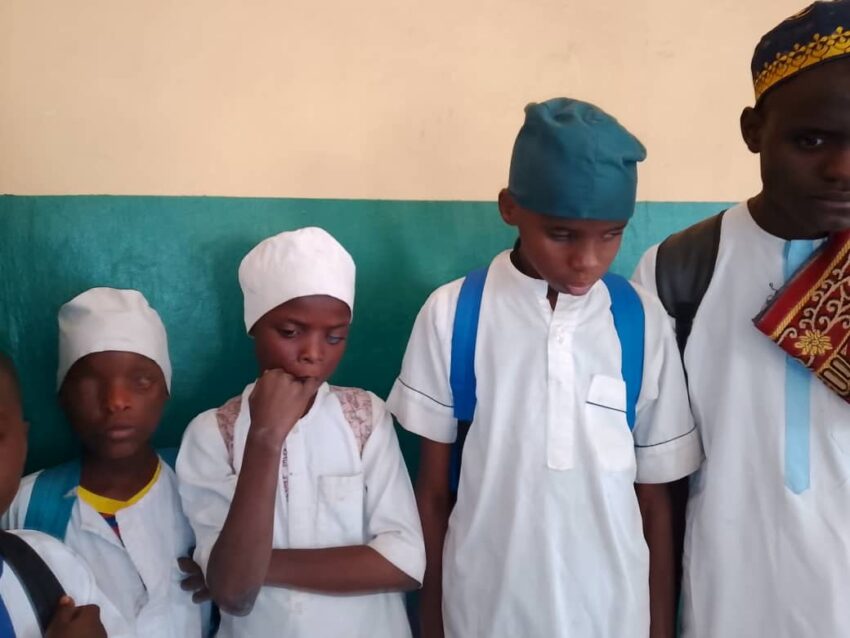
The school currently has over 100 students with visual impairments, yet only one teacher handles Biology. The shortage of qualified STEM teachers trained to teach visually impaired learners has severely limited students’ exposure to science and technology subjects, undermining both performance and confidence.
“We Were Left Behind”
Malam Hamza Fagge, a former student of Tudun Maliki, said the lack of inclusive practices has left many visually impaired students without even basic STEM foundations.
“The Kano State Government provides free education for persons with disabilities, but the shortage of teachers who can effectively teach STEM subjects has become a major barrier,” he said.
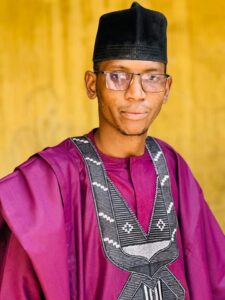
According to Fagge, visually impaired students were often subtly discouraged from pursuing science-related subjects and instead guided toward arts and social sciences.
“We were left behind because society did not believe we were capable of handling science subjects,” he explained.
He described the situation as deeply ironic.
“It was painful to record poor results in Mathematics when Braille itself is based on mathematical logic and dot patterns. Yet, we were denied appropriate learning materials and trained teachers,” he said.
Fagge stressed that visually impaired learners often possess strong intellectual abilities, but the failure to implement inclusive education policies—especially from the elementary level—continues to limit their potential.
Communication Barriers and Technology Gaps
Beyond teacher shortages, communication and technology gaps further complicate learning at Tudun Maliki. The school currently has only one computer teacher, who is hearing impaired. While this reflects inclusion in staffing, the absence of adequate assistive communication tools has created new barriers for visually impaired students.
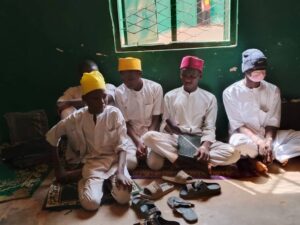
“It may surprise you that many students still believe visually impaired people cannot use computers,” Fagge said.
“They often ask, ‘So you can actually operate a computer?’ That question alone shows how deeply exclusion is rooted.”
He noted that although Kano State has inclusive education policies, special schools are often the most neglected in implementation, with science teachers absent for years and assistive technologies either outdated or unavailable.
Long-Term Effects at the Tertiary Level
The impact of weak inclusive education becomes even more evident at the tertiary level. At Bayero University, Kano, many visually impaired students in the Department of Special Education are graduates of Tudun Maliki.
One of them, Malam Yusuf Abdullahi, said poor exposure to STEM subjects earlier in life shaped his academic choices.
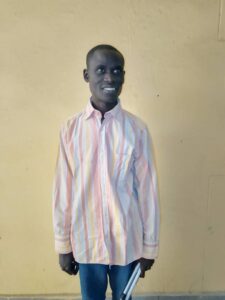
“I wanted to study science, but the challenges attached to it frightened me,” he said.
“Most of us don’t even apply for science-related courses because we were trained mainly in English and social science subjects. We wanted to explore other fields, but our dreams were cut short by poor policy implementation.”
When Barriers Kill Dreams
Abdulrazak Ado Zango said, “My dream was killed due to the poor system. If the system had been favorable, I could have been among the best visually impaired aerospace engineers.”
Across Kano State—and Nigeria as a whole—there is little or no structured support for Persons With Disabilities (PWDs) who want to study STEM and contribute meaningfully to national development.
“We are not asking for sympathy; we are asking for access and inclusion. If we keep moving like this, many dreams will vanish within a blink,” he said.
Today, he teaches computer skills, often encountering disbelief from others despite his many achievements based on his science background.
“People are surprised that I can use a computer. They keep asking how I learned,” he said.
“Our disability does not define our education. Poor implementation of STEM-inclusive policies does.”
And until inclusive education moves beyond policy documents into real classrooms, laboratories, and opportunities, many more dreams will continue to fade—quietly, invisibly, and unnecessarily.
Inclusive Education as a Human Rights Issue
Human rights lawyer Barrister A. A. Ayagi described the situation as a violation of the fundamental right to education.
“Many schools fail to provide inclusive learning environments,” he said. “Instead of integrating children with disabilities into mainstream education with adequate support, they are sidelined or denied proper attention.”
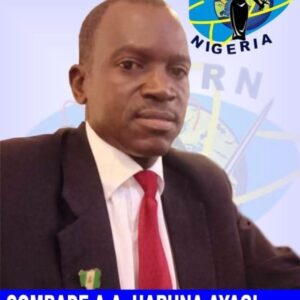
According to him, inclusive education—especially in STEM—is not a privilege but a right.
“When persons with disabilities are educated, they contribute meaningfully to society. Failure to include them deepens stigma, wastes human potential, and violates basic human rights,” Ayagi said.
In addition, Barr. Hauwa Ahmad Muhammad added that the continued neglect of inclusive STEM education for Persons With Disabilities represents a fundamental violation of multiple rights guaranteed under Nigerian laws and international instruments.
Under our Constitution, Section 18(1) of the 1999 Constitution (as amended) directs government to provide equal and adequate educational opportunities at all levels. It mandates the government to eradicate illiteracy, promote science and technology, and provide free, compulsory primary and secondary education, and free adult literacy—although these are generally non-justiciable on their own, meaning they cannot be enforced in a court of law.
“When we exclude PWDs from STEM education, we’re denying them this constitutional guarantee,” she said.
In addition, Section 42 also prohibits discrimination on any ground whatsoever, and educational exclusion based on disability clearly falls within this prohibition.
The Discrimination Against Persons with Disabilities (Prohibition) Act, 2018 is particularly instructive here. Section 18 of this Act specifically mandates that educational institutions shall not deny admission to persons with disabilities, while Section 19 requires reasonable accommodation in educational settings.
“When STEM facilities lack assistive technologies, when teaching materials aren’t provided in accessible formats, or when teachers aren’t trained in inclusive pedagogy, we’re violating these statutory duties,” she said.
“The right to education isn’t just about access to classrooms; it’s about meaningful participation in all fields of learning, including STEM. When we deny PWDs this opportunity, we’re not just violating their right to education—we’re violating their right to work (Section 17 of the Constitution), their right to dignity (Section 34), and their right to equal opportunity in all spheres of life,” she added.
Government Response
Efforts to reach the Kano State Commissioner for Science and Technology, Hon. Yusuf Kofar, were unsuccessful. However, Dr. Binta Bala, Director for Persons with Disabilities at the Ministry of Women Affairs, Children, and Disabilities, acknowledged the challenges.
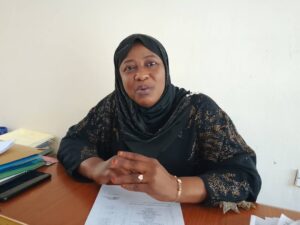
“The government is aware of the difficulties faced by visually impaired students at Tudun Maliki, and steps will be taken to ensure they are fully included in academic participation,” she said.
Dr. Bala, a former teacher at the school and a person with disability herself, spoke emotionally about the issue.
“I know how teachers avoid postings to special schools. As someone living with disability, I feel the pain of exclusion—but I also feel joy whenever inclusion happens,” she said.
She added that the Kano State Government remains committed to supporting persons with disabilities across education, health, and social development sectors as part of its long-term development goals.