

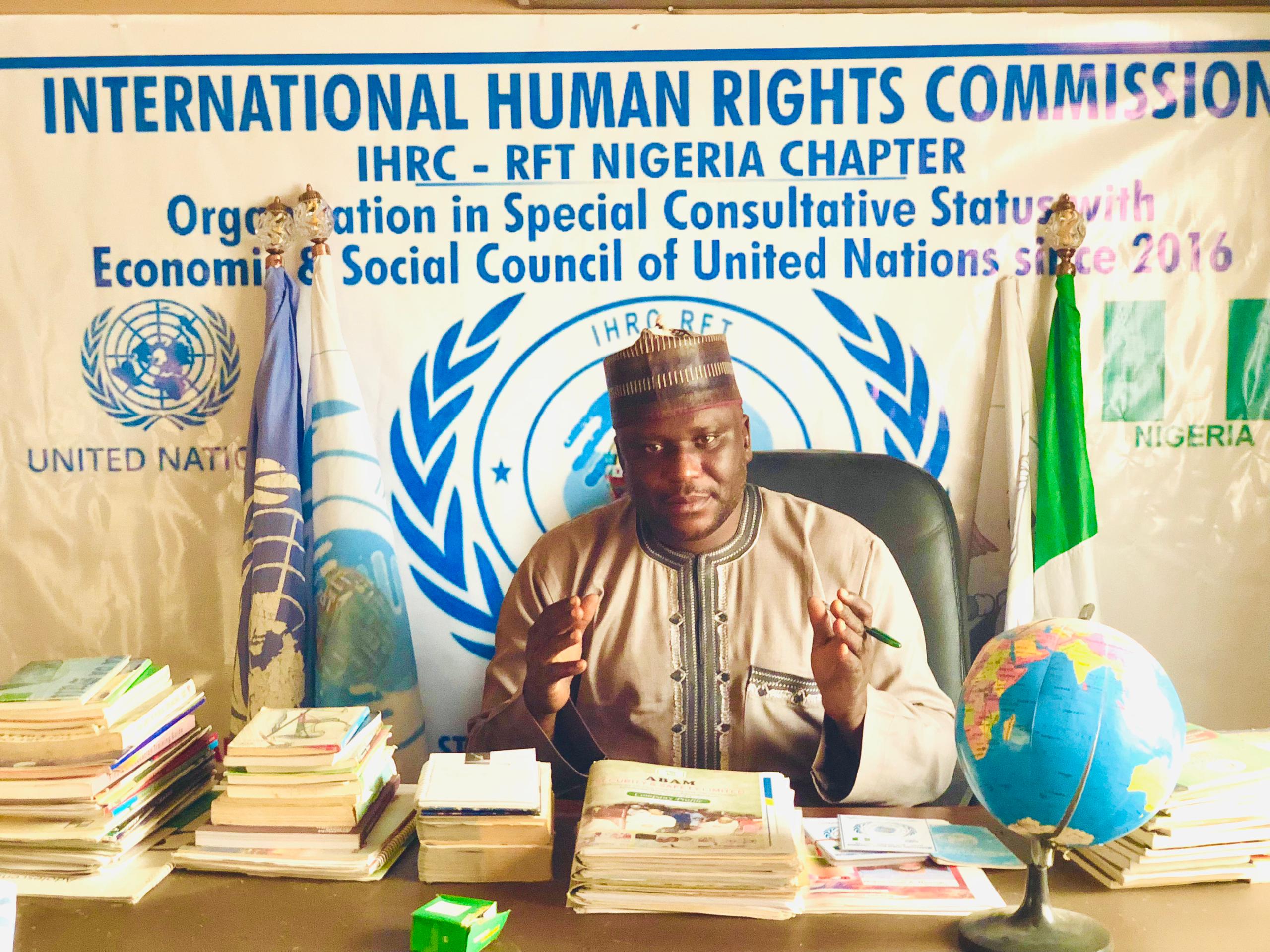
The International Human Rights Commission – Relief Fund Trust (IHRC-RFT Global), Nigeria Chapter, has expressed concern over certain provisions in the proposed “Nigeria Religious Freedom and Accountability Act of 2026” currently being considered by the United States Congress.
In a press statement issued on Tuesday, February 11, 2026, by the Country Director, Ambassador Abdullahi Bakoji Adamu, the Commission acknowledged the global importance of protecting religious freedom and ensuring accountability for violence against civilians but warned that the motion could inadvertently deepen division, stigmatization, and instability in Nigeria if not handled with fairness and transparency.
According to the statement, Nigeria’s security challenges are deeply rooted in social, economic, political, and environmental complexities — issues that demand a balanced, evidence-based, and non-discriminatory response rather than externally imposed punitive measures.
“No individual or group should face discrimination based on identity, ethnicity, religion, or association. Accountability must target proven individuals, not entire communities or organizations without distinction,” the statement read, referencing Article 2 of the Universal Declaration of Human Rights (UDHR).
The IHRC-RFT also cited Article 7 on equality before the law and Article 10 on the right to fair hearing, stressing that selective targeting of individuals without credible investigation risks creating perceptions of bias and political selectivity.
The organization cautioned against broad labeling of groups or institutions where members may include law-abiding citizens, warning that such collective attribution of guilt could deepen mistrust and fuel radicalization.
“Furthermore, isolating a single political figure without a transparent and comprehensive evaluation of all relevant actors may generate political tension and unnecessary controversy within Nigeria’s democratic space,” the statement added.
The Commission emphasized that sustainable peace cannot be achieved through sanctions alone but through strengthening domestic justice systems, addressing root causes of conflict, ensuring impartial investigations, and promoting inclusive national dialogue.
IHRC-RFT Global reaffirmed its stance that if credible evidence establishes individual criminal responsibility, those involved should be held accountable in accordance with the rule of law. However, it cautioned that collective stigmatization without due process undermines justice and long-term stability.
“Our position remains clear — fairness, objectivity, and adherence to international human rights standards must guide any action relating to Nigeria,” Ambassador Adamu stated.
He reaffirmed the Commission’s commitment to peace, justice, accountability, and the protection of the fundamental rights of all Nigerians without prejudice.
The IHRC-RFT Global, Nigeria Chapter, operates under ECOSOC Status, serving as a recognized international human rights advocacy organization promoting justice and humanitarian response globally.