

From Umar Dankano, Yola
Stakeholders in the health sector have urged governments and parents to give utmost attention to the first 1,000 days of a child’s life, describing it as the most critical period for growth, survival, and long-term development.
This call was made during a one-day media engagement organized by the Bauchi Radio Corporation in partnership with the UNICEF Bauchi Field Office, held in Yola on Wednesday.
The dialogue emphasized that the first 1,000 days—from conception to a child’s second birthday—determine the foundation for physical growth, brain development, and overall wellbeing.
In his presentation, Dr. Takwale Joseph Vawa, the Maternal Perinatal Child Death Surveillance and Response (MPCDSR) Desk Officer, said the importance of this early stage cannot be overemphasized, as it determines whether a child’s potential is nurtured or hindered.
Dr. Vawa explained that health care investment during this period is essential, noting that it lays the foundation for brain development, physical growth, and future productivity. He revealed that about 45 percent of under-five deaths in many developing countries are linked to malnutrition.
“Children who survive poor nutrition and inadequate healthcare during this period often grow up with developmental challenges that limit their productivity in adulthood,” he said.
He warned that failure to invest in the first 1,000 days has grave consequences, as weak immunity exposes children to diseases. “Such investment not only improves health and reduces mortality but also strengthens the national economy and ensures a prosperous future,” he added.
Earlier, Dr. Nuzhat Rafique, Chief of UNICEF Bauchi Field Office, said every stakeholder must be committed to improving the wellbeing of children, who are the future leaders and therefore deserve utmost care and guidance.
Dr. Rafique emphasized that UNICEF is investing in integrated services that support children and mothers during this critical window of opportunity. “Our goal is not only to ensure child survival but to safeguard lifelong wellbeing and productivity,” she stated.
According to her, UNICEF is strengthening antenatal and neonatal care, promoting exclusive breastfeeding and adequate nutrition, expanding immunization coverage, and improving sanitation services across communities.
Also speaking, Nanbam Dawap, Water, Sanitation and Hygiene (WASH) Officer at UNICEF Bauchi Field Office, urged stakeholders to conduct regular sanitation assessments and ensure WASH indicators are integrated into programs targeting the first 1,000 days.
Dawap underscored the importance of embedding WASH services into maternal and child health programs, warning that lack of clean water and proper hygiene practices often leads to preventable infections.
“We cannot achieve universal health coverage without embedding WASH components,” she stressed.
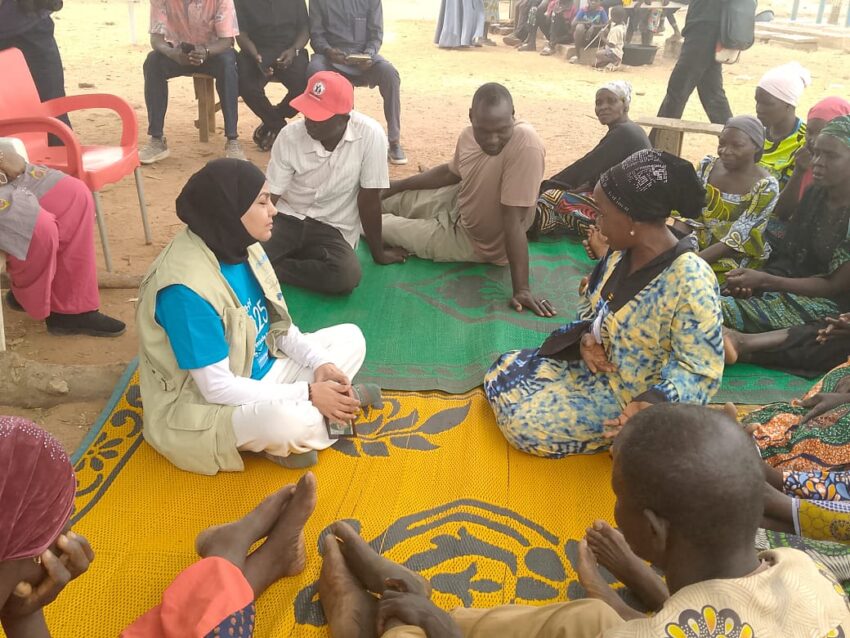
Meanwhile, a field visit was conducted by experts and journalists to communities in Shelleng Local Government Area, where the local WASH Committee Chairman, Gideon Emmanuel, disclosed that 293 out of 300 communities have been triggered to become open defecation free (ODF). He expressed optimism that complete ODF status will be achieved by the end of 2027.