

By Ali Abare
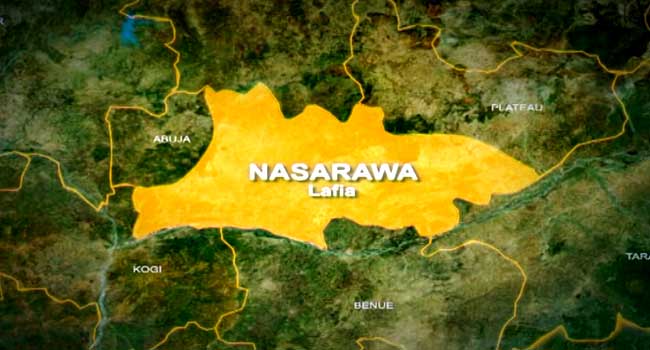
The debate over whether the governorship of Nasarawa State should be zoned in line with the already existing internal arrangement or not is once more taking centre stage in the political sphere of the state, especially as the 2027 general election approaches.
For Governor Abdullahi Sule, zoning of the governorship is not merely a question of political convenience; it is a matter of honouring a solemn agreement that brought equity and balance to the leadership structure of our state.
Those of us who have been closely monitoring the political ground in Nasarawa State since the dawn of this democratic dispensation, particularly the build-up to the 2019 general elections recall vividly the political battle that preceded the emergence of Governor Sule.
At that time, the immediate past governor, Senator Umaru Tanko Al-makura, faced considerable resistance from powerful interests who were uncomfortable with the idea of power shifting to the Nasarawa North zone.
Before that time, the zone had been largely confined to the deputy governor’s position, a role that often carried little influence in the scheme of things, not until the present dispensation under the incumbent governor.
But Senator Al-makura stood firm. Despite the pressure and the muscle flexing from opponents who wanted the seat to continue rotating strictly between Nasarawa South and Nasarawa West, he insisted that fairness and justice demanded that Nasarawa North be given a chance.
It was a tough fight, but the former governor held his ground.
Today, history has recorded that decision as a landmark moment in the political development of our state. It ensured that every senatorial zone now has a sense of belonging and a stake in the highest office in the land.
It is against this background that Governor Sule’s current disposition towards the zoning arrangement must be understood.
He is a product of that understanding. To ask him to jettison the very principle that brought him to office would be to ask him to forget the path that led to his own political emergence.
And to his credit, the governor has approached this matter with the wisdom and maturity that have come to define his leadership style.
Rather than stoke the embers of division or engage in a war of words with those who hold contrary views, Governor Sule has chosen to be philosophical. He has made it clear that while he personally stands by the zoning arrangement, he ultimately submits to the will of the Almighty God regarding who will succeed him.
This is not the language of a man desperate to impose his will, but that of a leader who understands that power belongs to God and that human arrangements, no matter how well-intentioned, must be tempered with humility.
In doing so, the governor has displayed a level of political sagacity that is often lacking in our clime. Instead of deploying the heavy hand of authority to crush opposition, he has allowed the debate to evolve naturally, trusting that the good sense of the majority will ultimately prevail.
He knows that those who are opposed to zoning because it does not favour their personal ambitions are entitled to their opinion. But he also knows that the people of Nasarawa State are watching, and they understand the value of the equity that zoning has brought to the state.
Let us be clear about the stakes involved. The All Progressives Congress in Nasarawa State is presently in a position of strength. The opposition, particularly the Peoples Democratic Party, is in total disarray, struggling to find its footing. The African Democratic Congress is still trying to establish itself as a viable alternative.
In such a situation, the ruling party should be focused on consolidation, not internal combustion. It would be a tragic irony if the APC were to tear itself apart over a question that was settled in the interest of fairness just a few years ago.
Those who are advocating for a departure from the zoning arrangement must tread carefully. They must ask themselves whether the temporary satisfaction of their political ambition is worth the permanent damage that could be done to the party’s cohesion.
Politics is often described as a game of interests, but it is also a game of patience. There is a time for everything, and the time for the zones to have a go at the saddle continues.
The people of Nasarawa State are not oblivious to these dynamics. They have watched Governor Sule steer the ship of state with a steady hand, focusing on development, infrastructure, and the welfare of citizens.
They identify with his calm and measured approach to governance.
It is therefore only natural that the majority of them stand with him on the matter of zoning. They see the attempt to reopen this debate not as a genuine quest for fairness, but as a move driven by personal ambition dressed in borrowed robes.
What is required at this moment is statesmanship. Those who feel aggrieved by the arrangement should look beyond the immediate and consider the larger picture. A house divided against itself cannot stand.
And in a political environment where the opposition is weak, the greatest threat to the ruling party often comes from within. If care is not taken, the very fabric of unity that has held the APC together in Nasarawa State could begin to fray.
Governor Sule has shown that he is not a man given to vendetta or arm-twisting. He has allowed the space for dissent, confident that the truth will eventually carry the day. But that should not be mistaken for weakness. It is a sign of a leader who is secure in his position and in the justice of his cause.
As the state moves towards another election cycle, all well-meaning supporters of the APC must rally behind the principle of zoning. It is the bond that guarantees inclusiveness. It is the arrangement that ensures no zone feels marginalized.
To break that bond now would be to open the door to the very kind of bitterness and disaffection that the party has worked so hard to overcome.
The message from the majority of the people is clear: they stand with their governor, and they stand with zoning. Those who think otherwise are entitled to their say, but in a democracy, the will of the majority must ultimately have its way. That is the beauty of our system. And that is the path to lasting peace in Nasarawa State.