

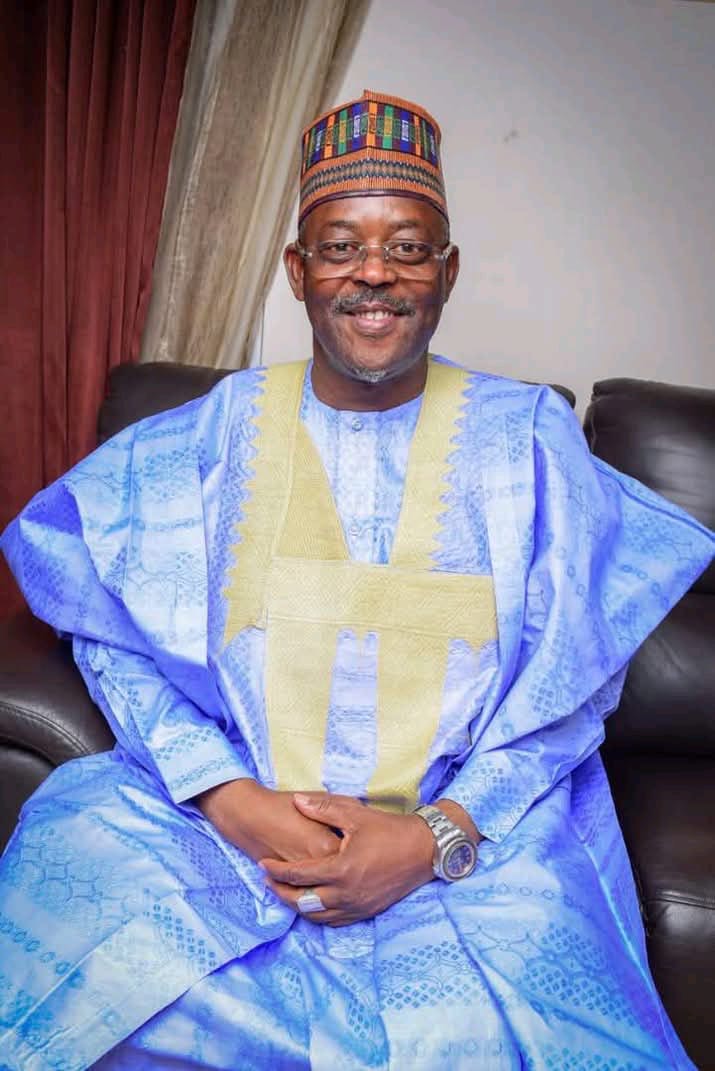
By Abba Dukawa
In every democratic society, the essence of representation lies not in the title of office but in the responsibility it carries. A truly effective representative understands that public office is not a privilege to be enjoyed, but a trust to be honoured—one bestowed by the people and sustained through service, accountability and results.
Citizens, in turn, measure public servants not by rhetoric but his outcomes. His look for visible development, thoughtful advocacy and prudent management of public resources. These are the enduring benchmarks of quality representation.
Yet, democracy sometimes produces what may be described as the “accidental public servant”—individuals who attain office without the preparation, vision or commitment required for meaningful governance. In such instances, leadership becomes reactive rather than purposeful, often resulting in missed opportunities, weak engagement with constituents and stagnation in addressing pressing community needs.
The consequence is a gradual erosion of public trust and a loss of momentum in development.
For the people of Ajingi, Gaya and Albasu Federal Constituency, this contrast has become particularly instructive.
The 2023 general elections marked a turning point for the Ajingi Gaya and Albasu federal constituency. Voters faced a consequential decision: to sustain the trajectory established under Hon. Abdullahi Mahmud Gaya, widely regarded for his consistent dedication to public service, or to embrace a new candidate whose promises, though appealing, remained largely untested.
It was a choice that reflected both hope and uncertainty—one that underscored the weight of public expectation and the complexities of democratic decision-making.
At its core, effective representation is defined by empathy, responsiveness and action.
A committed legislator listens attentively, understands deeply and acts decisively to improve the lives of constituents. Leadership of this nature extends beyond moments of political triumph, standing firm even in times of hardship.
Prior to 2015, many communities within Ajingi, Gaya and Albasu grappled with years of underdevelopment. Infrastructure deficits and limited access to essential services had dampened public optimism. The emergence of Hon. Gaya marked a shift. Through sustained effort, roads were constructed, schools rehabilitated and healthcare services improved, gradually restoring confidence in governance.
Beyond constituency projects, his legislative contributions also drew national attention. As Chairman of an Ad Hoc Committee tasked with investigating debts owed to the Petroleum Products Marketing Company (PPMC), he led efforts that resulted in the recovery of significant public funds from oil marketers.
This achievement earned him further responsibility, including membership in a high-level strategic committee focused on addressing Nigeria’s economic challenges in collaboration with key stakeholders such as the Manufacturers Association of Nigeria (MAN) and the Nigerian Labour Congress (NLC).
His tenure as Chairman of the House Committee on Petroleum Resources (Downstream) similarly reflected a commitment to oversight and public welfare, particularly in addressing policy decisions affecting border communities and ensuring fairness in sectoral processes.
At the constituency level, his interventions spanned education, healthcare, water supply and economic empowerment. From classroom construction and student support programmes to women’s empowerment initiatives and youth-focused agricultural schemes, these efforts contributed to measurable improvements in livelihoods across the constituency.
Equally notable was his role in facilitating employment opportunities for young people in various public institutions, including security agencies and government bodies—an intervention that addressed both economic need and social stability.
However, the post-2023 reality has prompted renewed reflection among constituents. Many now question whether the promise of change has translated into tangible progress or whether expectations remain unmet. This introspection highlights a broader democratic truth: that leadership must ultimately be judged by its impact.
As the 2027 elections approach, the people of Ajingi, Gaya and Albasu are once again confronted with a defining choice. The question before them is not merely political—it is existential: what kind of representation best serves their future?
Experience suggests that sustainable development is anchored in leadership that combines integrity, competence and a genuine connection to the people. Without these qualities, governance risks becoming detached, and progress, elusive.
Though no longer serving in the House of Representatives, Hon. Abdullahi Mahmud Gaya remains a visible presence within the constituency—engaging with residents, listening to their concerns and maintaining the bond forged during his years in office. For many, this continued connection reinforces the value of leadership rooted in service rather than position.
Ultimately, the debate within the constituency reflects a universal democratic principle: that representation must be earned through consistent performance, not assumed through electoral victory alone.
As the next electoral cycle draws closer, the people of Ajingi, Gaya and Albasu must weigh their experiences carefully. Their decision will shape not only political outcomes but the trajectory of development, opportunity and collective well-being for years to come. In the end, democracy delivers its greatest dividends when leadership is defined not by chance, but by character, commitment and an unwavering dedication to the people.
Hon. Abdullahi Mahmud Gaya has emerged as a leading voice in Nigeria’s petroleum sector reform discourse, authoring well-structured articles on policy, transparency, and economic development. His writings, including analyses of the Petroleum Industry Bill (PIB), showcase clear expression and logical flow. His articles, such as “How PIB Repeals Overlapped Petroleum Acts” and “Petroleum Industry Bill: What it Meant for Nigeria,” explain the bill’s potential to attract investment and drive growth. He emphasizes transparency in “PIB Will Strengthen Transparency in Nigeria’s Oil Sectors. His work reflects clarity, coherent progression, and policy relevance, positioning him as a disciplined communicator.
Dukawa write from Kano can be reached at abbahydukawa@gmail.com