

A Defining Blueprint for Regional Stability, Economic Renewal, and Coordinated Leadership in Northern Nigeria
By Musa Abdullahi Sufi
By all measurable standards, Nigeria’s North-West stands at a historic inflection point. For over a decade, the region comprising Katsina, Kaduna, Kano, Jigawa, Kebbi, Sokoto, and Zamfara—has grappled with a complex web of insecurity, economic fragility, and social disruption. Yet, within this challenge lies an opportunity: the emergence of a bold, coordinated, and data-driven response that could redefine the future of regional governance in Africa.
At the center of this transformation is the North-West Peace, Security and Development Framework (2026–2030)—a strategic, multi-sectoral roadmap driven by the collective resolve of the North-West Governors’ Forum, under the leadership of Dr Dikko Umaru Radda of Katsina State.
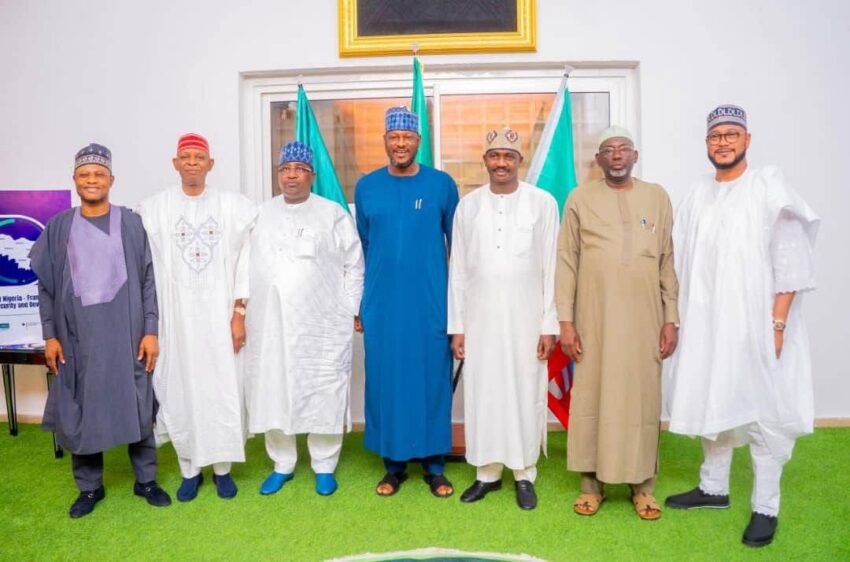
Together with fellow governors; Uba Sani (Kaduna), Abba Kabir Yusuf (Kano), Umar Namadi (Jigawa), Nasir Idris (Kebbi), Ahmad Aliyu (Sokoto), and Dauda Lawal (Zamfara)—this coalition represents one of the most consequential sub-national governance alignments in Nigeria’s recent history.
This is not merely a framework. It is a regional doctrine for survival, stability, and sustainable prosperity.
From Fragmentation to Coordination: Why This Framework Matters
The crisis in the North-West is neither isolated nor accidental. It is systemic.
Banditry and kidnapping have destabilized rural economies. Farmer–herder conflicts have deepened food insecurity. Youth unemployment continues to expand the recruitment pool for criminal networks. Weak institutional coordination has further compounded response inefficiencies.
For years, interventions have been largely state-centric and reactive producing limited, short-term gains.
The 2026–2030 Framework disrupts this pattern by introducing a regional systems approach. It recognizes a critical truth that insecurity does not respect state boundaries, and neither should solutions.
Leadership as the Anchor: The Radda Doctrine of Coordinated Governance
Under the leadership of Governor Dikko Umaru Radda, the framework signals a shift toward what can be described as “coordinated federalism in action” where states align strategy, intelligence, and development priorities in pursuit of shared outcomes.
This model elevates leadership from symbolic authority to operational coordination.
It demands:
• Joint decision-making across state lines
• Harmonized policy frameworks
• Shared accountability mechanisms
• Collective ownership of both risks and results
If effectively implemented, this could become a replicable governance model across Nigeria and the wider Sahel region.
Data as the New Security Infrastructure
Perhaps the most transformative pillar of the framework is its emphasis on data-driven governance.
Historically, one of the region’s greatest weaknesses has been the absence of:
• Integrated intelligence systems
• Real-time socio-economic data
• Coordinated monitoring frameworks
The new approach prioritizes:
• Unified security intelligence platforms across states
• Real-time data dashboards for tracking threats and development indicators
• Evidence-based budgeting and policy decisions
• Joint monitoring and evaluation systems
This is a fundamental shift from intuition-led governance to evidence-led decision-making.
In practical terms, it means that:
• Security deployments can be predictive rather than reactive
• Resources can be allocated based on verified needs
• Progress can be measured, audited, and improved
Without data, coordination remains rhetorical.
With data, transformation becomes quantifiable and scalable.
Beyond Security: Addressing the Political Economy of Conflict
The framework’s strength lies in its recognition that insecurity is not just a security problem, it is a development failure.
Its six core pillars integrate:
• Peace and security architecture
• Community-led peacebuilding
• Economic recovery and livelihoods
• Governance and justice reforms
• Human capital development
• Infrastructure stabilization
This aligns with global best practices around the Humanitarian–Development–Peace Nexus, where sustainable peace is built not only through force, but through:
• Jobs
• Education
• Inclusion
• Institutional trust
By targeting the root causes of conflict: poverty, exclusion, and weak governance, the framework addresses the supply side of insecurity, not just its symptoms.
The Imperative of Collective Ownership
No framework, regardless of its technical brilliance, succeeds without ownership.
The North-West Peace, Security and Development Framework calls for a multi-layered coalition of actors, including:
• Federal institutions
• Civil society organizations
• development partners
• Traditional and religious leaders
• Youth and community networks
This is particularly critical in Northern Nigeria, where informal institutions often carry as much influence as formal structures.
Sustainable peace will not be imposed from government houses alone, it will be co-created within communities.
Financing the Future: From Dependency to Strategic Investment
Another defining feature of the framework is its blended financing model:
• State-level fiscal commitments
• Federal government interventions
• International development support
• Public-private partnerships
This diversified approach reduces dependency risks and positions the region to leverage capital for long-term transformation, particularly in agriculture, infrastructure, and youth enterprise.
A Measurable Vision: What Success Looks Like by 2030
If implemented with discipline and integrity, the framework could deliver:
• A measurable reduction in banditry and violent conflict
• Restoration of rural economic productivity
• Increased investor confidence in the region
• Improved access to education and healthcare
• Strengthened trust between citizens and the state
More importantly, it could reposition the North-West from a zone of crisis to a hub of resilience and opportunity.
A Defining Moment for Northern Nigeria
The stakes could not be higher.
This framework represents a rare convergence of political will, institutional alignment, and strategic clarity. But it also presents a test: whether leadership can transcend political differences in favor of regional progress.
To the governors of the North-West, the message is clear:
history will not judge the existence of this framework but its execution.
To citizens and stakeholders, the responsibility is equally profound:
demand accountability, support collaboration, and engage in the process of rebuilding the region.
Conclusion: From Policy to Legacy
The North-West cannot afford another cycle of fragmented responses and missed opportunities.
Peace in Katsina depends on stability in Zamfara.
Economic growth in Kano is linked to security in Kaduna.
Development in Sokoto is tied to resilience in Kebbi.
The future is shared. The risks are shared. The responsibility must be shared.
The North-West Peace, Security and Development Framework (2026–2030) is more than a policy document; it is a blueprint for a new regional order.
If executed with discipline, data, and unity of purpose, it will not only stabilize the North-West, it will redefine what is possible for sub-national governance in Africa.