

By Musa Abdullahi Sufi
In a time when food security remains one of the defining challenges of our generation, leadership is measured not just by policy declarations, but by the precision, empathy, and systems that translate vision into measurable impact. This is where the leadership of Governor Dr Dikko Umaru Radda stands out professional in design, human in delivery, and transformative in outcome.
Across the farmlands of Katsina State, a quiet but powerful transformation is underway.
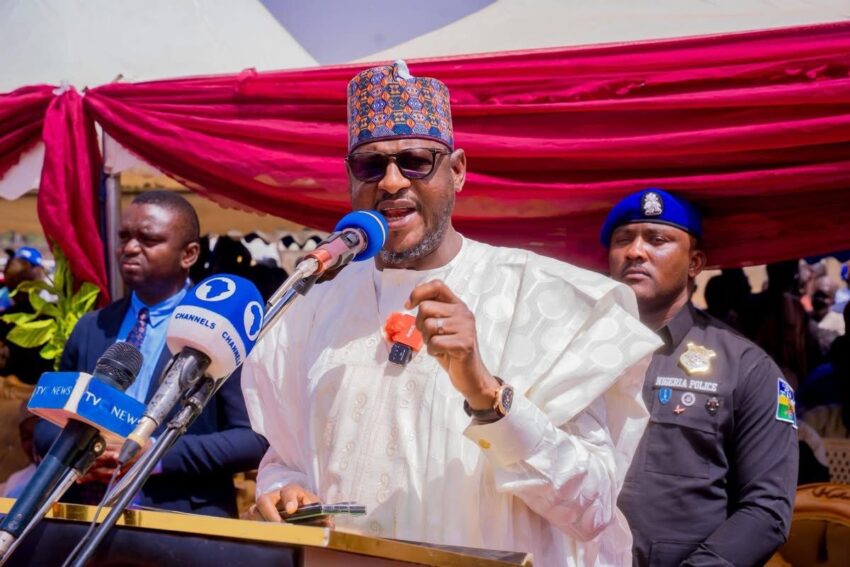
On Monday, April 20, 2026, Governor Radda officially launched the 2026 Fertiliser Sales and Distribution Programme in Malumfashi Local Government Area, signaling not just the commencement of seasonal support, but the deepening of a governance model built on inclusion, accountability, and results.
At the core of this intervention is a clear principle: the right support must reach the right farmer at the right time.
From Policy to Precision: A New Distribution Architecture
Departing from conventional, top-down systems often plagued by leakages and inequity, the Radda administration has institutionalized a decentralized, community-driven framework anchored on the Community Development Programme (CDP).
Under this model, fertiliser distribution is executed across 6,652 polling units spanning all 361 wards in the state; ensuring last-mile delivery, eliminating middlemen distortions, and safeguarding equitable access.
Zone-based allocation reflects agricultural realities. As Funtua Zone got 60 bags per polling unit, Katsina Zone 50 bags per polling unit and Daura Zone 45 bags per polling unit.
Additionally, 10 large-scale farmers per ward will receive 10 bags each to scale production and strengthen output capacity.
“We have deliberately designed this system to expand access, ensure fairness, and guarantee that genuine farmers benefit directly. This is governance with structure and purpose,” Governor Radda stated.
Fertiliser is being sold at a highly subsidized rate of ₦25,000 per bag, nearly half the market price an intervention that directly reduces production costs and unlocks productivity for thousands of farmers.
Where Professionalism Meets Humanity
This initiative goes beyond input distribution, it reflects a leadership philosophy rooted in human impact.
Every bag of fertiliser delivered under this system represents more than support; it is a signal of inclusion. It affirms to farmers in Malumfashi, Funtua, Daura in Katsina State that governance is responsive, intentional, and aware of their realities.
For many smallholder farmers, this intervention marks the difference between subsistence and scale between uncertainty and opportunity.
A Systems Approach to Agricultural Transformation
Governor Radda emphasized that fertiliser alone cannot deliver sustainable agricultural growth. His administration has therefore adopted an integrated, systems-driven strategy that combines immediate support with long-term resilience.
Some of the key interventions include:
1- Distribution of hand-powered tillers to reduce labour intensity
2- Deployment of tractors and modern implements to expand cultivation
3- Construction of over 3,000 tube wells to support irrigation farming
4- Provision of 4,000 solar-powered pumps (2025) and 4,000 gasoline-powered pumps (2026)
5- Distribution of liquid fertilisers, herbicides, and pesticides
To further strengthen irrigation infrastructure, the government has procured advanced equipment including drilling machines, compressors, dredging systems, and excavators to rehabilitate water bodies and expand irrigation networks.
These interventions signal a strategic shift from seasonal farming to year-round agricultural productivity.
Investing in the Next Generation of Farmers
Recognizing that sustainable transformation requires human capital development, the administration is currently training 361 young men and women in modern agriculture, agro-processing, and agribusiness.
“We are building not just farms, but futures. These young people will drive the next phase of agricultural transformation in Katsina State,” Governor Radda noted.
Accountability, Trust, and Community Ownership
A defining strength of this programme is its integrity.
Through the CDP framework, accountability is embedded at the community level. The system ensures traceability of inputs, empowers local structures, and builds trust between government and citizens.
The Honourable Commissioner for Agriculture, Hon. Lawal Aliyu Shargalle, described the initiative as a “renewed engine of hope,” emphasizing that strict monitoring mechanisms including real-time tracking and weekly reporting are in place to guarantee transparency.
“This partnership with the CDP ensures that every bag reaches the intended beneficiary. It is a model of accountability and grassroots ownership,” he affirmed.
The CDP Coordinator, Dr. Kamaludden Kabir, commended the administration’s sustained investment in rural development, noting that interventions in mechanization and irrigation have significantly improved farming efficiency and livelihoods despite past challenges.
Local Impact, Statewide Momentum
In his remarks, the Chairman of Malumfashi Local Government, Hon. Muntari Abdullahi, described the initiative as timely and transformative, highlighting its direct impact on farmers and local economic growth.
He further commended the Governor’s broader achievements in restoring security, expanding employment opportunities, and delivering critical infrastructure across the state.
A Model for Inclusive Agricultural Governance
The launch event, held at Malumfashi Township Stadium, attracted senior government officials, traditional leaders, legislators, and key stakeholders.
Governor Radda’s approach sends a clear and compelling message that development is not about distributing resources, it is about designing systems that work for people.
It is about leadership that listens, plans with precision, and delivers with integrity.
It is about governance that sees farmers not as statistics, but as partners in progress.
Across Katsina today, fields are not just being cultivated—they are being empowered. And in that empowerment lies a more resilient, inclusive, and food-secure future. The CDP-driven model ensures transparency, equity, and direct farmer access.