

By Hannatu Sulaiman Abba
For many of the estimated 2.5 million persons living with disabilities in Kano State, inclusion in policy-making and access to basic services remain distant promises rather than lived realities.
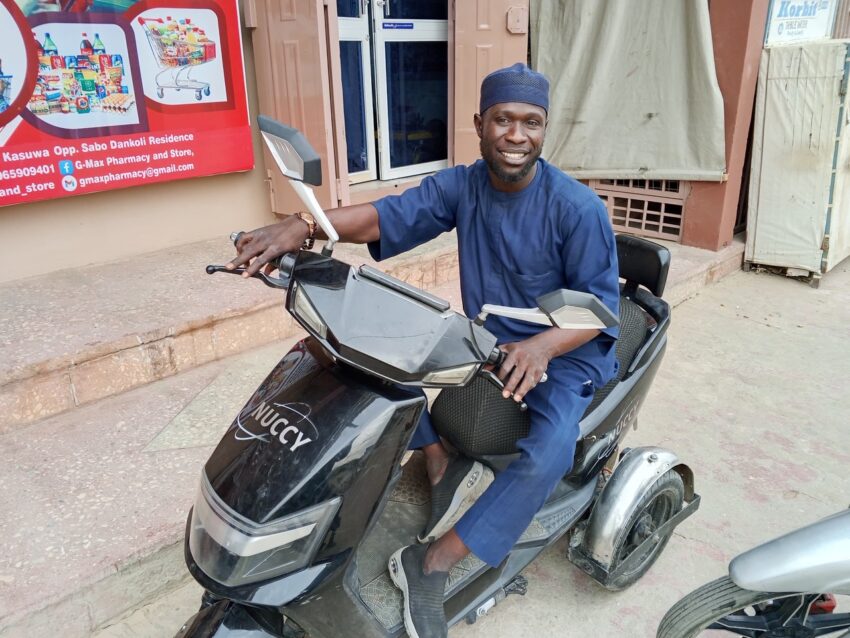
For Aftahana Dahiru Sarina, a physically challenged resident of Kano, the struggle for accessibility is not abstract—it is deeply personal.
“I have faced risks just trying to enjoy my fundamental human rights,” he says quietly.
From childhood, Aftahana’s journey began with hope.
His father insisted on inclusive education, determined that his son would grow to become the best version of himself. That decision opened doors—but also exposed the deep cracks in Kano’s accessibility systems.
A city built with exclusion
Across Kano, infrastructure tells a painful story of exclusion. Public buildings, including government offices, are largely inaccessible to persons with disabilities.
“I experience pain every time I go out for advocacy,” Aftahana explains. “There are no proper pedestrian walkways for wheelchair users. Yet billions are spent on roads and bridges.”
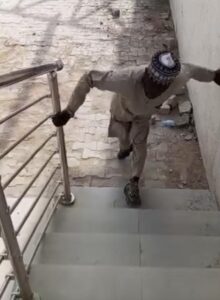
For people with hearing impairments, the absence of sign language interpreters limits communication. For the visually impaired, there are few mobility aids or orientation systems.
For those with physical disabilities, basic features like ramps are often missing even the ministry that people with disabilities are attached too.
Health risks with high ambition on education
Aftahana’s university experience reflects the daily struggles many students with disabilities endure.
At North West University Kano kofar Nassarawa, he attended lectures on the eighth floor—often without a functioning elevator.
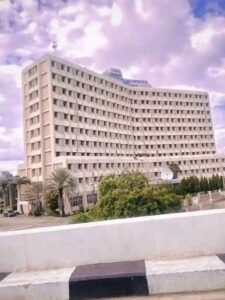
“The lift worked only two or three days a week, depending on electricity,” he recalls. “Most times, I had to climb eight floors. It was painful, but I didn’t want to miss my lectures.”
Even reaching campus was a challenge. There was no subsidized or accessible transport system for students with disabilities.
“It was always a journey filled with risk and hope,” he says.
Barriers beyond the classroom
After graduation, Aftahana encountered another layer of exclusion—employment.
“The system is not practical or inclusive. Jobs are often based on connections, with many empty promises,” he says.
For many persons with disabilities in Kano, opportunities are limited mostly to non-governmental organisations, which tend to be more inclusive.
Outside that space, representation remains scarce.
A daily battle with movement
Mobility within the city is another major challenge.During the rainy season, movement becomes nearly impossible due to flooded roads and blocked drainage systems.
“What should take five minutes can take me 40 minutes,” Aftahana says. “And it affects all of us.”
Public transportation adds another layer of hardship. He recounts frequent discrimination from commercial drivers.
“Some refuse to carry me. Others increase the fare because of my condition,” he says.
In one instance, a driver demanded double fare, claiming other passengers would avoid the vehicle if he boarded.
Even worse, Aftahana says he has been cheated multiple times.
“More than 30 times, drivers have taken my money and driven off, knowing I cannot chase them.”
Determined to regain independence, he saved for years—often skipping meals—until he could afford a motorcycle.
Healthcare out of reach
Accessing healthcare is equally difficult.
“Most hospitals are not accessible,” he explains. “Some of us resort to herbal treatment because navigating the hospital environment is too stressful.”
Ironically, accessibility features like ramps are often only available in surgical wards, not at entry points where they are most needed.
Law without implementation
Human rights advocate Umar I Umar, says the rights of persons with disabilities are clearly protected under Nigerian law.
The Discrimination Against Persons with Disabilities (Prohibition) Act, 2018 mandates accessibility in public buildings, transportation, and services. Similarly, the Constitution of the Federal Republic of Nigeria 1999 guarantees equality and freedom from discrimination.
Nigeria is also a signatory to the United Nations Convention on the Rights of Persons with Disabilities, committing the country to full inclusion.
Yet, implementation remains weak.
“Accessibility is not charity—it is a legal right,” Umar stresses.
He calls for stricter enforcement of existing laws, the strengthening of a functional Kano State Disability Commission, and accountability for institutions that fail to comply.
A call for inclusion
For Aftahana and millions like him, the message is simple: “Disability is not inability. But the system makes it harder for us to live with dignity.”
A society that excludes persons with disabilities, he adds, ultimately undermines its own progress.
Government perspective
The director for people with disablities Dr Binta Bala said, the government and development partners are fixing the gaps of inaccessibility that hinder challenge for PWDs in the State with consideration for accessiblity plans in all government agencies and other places for implementations through the law for inclusion in the State.
This report is supported by HumAngle under the Strengthening Community Journalism and Human Rights Advocacy (SCOJA) Fellowship.