

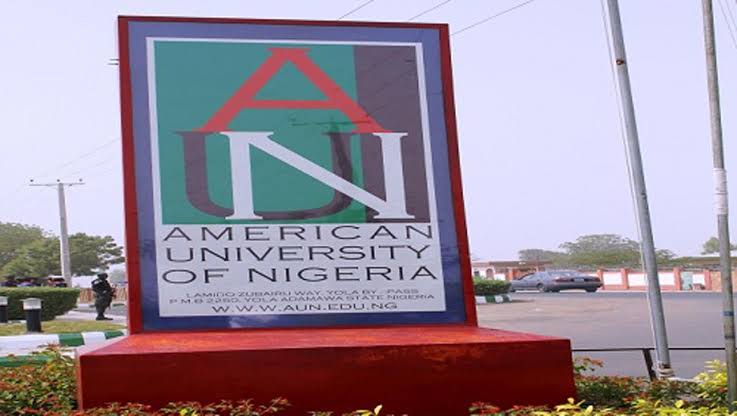
From Umar Dankano, Yola
The management of the American University of Nigeria (AUN), Yola, has fixed May 9, 2026, for a historic graduation ceremony for its students, including twelve abducted Chibok girls who were rescued and later enrolled at the institution.
AUN President, Prof. DeWayne Frazier, disclosed this during a pre-commencement media briefing held in Yola on Wednesday. He stressed that the graduation of the students, who were formerly held captive in the Sambisa Forest, symbolizes more than academic achievement, describing it as a global testament to resilience, hope, and the indomitable human spirit.
Frazier noted that their journey from captivity to earning university degrees has captured global attention as a victory over adversity, highlighting the transformative power of education and AUN’s commitment to its mission as a development university.
“When these 12 girls walk across that stage, it will be deeply symbolic. For years, the world cried ‘Bring Back Our Girls.’ On May 9, we are not just bringing them back, we are sending them forth as educated, empowered women ready to shape the future. Boko Haram lost. Education won,” he said.
The graduation ceremony will feature renowned CNN journalist Stephanie Busari, whose groundbreaking “proof of life” report on the Chibok girls earned global acclaim, as keynote speaker. Frazier described her participation as a fitting recognition of journalism’s role in amplifying the Chibok cause.
“With the right support system, specialized counseling, and a world-class learning environment, AUN has shown that it is possible to bridge the gap between trauma and high-level academic success. These graduates now stand as beacons of light for the Northeast and the world.
“Their success sends a powerful message: education is the most potent tool for healing and transformation, capable of reclaiming lives and building a brighter, more secure future for Nigeria,” Frazier added.
He also announced that the university has unveiled a sweeping upgrade of its technology infrastructure, reinforcing its position as one of Africa’s leading institutions for innovative higher education.
The multi-faceted investment includes the tripling of internet bandwidth, deployment of Wi-Fi 6 across campus, introduction of smart classroom devices, and modernization of its enterprise resource planning platform.
“In a decisive move to advance digital learning, research excellence, and smart campus operations, AUN is increasing its internet bandwidth from 301 Mbps to 1 Gbps. This enhancement is designed to support the evolving demands of 21st-century teaching and learning, including faster access to learning management systems, research databases, cloud applications, virtual classrooms, and multimedia resources,” Frazier emphasized.
He explained that the upgrade also involves a comprehensive replacement of wireless access points across campus, with each new unit supporting up to 100 users—double the current capacity—ensuring smoother connectivity during peak periods.
“Wi-Fi coverage will increase significantly, with stronger signal strength and uninterrupted access in students’ residences, classrooms, offices, and communal spaces.
“The transition to Wi-Fi 6 technology delivers enhanced speed, wider coverage, and greater support for multiple connected devices simultaneously,” he said.
According to him, AUN has also deployed highly interactive smart classroom devices to foster real-time collaboration, immersive teaching, hybrid learning delivery, and active student participation.
“These tools align with global best practices and support both in-person and virtual learning models.
“Beyond connectivity, the university is advancing its smart campus initiative by upgrading its enterprise resource planning platform from OpenERP 7 to Odoo 18.
“This upgrade strengthens data protection, improves operational workflows, reduces cybersecurity risks, and enhances service delivery across academic administration, finance, student services, and institutional management,” he explained.
Frazier expressed deep appreciation to the university’s technology partners.
“I would like to express my sincere appreciation to Inlaks, TD Africa, and Huawei for this important partnership. This marks the beginning of a long-term collaboration aimed at continuously strengthening and modernizing the university’s technology infrastructure,” he said.
“The goal is clear: to prepare our students for success in the 21st-century workforce by providing them with a world-class, technology-enabled learning environment right here on our campus,” he added.