

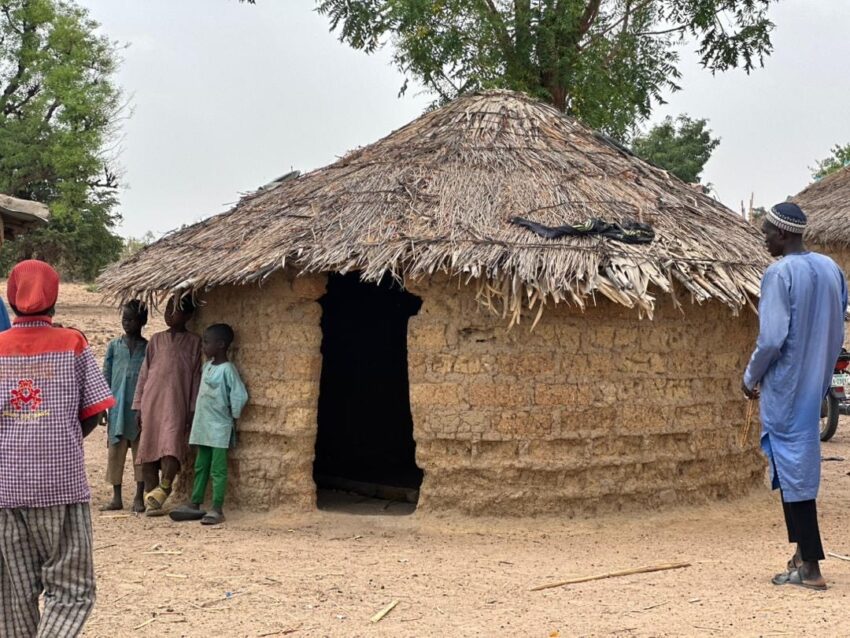
Residents of Waja village in Fagam District of Jigawa State have accused the District Head of Fagam, Auwalu Adamu, of allegedly confiscating ancestral farmlands, imposing heavy levies on Fulani pastoralists, and selling grazing reserves and cattle routes, leaving many families in severe hardship.
The allegations were uncovered during an investigative visit by journalists from Premier Radio, who travelled more than 300 kilometers from Kano to the remote community.
The team, made up of Aminu Abdullahi Ibrahim, Mustapha Muhammad Kankarofi, driver Nura Labaran, and Kabir Bello Tukur, spent over four hours on the road before reaching the rocky settlements surrounding Waja village in Fagam.
Upon arrival, dozens of Fulani residents gathered under a tree to narrate what they described as years of oppression, intimidation, and denial of basic rights.
Speaking on behalf of the community, Malam Abdulkadir Jibrin alleged that families in the area are no longer allowed to inherit farmland passed down from their fathers and grandfathers unless they pay money to the district head.

“Our parents were born here, our grandparents were born here, and even their forefathers lived here. Yet today, we are being treated like strangers on our own land,” he lamented.
According to him, the crisis has persisted for more than 20 years, with many families losing access to farmland that has sustained them for generations.
Residents further alleged that excessive levies are imposed on pastoralists, including payments ranging from ₦200,000 to ₦250,000 on ownership or sale of a single cow.
Yakubu Abdu, commander of the local vigilante group, said the taxes have pushed many families deeper into poverty.

“We survive through cattle rearing, but the burden placed on us is becoming unbearable. Many people can no longer feed their families properly,” he said.
The villagers also alleged that grazing reserves and livestock routes traditionally used by Fulani herders have been sold off, forcing them to migrate long distances in search of pasture and water for their animals.
According to the residents, many herders now move cattle to places such as Awe and other distant communities, exposing them to attacks by kidnappers and armed bandits along the routes.
An elderly resident, Buba Lamido, broke down in tears while recounting how he lost two sons to kidnappers during one of such journeys.

“They left with our cattle to search for grazing land, but they never returned home alive,” he said emotionally.
Other residents claimed that poor telecommunications networks in the area make the situation even worse, as families sometimes spend days without hearing from relatives travelling with cattle.
Community members also lamented decades of neglect in education and social infrastructure.
Despite the large population of the area, residents said there is neither a primary school nor a secondary school in the community.
“Our children have no future because there are no schools. Many people here have never had the opportunity to receive formal education,” one resident said.
The villagers appealed to the government to urgently provide schools, healthcare facilities, roads, and security presence in the area.
In response to the allegations, the spokesperson of the Jigawa State Police Command, SP Lawal Shi’isu, said the command had not previously received formal complaints regarding the matter. He advised the residents to submit their grievances in writing to the Divisional Police Officer in charge of Fagam for proper investigation.
Attempts by journalists to obtain the reaction of the District Head of Fagam, Auwalu Adamu, were unsuccessful, as he neither answered phone calls nor responded to text messages sent to him.
The residents called on Umar Namadi, the Emir of Dutse Hameem Nuhu Sunusi, security agencies, and human rights organizations to urgently intervene and ensure justice for affected families.
Emirate Council Orders Investigation
Following the broadcast of the report by Premier Radio, the Dutse Emirate Council established a high-powered committee to investigate the allegations against the district head.
The Secretary of the Emirate, Amadu Malami Dutse, confirmed that the Emir personally directed the formation of the committee after listening to the complaints raised in the report.
He added that the committee will be inaugurated next Monday at 11:00 a.m. at the Emir’s palace in Dutse.
Call to Action
The allegations emerging from Waja community raise serious concerns about land rights, insecurity, access to education, and the protection of vulnerable rural communities.
Residents are calling on the Jigawa State Government, traditional authorities, security agencies, civil society groups, and human rights organizations to conduct a transparent investigation into the claims and ensure that justice, peace, and protection are restored to the affected communities.