

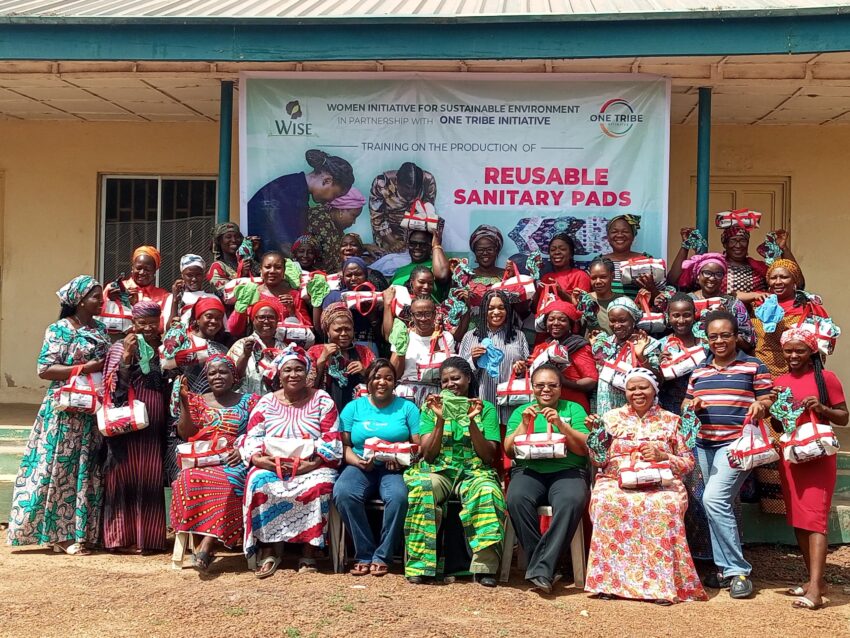
NGOs Train 40 Women In Kaduna On Reusable Sanitary Pads Production
By Umar Faruk Tukur
Two Non-governmental Organisations(NGOs), Women Initiative for Sustainable Environment (WISE) and One Tribe Initiative, have trained 40 women in Kaduna on the production of reusable sanitary pads to promote menstrual hygiene and environmental sustainability.
The training formed part of activities lined up ahead of the 2026 Menstrual Hygiene Day observed annually on May 28 to raise awareness on menstrual hygiene management.
Speaking at the end of the two-day training in Kaduna, the Founder and Executive Director of WISE, Mrs Olanike Olugboji-Daramola, said the initiative was aimed at equipping women with practical skills on reusable sanitary pads production.
Olugboji-Daramola explained that reusable sanitary pads are environmentally friendly and help reduce waste generated from disposable sanitary products.
According to her, improper disposal of disposable sanitary pads has continued to pose environmental challenges in many communities.
She added that the initiative was also designed to address stigma surrounding menstruation and encourage open discussions on menstrual health issues among women and girls.
“It is also an economic-driven initiative because beyond learning the production process, the women can generate income through the business,” the executive director said.
She disclosed that the organisations were planning advocacy programmes in schools and communities to further promote menstrual health awareness and education.
Also speaking, the Founder and Executive Director of One Tribe Initiative, Magdaline Musa, said the programme was designed to provide sustainable solutions to period poverty and improve access to affordable menstrual hygiene products.
Musa noted that women leaders from cooperatives and community groups were deliberately selected to enable them to step down the training to other women in their communities.
She said the rising cost of disposable sanitary pads has made them unaffordable for many women, especially those from low-income households.
Some of the beneficiaries commended the organisations for the initiative, describing the training as impactful and timely.
One of the participants, Mrs Ruth Solomon, said the knowledge gained would help women improve hygiene practices while also creating economic opportunities through the production and sale of reusable sanitary pads.
Another beneficiary, Juliana Turaki, described the training as enlightening, noting that it also highlighted the importance of educating men and boys on menstrual health issues.