

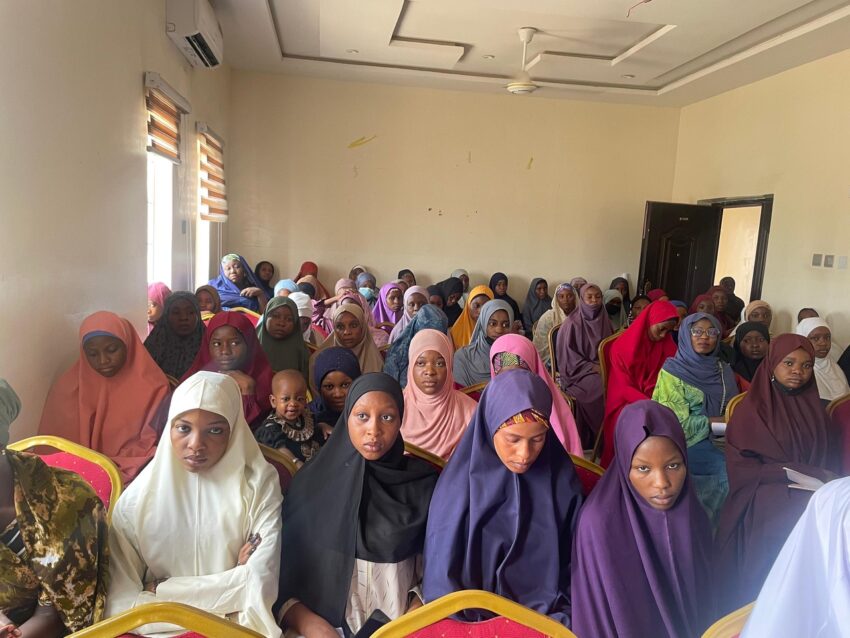
At least 15,000 women are targeted to receive training on digital literacy, safety and hygiene to address the widening digital gap between the North and the rest of the country in a rapidly changing world.
Centre for Information Technology Development CITAD said the training has become imperative in view of the fact that the northern region is lagging behind in the Information and Communication Technology sector without which no meaningful development can be achieved.
CITAD Executive Director YZ Yau represented by Isa Garba said the idea behind the training is to narrow the gap in the digital divide in a world driven by information and communication technology.
” Businesses dealing with ICT in one Lagos Street are more than the entire ICT businesses in Kano for example.While those in Lagos have reached their destination,we are about to begin our journey in ICT.This is what informed our resolve to train 15,000 women in digital literacy to address the digital divide,” he said.
Yau noted that women must be empowered with digital skills to improve the socioeconomic wellbeing of citizens with multiplier effects on all aspects of human life.
Fatima Babakura,the project manager of digital literacy training said about 5000 women and girls between the ages of 16 and 40 would be trained on digital entrepreneurship to explore business and income opportunities in the digital space.
” We also intend to prepare women against online harassment,cyber attacks for them to go back to their communities and share knowledge.
We are also training students on CBT because we realised that many failed examinations on account of lack of digital skills,” said Babakura.
Director ICT Kano State Secondary Schools Board KSSB Isyaku Garba said the board has deliberately designed programmes to equip students with ICT knowledge to enable them compete anywhere in the world.
He said Lagos has achieved over 60 % ICT infrastructure utilisation as far back as 2006 with a multitude of women equipped with ICT knowledge.
The director said women with digital skills can work remotely even from their matrimonial homes thereby reducing financial burdens on their spouses.