

By Hajara Abdullahi
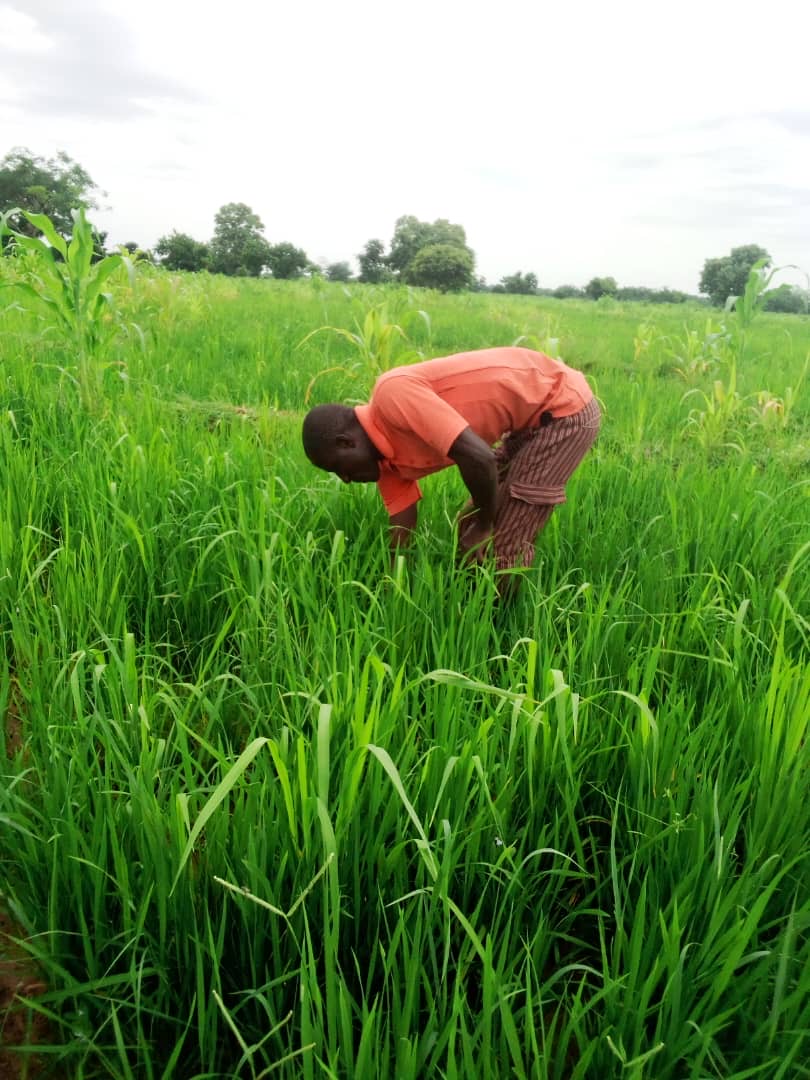
Farming, a long-standing economic activity in Northern Nigeria, is increasingly becoming less profitable for many local farmers as rising production costs, climate change, and government policies continue to threaten livelihoods and food security.
Farmers across Kano State say they are recording heavy losses despite investing heavily in farm inputs, forcing many to abandon food crop production for alternative businesses.
Ahmadu Nasiru, a 55-year-old farmer from Kiru Local Government Area of Kano State, said the current economic realities are threatening a profession he inherited from his parents nearly two decades ago.
“I spent years as a farmer because my parents were farmers, so I inherited it,” he said.
Speaking on government policies surrounding food importation, Nasiru lamented that small-scale farmers are suffering losses despite spending heavily on production.
“Government policies usually affect us small farmers. We bought fertilizer at huge prices, and now we are selling our produce at a loss,” he lamented.
On border closure and importation policies, Nasiru said government intervention through fair produce pricing could reduce farmers’ hardship.
“Opening borders is not a problem if the government can buy from us at a fair price and resell,” he stated.
According to data from the National Bureau of Statistics (NBS), headline inflation dropped to 16.05 percent in October 2025, while food inflation eased to 13.12 percent due to government interventions and improved harvests.
However, a recent report by BudgIT on its website,inflation climbed back to 15.5% in March 2026 signalling a high surge of 135.38% in the Consumer Price Index. the report added that food inflation rose from 8.89% in January to 14.31% in March 2026.
NBS data also revealed that Nigeria spent N7.65 trillion on food and beverage imports in 2025, while United Nations data indicated that the country spent about N51 billion on rice imports in 2024.
Many farmers believe these importation policies have reduced food prices but negatively affected local production, pushing several farmers into bankruptcy.
The World Bank was also quoted as saying that Nigerians living below the national poverty line rose to 56 percent in 2024 from 49 percent in 2023, representing about 20 million additional people living in poverty.
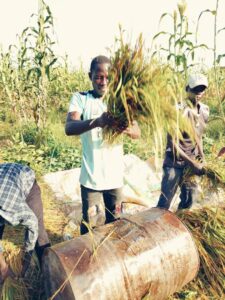
Another farmer from Kiru LGA, Mallam Ibrahim, 56, described the 2024/2025 farming season as the worst he had experienced in over 15 years.
“Over the past 15 years of being a farmer, this is the worst season we have ever witnessed,” he said.
He questioned why prices of staple food crops had dropped while prices of other commodities remained high.
“We don’t receive any incentives. Why are only food prices going down while other consumer goods remain expensive?” he asked.
Mallam Ibrahim said many farmers are now shifting from food crops such as rice, beans, and maize to cash crops requiring less fertilizer.
“We have shunned planting food crops like rice, beans, and corn,” he added.
He also decried the rising cost of farm inputs.
“A bag of fertilizer is now sold at N80,000. Pesticides, seedlings, and labour have all increased,” he lamented.
According to him, farmer unions are trying their best, but only government intervention can address the growing crisis.
“It is only the government that can intervene on our behalf,” he said.
Farmers from Sumaila Local Government Area also narrated how losses recorded during the 2024/2025 farming season forced many of them to abandon farming.
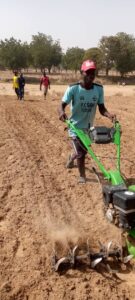
Inuwa Muhammad, a 35-year-old farmer from Gisai Rumo Ward in Sumaila LGA, said he switched to livestock rearing after recording significant losses in farming.
“Government policies have affected farmers and created setbacks to farming,” he said.
“I decided to try livestock rearing. It is difficult, but at least there is profit despite the risks involved,” he added.
He urged the federal government to support farmers facing economic hardship, noting that many farmers are family breadwinners.
Similarly, another farmer, Alhassan Ibrahim, said he abandoned farming for petty trading after suffering major losses.
“Many of us left farming because of the low prices crops are sold for. We also have families to cater for, so what is the essence of continuing when you are losing?” he questioned.
To minimize losses, Alhassan said many farmers now store cash crops such as groundnuts, bambara nuts, soybeans, and hibiscus leaves for future sales when prices improve.
“We stored the cash crops for sale ahead of the next planting season when prices may appreciate slightly,” he stated.
Professor Aminu Fagge of the Centre for Dryland Agriculture, Bayero University Kano, said the border closure policy introduced by former President Muhammadu Buhari had both positive and negative effects on the economy.
“It yielded positive results because food production increased, and many rice milling industries were established in the North. That was a welcome development,” he said.
However, he noted that the policy also caused fertilizer prices to skyrocket, leading to increased food prices.
“Rice is a cereal crop that heavily relies on fertilizer for bumper harvests,” he explained.
Professor Fagge further stated that the lifting of the rice import ban by President Bola Tinubu has not fully addressed the problem.
“The high cost of fertilizer led to lower production. If you go round Kano, you will find many rice milling industries with little or no paddy to process,” he stated.
According to him, the high cost of production after border closure contributed significantly to inflation, adding that the borders should have been partially closed instead.
The agronomy expert also linked Nigeria’s food insecurity challenges to insecurity ravaging farming communities across Northern Nigeria.
“The areas where food is produced are being affected by insecurity, including banditry, cattle rustling, Boko Haram, and Lakurawa activities. People are being kidnapped and villages destroyed,” he said.
Professor Fagge added that climate change has also worsened farming conditions through flooding and drought, destroying farmlands and reducing crop yields.
He advised farmers to adopt climate-smart agriculture, including the use of flood-resistant and drought-tolerant crops.
“Farmers should adopt climate-smart agriculture through the use of crops tolerant to flooding or drought and early-maturing crops,” he advised.
He disclosed that the Centre for Dryland Agriculture, Bayero University Kano, in collaboration with the National Cereals Research Institute, has developed flood-resistant rice seeds.
Professor Fagge also called on Nigerian leaders to strengthen irrigation farming to tackle food insecurity.
“India gained independence the same year as Nigeria and relies heavily on irrigation farming. Nigeria can do the same with the abundance of dams and water bodies available,” he stated.