

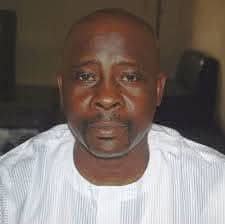
By Adamu Aminu
For Hausa speakers across Nigeria and parts of West Africa, listening to the BBC Hausa Service each morning is more than a habit. It is a ritual — a quiet appointment observed before the day’s business begins.
It was in the course of that very ritual, on a Monday morning in 1996, half-awake beside my small transistor radio, that I first encountered the voice of Bala Ibrahim.
He was reporting with remarkable eloquence on his visits to the residences of former Nigerian leaders — the late President Shehu Shagari, the late General Muhammadu Buhari, and former President Ibrahim Babangida.
I did not know it then, but that single report, delivered with such fluency and authority, planted in me a seed of interest in a career in radio broadcast journalism — a seed that would define the next thirty years of my life.
I met Mallam Bala Ibrahim in person for the first time in 1996, at his office in Kano, only days after his return from London.
I found him seated on a black sofa, dressed in his signature attire — a white top and black trousers, absorbed in a copy of the New Nigerian newspaper.
Despite the demands of his schedule, he received me warmly. I told him, without reservation, how his style of reporting had inspired me to pursue a career in broadcast journalism.
He listened, and offered me counsel I have carried ever since: that whatever I aspired to be, I should remain steadfast in prayer and in effort. He said to me, “Da karfin Allah, watarana za ka zama dan jarida.” which means “By the grace of God, one day you will become a journalist.”
I recall that on that day, Mallam Bala presented me with a pictorial calendar of BBC Hausa Service staff and a transport fare.
Unbeknownst to me, that first encounter occurred five years before I began my own journey in radio journalism at RayPower FM, Kano, the first private radio station in the city.
That singular meeting marked the beginning of a mentor-mentee relationship that has spanned three decades. In it, I found not merely a senior colleague willing to offer advice, but a teacher in the fullest sense, generous with his knowledge and exacting in his standards.
He belongs to a generation of BBC Hausa and English broadcasters who understood journalism not as a private ambition, but as a public trust.
To describe Bala Ibrahim simply as an international broadcaster would be to understate his talents. He is, in the truest sense, a newsreader and a reporter, one whose command of language elevated even the most routine bulletin into something worthy of attention.
To the devoted listeners of BBC Hausa, Mallam Bala became more than a household name. He is widely known for his signature style of dressing — white tops and black trousers — and for being dapper. He is also a car-freak, famously known for driving extraordinary cars bearing private number plates inscribed “Bala Texas” or “BL-GYA.”
He came to be regarded as the benchmark for comprehensive and authoritative reporting, particularly during his tenure as a correspondent in Lagos.
His sentences were marked by economy and precision. His judgment regarding what mattered, and what did not, reflected decades of disciplined thought.
Many of us who came within his orbit absorbed, often without realizing it, the standards he set by example alone.
Although our physical meetings were infrequent — perhaps once or twice a year due to the demands of our respective schedules, we remained in constant contact. Through countless telephone conversations, I sought his counsel, his perspective on political and current affairs, and, at times, simply the warmth of collegial exchange.
Despite his exacting commitments, Mallam Bala has remained exceptionally generous and accommodating in his dealings with people from all walks of life.
He is a man of keen intellect, discerning in judgment, and endowed with a listening ear. He offers words of comfort and conviction with sincerity.
As former Bureau Chief of the BBC in Abuja, Mallam Bala demonstrated through his diligence that nothing of value is attained without effort. He has been, for me, a mobile tutor — a model I have studied from afar in the practice of our noble profession.
When Mallam Bala retired from the BBC and assumed the roles of an Abuja-based media consultant and the current Director of Information & Publicity for the APC, I continued to benefit from his mentorship through his daily writings on his Facebook page.
He is a wordsmith of the highest order, from whom I have always sought to learn. Rarely does a day pass without my visiting his Facebook page or WhatsApp to read the pieces he so graciously shares with me, and from which I continue to refine my own craft.
What has impressed me most over these thirty years is his consistency.
Mentorship, properly understood, is not a singular act of guidance. It is a sustained commitment and checking in, correcting, encouraging, and, when necessary, delivering the hard truths that younger professionals need but are seldom eager to hear.
Bala Ibrahim offered that commitment freely, and without expectation of reciprocity.
He built no faction around himself. He simply did the work of shaping others, one conversation at a time.
Today, as I reflect on three decades shaped by that morning broadcast and by that first meeting in his office, I recognize that whatever measure of discipline, integrity, or professionalism I have brought to my work in journalism and public communication is indebted to his example.
It is a debt I cannot fully repay, but one I am determined to honour by extending to those who now look to me the same patience, rigor, and generosity he extended to me.
Thirty years ago, I came to your office seeking guidance for my aspiration to become a journalist. Today, I write this tribute to you as Special Assistant on Media to the Honourable Minister of State for Housing and Urban Development, Hon. Yusuf Abdullahi Ata.
Mallam Bala Ibrahim: Thank you for thirty years of guidance, and for demonstrating, across a lifetime in this profession, what it truly means to master the craft.
Allah Ya sa a gama lafiya, duniya da lahira.