

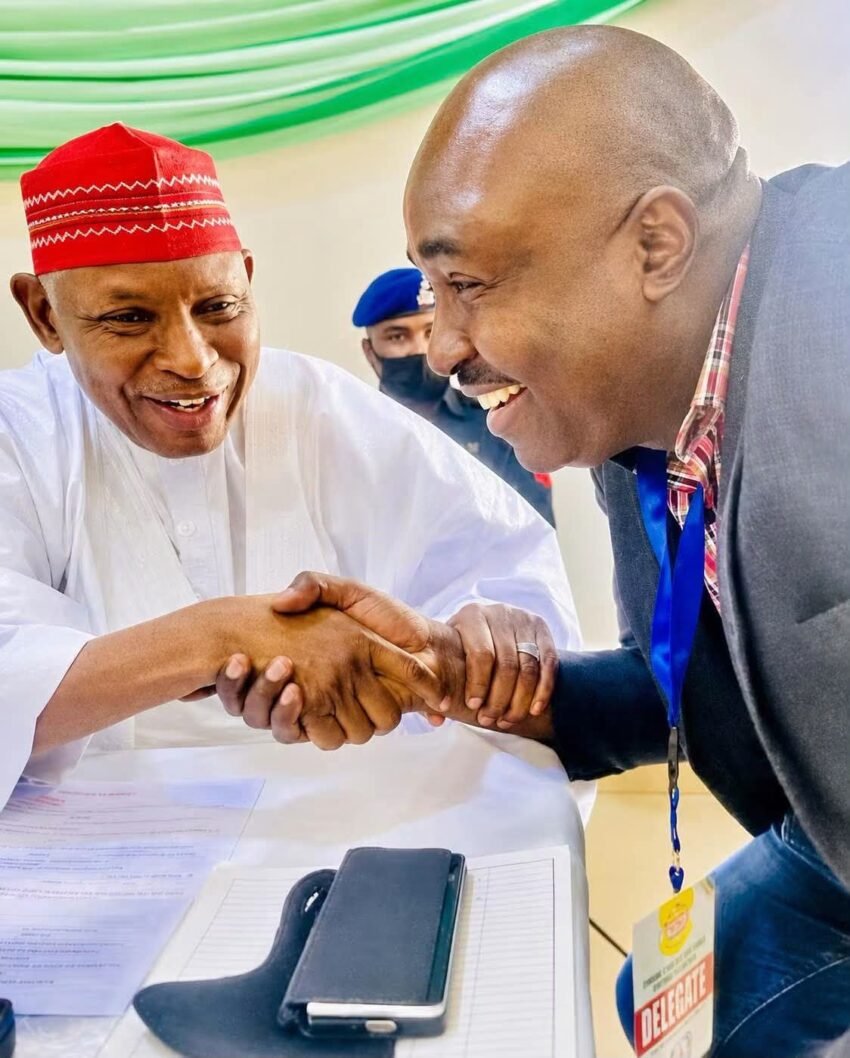
By Dr. Musa Abdullahi Sufi
There is a paradox unfolding in Kano State. On one hand, the government is announcing major interventions across education, healthcare, infrastructure, water, agriculture and social development. On the other, a significant part of that activity risks remaining invisible to the millions of people who could benefit from knowing about it, scrutinising it, supporting it or learning from it.
This is not necessarily a question of whether government is working. It is a question of whether the work is being seen, understood and properly documented. In the digital age, that distinction is increasingly consequential.
A government can build a road, renovate a school, rehabilitate a water plant, equip a health facility or introduce a new policy. But if citizens do not encounter credible information about those interventions, the impact of the work can become confined to the communities where it physically occurs. The story stops at the project site. That is a missed opportunity.
Kano is one of Nigeria’s most important political, commercial and demographic centres. What happens in Kano matters beyond Kano. Its policies can provide lessons for other states; its development interventions can attract the attention of development partners; its successes can become models; and its failures can provide equally important lessons for public policy.
For that to happen, however, Kano must communicate its story more effectively. And at the centre of that communication should be the person whose name citizens already know: the Governor. The governor’s digital voice matters
Governor Abba Kabir Yusuf does not need to become a social-media influencer. Nor should the responsibilities of government communication be reduced to posting photographs of political activities. But a governor’s personal and official digital presence has become an important instrument of modern governance.
Citizens may not know the name of the official managing a ministry’s social-media account. They may not know the government’s communications director. They may not know which agency is responsible for a particular programme. But they know the governor.
That recognition gives the governor’s digital voice a unique communication advantage. When a governor speaks directly about a policy, explains a decision, visits a project or presents evidence of an intervention, the communication has a different level of immediacy. It creates a direct relationship between leadership and citizens without requiring every message to pass through several institutional layers before reaching the public.
This is why the governor’s social-media presence should not be regarded simply as a personal platform. Properly managed, it is part of the digital infrastructure of governance.
Kano’s communication gap
The concern surrounding Governor Yusuf’s digital presence is therefore not trivial. The public posting record of his personal social-media platforms has been notably quiet compared with the pace at which modern political communication now operates. If, as publicly observed, his last personal post was on October 2, 2025, the resulting gap deserves attention.
The issue is not that the governor should personally type every update. That would be unrealistic. It is that the voice of the governor should remain present in the public conversation. Government communication has fundamentally changed that is the concern.
The traditional model was simple: government acted, a press release was issued, journalists reported it, and citizens read about it.
But today, the information ecosystem is far more fragmented. Government acts, but citizens may first encounter the story through a short video, a Facebook post, an X update, a WhatsApp message, a podcast, an infographic, a livestream or an algorithmically recommended piece of content.
The first question is no longer simply, “Did government do something?” It is also now “Can people find out what government did?”
Kano has a lot to communicate
The irony is that Kano does not lack material for a strong public narrative. The state’s own records point to significant government activity.
The 2026 budget proposed by Governor Yusuf placed education, health and infrastructure among the administration’s principal priorities, with education allocated 30 percent of the proposed budget, health 16 percent and infrastructure 25 percent.
The administration has also announced major investments in water infrastructure. In May 2026, the state government announced approval of ₦21.89 billion for the rehabilitation and upgrading of the Challawa and Tamburawa water treatment plants, with the stated objective of improving reliable water supply to Kano metropolis and surrounding communities.
In education, the government announced more than ₦4.9 billion in approvals for projects including the renovation of Government Technical College, Ungogo, instructional materials, an e-library, accreditation activities and other educational infrastructure.
In July 2025, the state government also announced more than ₦69 billion in approvals covering infrastructure, education, healthcare, energy and humanitarian interventions.
Whether one agrees with every policy decision or not, these are substantial developments. They are stories. And Kano needs to tell them as stories, not simply as government announcements.
From projects to people
The strongest government communication is not necessarily a photograph of a governor commissioning a project. It is the human story behind the project. A newly renovated school should have a student explaining what has changed.
A health intervention should have health workers and patients explaining its relevance. A water project should show the communities affected by unreliable water supply and what improvement means to them.
An agricultural intervention should allow farmers to describe what changed. Also, a road project should be documented from the perspective of the communities and businesses that depend on it. This is the difference between publicity and public communication.
Publicity says look at what we did but effective public communication says here is what we did, here is why we did it, here is the evidence, here is who benefited, here is what remains unfinished and here is how you can hold us accountable. That is a much more powerful model.
The world is already changing how leaders communicate
Kano does not need to invent this approach. Across the world, political leaders are adapting their communication strategies to the realities of digital media. Let me share some of examples below.
Rwanda offers an interesting example. The official Presidency website directs audiences to President Paul Kagame’s social-media presence and specifically highlights his daily work through the presidency’s digital channels.
The lesson is not that Kano should reproduce Rwanda’s political system or communication style. But the lesson is that leadership visibility matters in the information age.
New York offers another contemporary example. In May 2026, New York City Mayor Zohran Mamdani launched “Talk With The People,” a recurring interactive programme distributed simultaneously across Twitch, TikTok, Instagram, Facebook, YouTube, X, and podcast platforms etc.
The Mayor’s Office described the initiative as an effort to make city government more accessible, transparent and responsive by reaching residents on the platforms they already use. That is an important shift.
The question is no longer simply where government wants citizens to receive information. The question is where are citizens already receiving information Government has to meet them there. And Nigeria cannot afford to be left behind
Nigeria’s political communication environment is evolving rapidly as governors and public institutions increasingly use social media to communicate directly with citizens.
But the most effective digital leadership is not about having the largest number of followers. It is about having a clear communication strategy.
The governor’s platform should provide context, evidence and continuity. Government institutions should provide detailed information. Journalists should independently scrutinise claims. Citizens should be able to ask questions. And development partners should be able to find reliable information about programmes and results.
This is what a healthy digital governance ecosystem looks like. It is not a fan club,
not a propaganda machine. And it should never become an echo chamber.
What happens when people criticise? One of the strongest arguments against active political communication is often the fear of negative comments. But criticism is not a uniquely Nigerian phenomenon, nor is it unique to Governor Yusuf.
Every visible political leader is criticised. Presidents, Governors, institutions and even religious and traditional leaders are criticised.
The existence of negative comments is therefore not a sufficient reason for government to retreat from public communication. In fact, the opposite may be true. The noisier the information environment becomes, the more important credible communication becomes.
Not every criticism deserves a response. Some comments are simply political noise. Others are misinformation and require correction. Some are legitimate criticism and should be answered. Others may expose genuine gaps in implementation.
A sophisticated communications team must know the difference. The objective should not be to eliminate criticism. It should be to ensure that criticism does not become the only story citizens hear.
Silence creates a vacuum
When government does not tell its own story, someone else will. That person may be a journalist, a political opponent, an activist, an influencer, a supporter; and it may be someone with accurate information.
Or it may even be someone working with incomplete information or deliberate misinformation.
Government cannot control every interpretation of its activities. But it can ensure that credible primary information is available. That is why silence is rarely a sustainable communication strategy.
Kano needs a digital governance newsroom
What Kano needs is not simply more posts. It needs a more sophisticated digital governance newsroom.
Imagine a coordinated system in which government teams document activities across the state’s 44 local government areas, verify project information, capture photographs and video, collect beneficiary testimonies and convert complex policy information into accessible content.
What about a daily feature called “Today in Kano.”? A monthly Kano Progress Report showing what has been completed, what is ongoing and what remains outstanding and Imagine a quarterly Ask the Governor session?
Imagine a bilingual communication strategy reaching citizens in Hausa and English as well as an interactive project map that allows citizens to move from a digital screen to a real project on the ground?.
These are not futuristic ideas. They are the logical next stage of public communication. And Kano already has an important foundation: the state has begun developing systems designed to make project information more accessible to citizens. The challenge is to connect that institutional information with a compelling, consistent leadership narrative.
Documentation is part of governance
There is a deeper reason this matters. Because governments come and go but projects remain. Also policies evolve and people change.
However, if the work of an administration is not properly documented, an important part of the state’s institutional memory disappears with time.
A successful health programme that is never documented may never be replicated.
Just like an effective education reform may remain unknown outside the communities where it was implemented.
A successful infrastructure intervention may never become a case study for another state. Documentation transforms activity into institutional memory.
Storytelling transforms institutional memory into public understanding. Digital communication transforms public understanding into wider influence. That is how a local development experience can become a national lesson. And that is how a Nigerian state can contribute to international development conversations.
The Governor’s voice should be heard
This is ultimately a call for Governor Abba Kabir Yusuf to reclaim the digital microphone. Not to dominate the conversation or suppress criticism or turn social media into political campaigning. And certainly not to present every government activity as a triumph.
Rather, the Governor should use his digital presence to explain, document, engage and account. His team can produce the machinery of communication. But his voice is irreplaceable.
Citizens should occasionally hear directly from him about the decisions that affect their lives. They should see him at projects, not merely during ceremonial events, but during inspections and moments of accountability.
They should hear him acknowledge challenges and see evidence of progress. They should understand what has been completed and what has not.
And when the government gets something wrong, citizens should see a leadership willing to explain what happened and what will be done differently.
That is how digital communication becomes an instrument of trust. Kano is bigger than its political arguments. And it is too important to be defined exclusively by political disputes.
Kano is a commercial centre, a cultural powerhouse, a major population centre and one of the most consequential states in northern Nigeria. Its development experience deserves a wider audience.
The question, therefore, should not be whether people agree with every action of the Yusuf administration; but they should be able to see the actions, examine the evidence, debate the policies and judge the results. That is the essence of democratic communication. And it is precisely why the Governor’s digital presence matters.
One viral post is not a strategy
The answer is not one spectacular video. It is not one carefully produced campaign. It is not one viral photograph. It is consistency with one story, one project, one citizen, one policy, one explanation, one conversation and repeated over time.
That is how public narratives are built and how institutional credibility develops. Also, And that is how governance becomes visible beyond the walls of government offices. Kano is working. The question is whether enough people can see it.
Governor Abba Kabir Yusuf has an opportunity to turn his digital platforms into one of the most effective windows into government in Northern Nigeria, one that informs citizens, welcomes scrutiny, connects Kano to the wider Nigerian conversation and allows development partners, researchers and the international community to discover what is happening in the state.
The task is not to manufacture a perfect narrative. It is to make the real narrative visible. Because good governance should not have to depend on citizens accidentally stumbling across a press releases.
Great and impactful program in Kano State should be more accessible, documented, explainable, discoverable and, above all, it should be seen.
Kano has many impactful stories worth telling and Kano needs to continue telling them, and let the world see.
Dr. Musa Abdullahi Sufi
Development Specialist | Strategic Communicator | Development Journalist | Public Health Advocate