

By Abdulhameed Musa Abdullahi
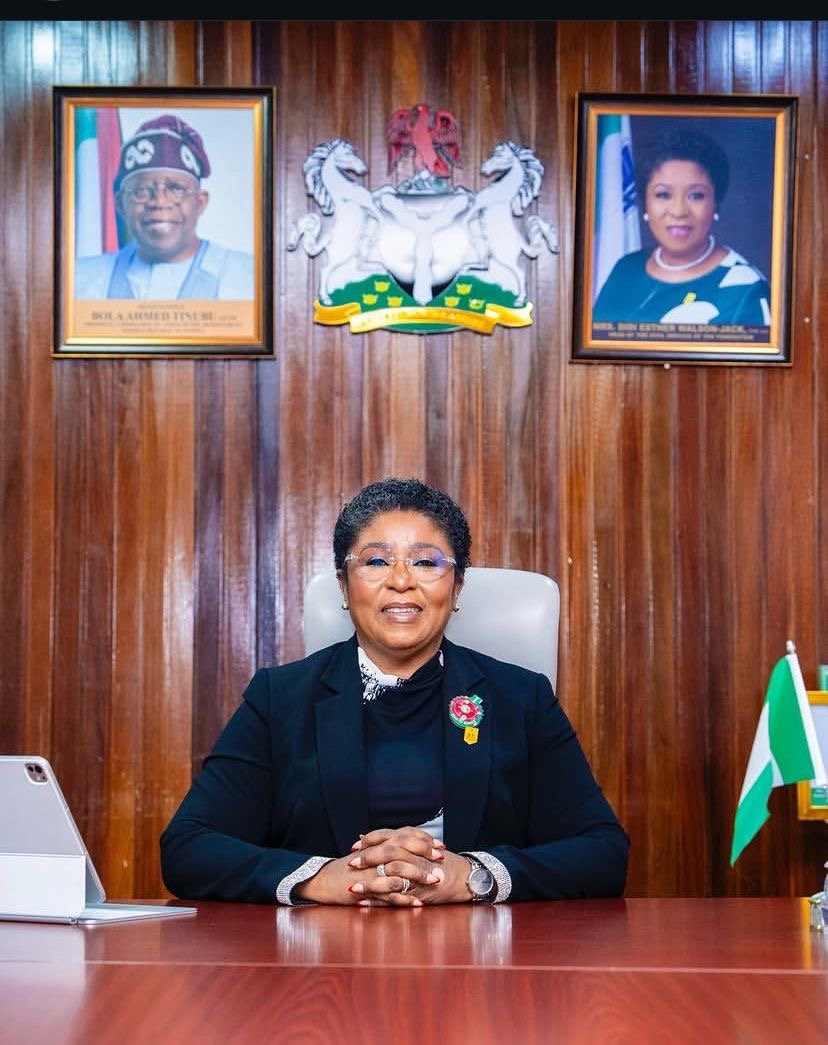
On 14 August 2026, Mrs. Didi Esther Walson-Jack, OON, mni, marks exactly two years since she assumed office as the Head of the Civil Service of the Federation.
Two years in the life of a nation may seem short. In the life of an institution as vast, complex and consequential as the Nigerian Civil Service, however, two years can be long enough to establish a direction, initiate reforms and create the foundations upon which future administrations can build.
For President Bola Ahmed Tinubu’s administration, the appointment of Mrs. Walson-Jack was more than the filling of a senior bureaucratic position. It placed a career public servant at the centre of one of the most important implementation mechanisms of the Renewed Hope Agenda: the Federal Civil Service.
Policies are conceived by government, but they are ultimately translated into programmes, regulations, services and outcomes through institutions and the people who operate them.
This is why the effectiveness of the Civil Service matters.
And this is also why, two years after she assumes office, the record of Mrs. Walson-Jack deserves to be examined beyond the ceremonial language that usually accompanies anniversaries.
An appointment at the heart of implementation
The Renewed Hope Agenda requires an administrative system capable of converting political vision into measurable public value.
That responsibility rests heavily on Nigeria’s public institutions.
The Head of the Civil Service of the Federation therefore occupies a unique position in the architecture of governance. The office is not merely administrative. It has implications for institutional capacity, human-resource management, performance, innovation, digital transformation and the professional development of the people who keep government functioning.
President Tinubu’s decision to appoint Mrs. Walson-Jack therefore came at an important moment.
Two years later, the significance of that appointment can increasingly be seen through the reform direction of the Federal Civil Service.
From FCSSIP25 to the next generation of reform
One of the defining features of the Walson-Jack era has been the determination to treat reform as a continuing institutional process rather than a one-off initiative.
In June 2026, the Office of the Head of the Civil Service of the Federation concluded the End-Term Review of the Federal Civil Service Strategy and Implementation Plan 2021–2025 (FCSSIP25).
The review examined the six major reform pillars of FCSSIP25, including capability building and talent management, performance management, human-resource systems, innovation, digitalisation and staff welfare.
The exercise was not simply about celebrating what had been achieved. It was also about identifying what had not worked sufficiently and determining what should change.
That is the essence of institutional reform.
The lessons from the review are now feeding into FCSSIP 2026–2030, the next phase of the Federal Civil Service reform agenda. At the July 2026 stakeholders’ workshop, Mrs. Walson-Jack emphasised that the new strategy must move beyond aspirations towards measurable implementation, institutional accountability and tangible outcomes for Nigerians.
That transition may ultimately become one of the most important legacies of her tenure: ensuring that reform does not end with the expiration of a strategy but evolves into the next generation of institutional improvement.
Building a Civil Service for the digital age
The Nigerian Civil Service cannot remain trapped in the administrative culture of the past while the rest of society moves rapidly towards digital government.
Under Mrs. Walson-Jack’s leadership, digitalisation has therefore occupied an important place in the reform conversation.
The wider transformation agenda has focused on strengthening digital systems, improving human-resource management, encouraging innovation and reducing the inefficiencies associated with traditional bureaucratic processes.
The objective is not technology for its own sake.
A digitally enabled Civil Service should mean faster processes, better records, stronger institutional memory, improved accountability and ultimately better service to citizens.
That is the kind of transformation required if the machinery of government is to keep pace with the expectations of a modern Nigeria.
Reforming the people who run government
No institution can be stronger than the people operating it.
This is why the emphasis on capability building, talent management and leadership development is particularly significant.
The Federal Civil Service requires officers who understand not only government procedures but also modern management, technology, innovation, performance and citizen-centred service.
The collaboration between the OHCSF and the Federal Civil Service Commission has also demonstrated the importance of institutional synergy. At their 2025 joint retreat, the leadership of both institutions emphasised collaboration, performance management, merit, competency and a shared responsibility for transforming the public service.
This is an important development.
Reform becomes difficult when institutions compete rather than collaborate. It becomes sustainable when institutions share a common purpose.
Welfare and dignity of the public servant
Public-service reform must also recognise the human being behind the desk.
A civil servant who spends years serving the nation deserves dignity, security and a sense that government values the service rendered.
The emphasis on staff welfare during this period therefore deserves recognition as part of the broader reform agenda.
From welfare initiatives to retirement-related measures, the conversation has increasingly recognised that public servants are not merely instruments for delivering government policy. They are themselves citizens whose wellbeing affects institutional performance.
This is important because a motivated workforce is an institutional asset.
A more performance-driven public service
One of the greatest challenges facing Nigeria has historically been the gap between policy formulation and implementation.
A policy can be excellent on paper and still fail if institutions lack the capacity, incentives and accountability mechanisms necessary to execute it.
This makes performance management central to the reform agenda.
The emerging direction under Mrs. Walson-Jack has increasingly emphasised measurable outcomes, accountability and institutional ownership.
Her message at the FCSSIP30 stakeholders’ workshop was particularly revealing: the next phase of reform must be results-driven and must produce tangible value for Nigerians.
That is precisely the language required for a Civil Service supporting an administration whose central political promise is transformation and delivery.
Taking Nigeria’s Civil Service beyond Nigeria
Another dimension of the tenure has been the effort to place Nigeria’s public administration within a broader international conversation.
The International Civil Service Conference initiative has provided an avenue for Nigerian public servants and international partners to exchange ideas, examine global practices and discuss the future of public administration.
This matters because the modern Civil Service is no longer defined solely by traditional bureaucracy.
It must understand artificial intelligence, digital government, innovation, climate pressures, changing labour markets, cybersecurity, citizen expectations and new models of public-sector delivery.
Nigeria cannot build a world-class Civil Service by looking inward alone.
The significance of the appointment
Looking back at the last two years, it is reasonable to argue that President Tinubu’s appointment of Mrs. Walson-Jack has become one of the consequential appointments within the institutional machinery of the Renewed Hope administration.
Not because an individual appointment can transform government by itself.
Rather, because the position she occupies sits at the intersection of people, policy implementation, institutional capacity and public-service reform.
The success of the Renewed Hope Agenda ultimately depends not only on what government announces, but on whether institutions possess the capacity to deliver.
And that is where the Civil Service becomes indispensable.
Two years completed. The work continues.
Yet, perhaps the most important point about this anniversary is that it should not be treated simply as a celebration.
Two years should be a moment of reflection.
What has changed?
What has worked?
Where are the gaps?
What must be institutionalised?
And how can reforms survive beyond individual personalities and individual tenures?
These questions will determine whether the reforms of this period become enduring institutional achievements.
The development of FCSSIP 2026–2030 provides an important opportunity to consolidate the gains of the past five years, address identified weaknesses and establish a stronger foundation for the future.
The objective should be a Civil Service that is professional without being rigid, innovative without abandoning institutional discipline, digitally enabled without losing the human element, and accountable while remaining responsive to citizens.
That is the real measure of reform.
A legacy beyond an office
Two years ago, President Bola Ahmed Tinubu entrusted Mrs. Didi Esther Walson-Jack with one of the most consequential responsibilities in Nigeria’s public administration.
Two years later, the story is still being written.
There have been reforms, institutional partnerships, digital initiatives, welfare interventions, leadership development and the preparation of a new reform strategy.
There is still much more to do.
But perhaps that is precisely what makes her own words on this milestone so appropriate:
“Two years completed. The work continues.”
For a Civil Service that carries the daily machinery of government, the work must indeed continue.
May Almighty God continue to grant Mrs. Didi Esther Walson-Jack wisdom, strength and good health as she contributes to the continuous transformation of Nigeria’s public service.
And may the reforms underway ultimately produce what matters most:
a Nigerian Civil Service that works better, delivers better and serves Nigerians better.
Service. Reform. Excellence. For a better Nigeria.