
By Mustapha Salisu
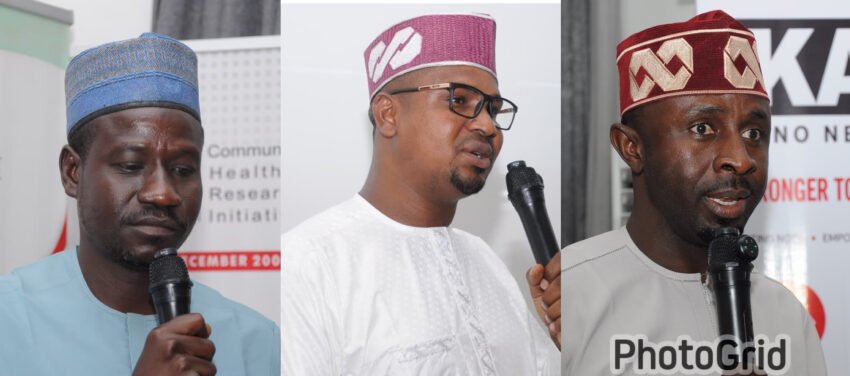
The Managing Director of the Kano State Refuse Management and Sanitation Board (REMASAB), Dr. Muhammad S. Khalil, has advocated a circular economy approach to waste management, stressing the need to transform waste from an environmental liability into an economic resource.
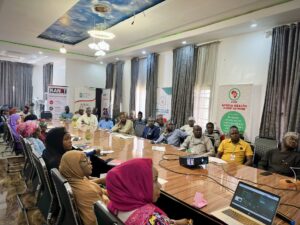
Khalil made the call on Tuesday while speaking at a sensitisation lecture on “Circular Economy as a Sustainable Waste Management Model for Kano State,” organised for members of the Kano Network of NGOs (KANET).
He said the circular economy model would move Kano away from the traditional “take-make-use-dump” system towards waste reduction, reuse, recycling and resource recovery, with both recyclable and organic waste treated as valuable resources.
According to him, rapid urbanisation, changing consumption patterns and increasing waste generation have created challenges including indiscriminate dumping, pollution, blocked drainage channels and open burning of waste across the state.
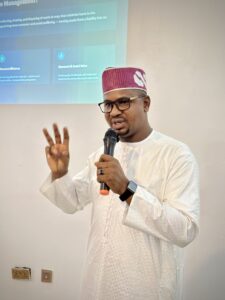
The REMASAB Managing Director said the agency was already implementing circular systems for plastics and organic waste, including collection, sorting, processing, recycling and composting, while its revived compost plant converts biodegradable waste into organic fertiliser for agricultural use.
He said REMASAB was also strengthening recycling SMEs, formalising waste pickers and promoting waste banks in schools and community sensitisation programmes as part of efforts to build an inclusive waste management system.
Khalil further disclosed that the agency was working towards the development of a Kano Circular Economy Hub that would bring together collection, sorting, processing, recycling, composting, manufacturing and marketing in one coordinated system.
The Managing Director of the Kano State Rural Electrification Board, Engr. Sani Bala Dambatta, said waste could also be harnessed to generate electricity and contribute to the state’s energy security.
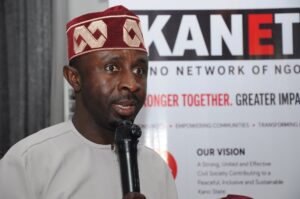
He said Kano had the resources needed to achieve this, stressing that the major requirement was proper management and conversion of waste for productive purposes. “We can use this waste to generate electricity. Maybe it might sound odd to you, but if time permits, we will create time to come and explain better on how to use waste to generate electricity,” he said.
Dambatta noted that several investors were already approaching Kano State with interest in waste management, particularly in converting waste to energy, adding that the forthcoming Kano State Investment (KANINVEST) programme would further promote the waste-to-wealth initiative. Adding that, some private investors had already expressed particular interest in using waste to generate electricity for Kano State.
Earlier in his remarks, the Chairman of KANET, Barrister Nura Ahmad Muhammad, called for a shift from conventional waste collection and disposal to a system that treats waste as a resource capable of generating economic and environmental opportunities.
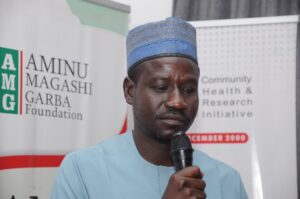
Nura said waste management should no longer be viewed simply as the collection and disposal of refuse, but should focus on reducing, reusing, recycling and recovering waste for productive purposes.
“A clean Kano cannot be achieved by government alone. It requires collective responsibility and collective action,” he said.
The KANET chairman said sustainable waste management required practical partnerships between government, citizens, communities, civil society organisations and other stakeholders, adding that the engagement provided an opportunity to understand ongoing efforts and identify practical ways of supporting sustainable sanitation.
He said the lecture also demonstrated KANET’s commitment to constructive advocacy, citizen engagement and meaningful dialogue with government, noting that the platform followed the network’s recent advocacy engagement with REMASAB.
Nura commended the REMASAB Managing Director for accepting KANET’s invitation and engaging directly with civil society representatives, while also appreciating the network’s partners, particularly AMG and AHBN, for supporting its monthly lecture series and other engagements.
He urged participants to move beyond identifying challenges and focus on practical solutions, saying, “Let us move beyond identifying problems but focus on practical solutions that can contribute to a cleaner, healthier, and more sustainable Kano State.”