

By Mustapha Salisu
Researchers from Maryam Abacha American University of Nigeria (MAAUN), Lincoln University College, Malaysia and Sree Buddha College of Engineering, India have proposed a new experimental approach to reducing heat in concrete roofs using pulsating heat pipes.
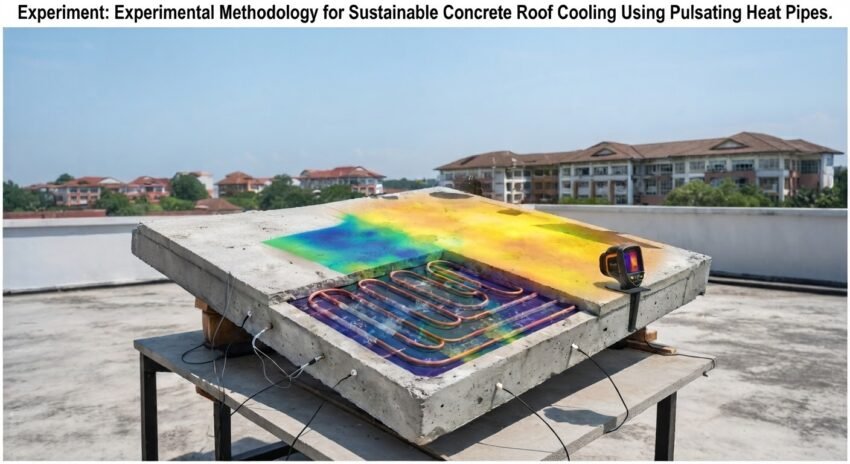
The study, titled “Knowledge Gaps and Experimental Methodology for Sustainable Concrete Roof Cooling Using Pulsating Heat Pipes,” and shared to PRIME TIME NEWS by the President of MAAUN, Prof (Dr) Mohammad Israr, examines the use of double-layer pulsating heat pipes (PHPs) integrated into concrete slabs as a possible alternative to conventional roof-cooling methods.
The researchers noted that concrete roofs absorb and store significant amounts of heat during hot weather, which can later radiate into buildings and cause thermal discomfort for occupants.
According to the study, the resulting discomfort often increases reliance on air conditioners, fans and coolers, contributing to higher electricity consumption and placing additional pressure on power generation systems.
The researchers also linked increased electricity demand to environmental concerns, particularly because fossil fuels continue to contribute significantly to electricity generation in many parts of the world.
They observed that conventional approaches to reducing concrete roof temperatures include green roofs, cool roofs, roof ponds and phase-change materials.
However, the study said these methods can face challenges including performance degradation, high maintenance costs, additional roof weight and water leakage, despite their ability to reduce roof temperatures.
To address some of these limitations, the researchers proposed incorporating double-layer pulsating heat pipes into concrete roofs to transfer heat away from the roof structure.
The proposed research methodology involves fabricating pulsating heat pipes, preparing concrete slabs and conducting heat-transfer experiments after integrating the PHPs into the slabs.
The experimental setup is designed to examine the effectiveness of the technology and determine the extent to which it can reduce roof temperatures.
The researchers said the study will also assess the differences between single-layer and double-layer PHP configurations, as well as the influence of different working fluids and tilt angles on roof temperature.
The expected findings are intended to provide data on the potential of pulsating heat pipes as a sustainable approach to concrete roof cooling.
The study further highlighted that prolonged heating and thermal stresses could contribute to the degradation of concrete roofs, making the development of effective cooling techniques important for both occupant comfort and building durability.