

By Mustapha Salisu
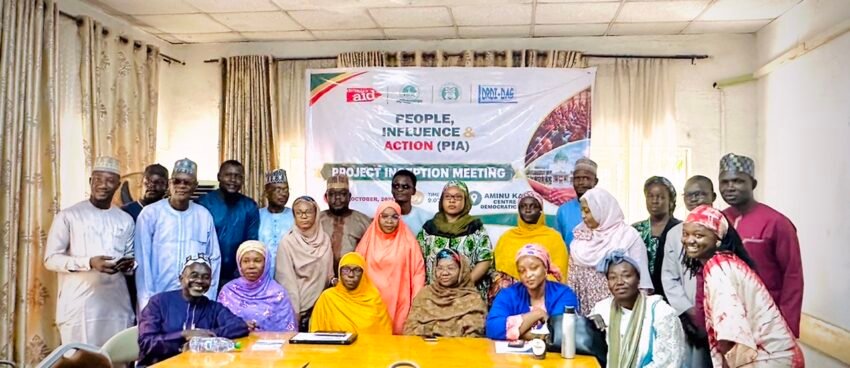
The Tax Justice and Governance Platform has launched the inception meeting of the People’s Influence and Action (PIA) Project in Kano, aimed at strengthening civic participation and ensuring citizens’ interests are reflected in government policies.
The four-year project, implemented under the Civil Society Legislative Advocacy Centre (CISLAC) with support from Christian Aid, was launched on Tuesday at Mambayya House, Kano.
Coordinator of the Tax Justice and Governance Platform, Simeon Olatunde, said the initiative was designed to strengthen and protect civic space while empowering citizens to engage government on policies and programmes affecting their lives.
Olatunde said the shrinking civic space, reduced access to funding and limited transparency in some government structures had made it necessary to promote reforms that would give citizens greater influence in governance.
He said the project would particularly focus on women, youths, persons with disabilities and other vulnerable groups who, according to him, often face barriers in accessing public services and benefiting from government policies.
Olatunde explained that the initiative would empower citizens with knowledge and skills to engage government institutions, contribute to discussions on budgets and policies, and advocate for improved services in areas including health, education, social protection and infrastructure.
He noted that persons with disabilities could face additional barriers to accessing public services, citing the absence of sign language interpreters in some institutions as an example.
According to him, the project will bring together different civil society platforms working on issues including women, disability rights, health and education to avoid operating in silos and strengthen collective advocacy at community level.
Olatunde said the project was expected to create a stronger civic space where citizens could engage government without fear, while encouraging authorities to listen to and address legitimate concerns within available resources.
A participant, Ruqqayya Ibrahim Musa, described the initiative as timely, particularly as the country approaches another election cycle.
Musa said the project would provide participants with a platform to voice concerns, organise around issues affecting their communities and develop mechanisms capable of influencing positive change.
She said she was pleased to participate in the programme and contribute to efforts aimed at addressing challenges confronting communities.