

By Adamu S. Ladan
Four years have passed in what seems like the blink of an eye. Once again, the political season is upon us, and the familiar rhythm of campaign organisation, political mobilisation and party consolidation is gathering momentum across Katsina State.
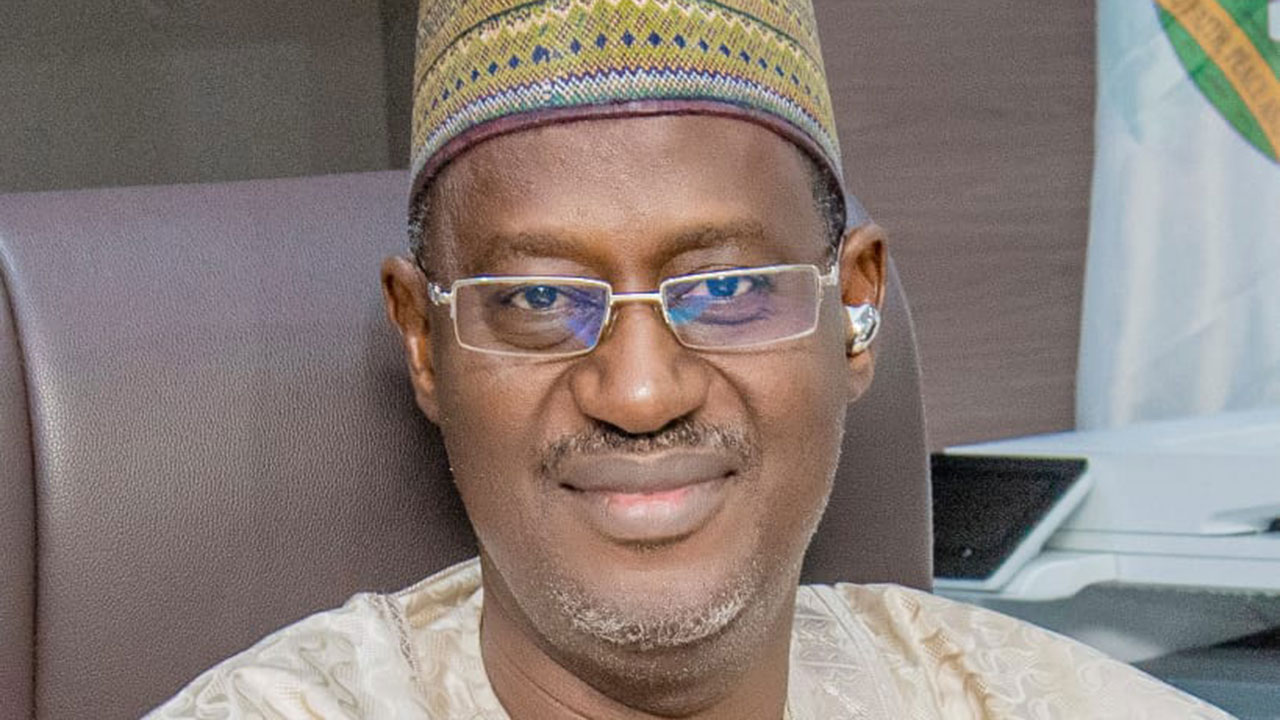
With the 2027 general elections approaching, the Katsina State Government has constituted the campaign council for the re-election of Governor Malam Dikko Umaru Radda, PhD, and President Asiwaju Bola Ahmed Tinubu under the All Progressives Congress (APC). In a significant move, Arc Ahmed Musa Dangiwa has once again been entrusted with the responsibility of Director-General of the campaign council, with Governor Radda serving as Chairman.
The appointment is significant not merely because it brings back a familiar face, but because it offers an opportunity to harness tested experience, institutional knowledge and lessons from the 2023 general elections.
In politics, experience is an invaluable asset, particularly when the task involves coordinating party structures, managing competing interests, mobilising supporters and translating political goodwill into electoral success.
Dangiwa’s previous experience as Director-General of the 2023 campaign organisation provides a valuable foundation for the assignment ahead. Having participated in the demanding business of coordinating the party’s campaign during the last electoral cycle, he is familiar with the political terrain, the workings of party structures and the challenges that arise when competing aspirations and expectations converge within a large political organisation.
The value of this experience was underscored by Dr Mustapha Inuwa, former Secretary to the Katsina State Government and co-chair of the campaign council, during a pre-inauguration meeting with the leadership of the campaign directorates at Government House, Katsina.
Dangiwa’s return therefore presents an opportunity to combine continuity with fresh thinking, building on previous experience while adapting to the demands of a new electoral cycle.
The task before him is clear: consolidate the gains of 2023, learn from the challenges encountered and ensure that the 2027 campaign benefits from stronger coordination, broader engagement and more effective execution.
His responsibility extends far beyond organising meetings, producing campaign materials and coordinating rallies. As Director-General, he will be expected to help establish a coherent operational structure linking the campaign’s leadership with party members and supporters across the state, local government areas, wards and polling units.
Ultimately, a campaign’s effectiveness depends on how successfully its overall strategy translates into grassroots action. This requires clear lines of responsibility, regular engagement with party stakeholders, timely communication and a sound understanding of local political dynamics.
Dangiwa’s familiarity with the previous campaign gives him a valuable head start. He has an opportunity to identify what worked, address weaknesses and ensure that the 2027 campaign is better organised, more inclusive and responsive to the realities of each constituency.
Equally important is the need to strengthen relationships among party leaders, elected officials, former officeholders, candidates, youth groups, women and grassroots mobilisers. Electoral success is rarely the product of one individual or a small circle of political actors. It requires collective commitment, shared responsibility and a campaign structure in which stakeholders feel recognised and involved.
This is where Dangiwa’s organisational experience and professional background in public service could prove particularly valuable.
His career has exposed him to the demands of institutional management, strategic coordination, stakeholder engagement and leadership within complex organisations. These experiences provide useful foundations for managing the competing interests and operational pressures that accompany a major political campaign.
Nevertheless, experience alone does not guarantee success. Its real value lies in how effectively it is applied. Dangiwa’s leadership will ultimately foster teamwork, sustain constructive engagement, resolve organisational challenges and translate the campaign council’s decisions into measurable results.
With Governor Radda serving as Chairman, the leadership structure also provides an opportunity to align political direction with operational execution. The Governor’s leadership and Dangiwa’s coordinating responsibilities can complement each other, ensuring that the council’s strategic objectives are supported by effective implementation across its various committees and campaign structures.
As the campaign council prepares for its inauguration on Saturday, October 17, 2026, Dangiwa has already begun laying the groundwork. He has held a pre-inauguration meeting with the leadership of the campaign directorates to review their respective assignments and has toured the new party and campaign offices ahead of the formal take-off.
These early engagements suggest an emphasis on preparation and coordination before the campaign gathers full momentum. They also provide an opportunity to establish clear responsibilities, strengthen collaboration among the directorates and set expectations for the work ahead.
Dangiwa understands that a successful campaign is not measured merely by the size of its rallies or the forcefulness of its political declarations. It also depends on the strength of its organisation, the credibility of its message, the commitment of its supporters and its capacity to maintain meaningful engagement with voters.
The 2027 electoral cycle will bring its own demands, interests and challenges. The political environment cannot simply be assumed to mirror that of 2023. Consequently, the task before the campaign leadership is not merely to reproduce the previous campaign, but to build on its experience while responding intelligently to changing circumstances.
For Dangiwa, this is both a responsibility and an opportunity: to demonstrate that experience, when combined with inclusiveness, discipline, strategic thinking and effective execution, can provide a formidable foundation for the campaign ahead.
The trenches beckon once again. The experience is there, the responsibility is greater, and expectations are high.
As the APC prepares for another electoral contest in Katsina State, Dangiwa’s return places a familiar hand at the centre of campaign coordination. The challenge now is to turn that experience into a stronger organisation, a more united campaign and an effective mobilisation effort.