

By Hassan Kasim, Shuaibu Haruna, Aishatu Suleiman, Muhammad Salim Abdulfattah, Bello Hassan, Sadiq Alhassan National Museum Gombe
Most visitors arrive at the museum with expectations about what will actually occur. Museum audiences agree on a few characteristics:
(1) the best museum is the one that presents a variety of interesting material that appeals to different age groups, educational levels, personal interests and technical levels
(2) whether visiting as a group or alone, visitors expect to be mentally engaged in some way by what they see, in other words, they expect to be able to personally connect in some way with the objects, ideas and experiences presented and often expect to do more than just look at things, perhaps even become physically engaged; and
(3) people visiting in groups, either families with children, all-adult groups or school children expect an opportunity for a shared experience, as the members of the group with their varying interests and backgrounds exchange and communicate their knowledge and excitement for what they see and experience.
In addition, there are also some built-in assumptions. Paramount is the knowledge that this is the real stuff or about the real stuff; consequently, visitors believe that there is an inherent sense of integrity to the objects, ideas and experiences presented within the museum.
Asking what makes a museum visit engaging, some visitors refer to “hands-on” or “touching” experiences, others indicate a desire for a human presence in the galleries to respond to specific visitor questions and to provide explanations, and many refer to the role that media can play in fostering interactivity, particularly CD-ROMs and computer interactive
The visitor is given choices, makes choices, becomes involved and ultimately is an active participant in the experience.
This is true whether the visitor is curious and asks a question of a facilitator on the gallery floor, experiences something new by encountering or touching an object for the first time or in a different way.
Some visitors are very knowledgeable about specific aspects of the museum collection; others are relatively uninformed.
Some visitors, even if lacking in subject matter knowledge, are curious about the objects and ideas represented by the museum; some are not.
Some visitors are experienced museum-goers; some are not.
Museums impacts on the community are numerous, few among them include:
Promotion of deep appreciation for the diverse cultures through exhibitions, cultural events and educational programs
Engage in all activities which are necessary, useful, expedient, or appropriate to further public education.
They schedule exhibitions and activities involving all the diverse cultures in the community.
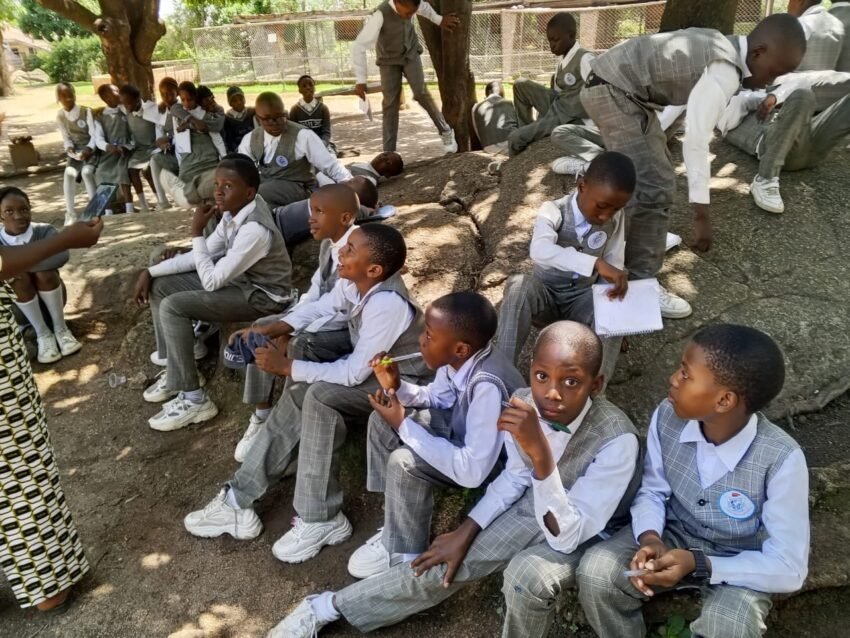
They are teaching centres that conduct special tours and experiences for schools and public.
They are conceived as community centres where activities and exhibitions can be meaningful, educational, and available to the public.
They stimulate the visitor and challenge his/her awareness of his/her environmental world.
They have the educational aim which is to enrich, strengthen, and sensitize the community through cultivation of unique educational programmes.And their purpose as educational institutions is that, they preserve the past, record the present and provide perspective for the future through collection and care of objects for research, publication, programmes and exhibition.
On one hand, the community provide the audience and are also key stakeholders in the museum affairs
Although much of what the museum visitor encounters is subject-specific information related to science, history or art, as reviewed by Falk and Dierking (1992), much is not.
Visitors also have other less subject matter-oriented expectations of the rich social, physical and personal contexts museums afford.
Studies have documented that beyond “content,” museums afford opportunities for social interactions, for escaping from the normal hum-drum of the work-a-day world and for the experience of interesting and unusual built or natural environments.As educational institutions in their communities, the Nigerian museums need to expand their roles in the light of changes that are taking place.
There is the need to ask how museums can adapt to those changes and to ask further, how the museums can be, in their environments, the instrument for desirable social change that they have always bee