
FARIDA ISIAK: WHO WILL PROTECT THE YOUNG JOURNALIST?
By Shu’aibu Usman-Leman
Last Wednesday, October 21,2026, I wrote about Dele Giwa, the legendary Nigerian journalist murdered by a parcel bomb in October 1986. I had hoped that, nearly four decades later, Nigeria had moved beyond the era when journalists were threatened for daring to speak truth to power. Sadly, the reported ordeal of a young journalist in Kaduna suggests that the struggle for freedom of expression remains far from over.
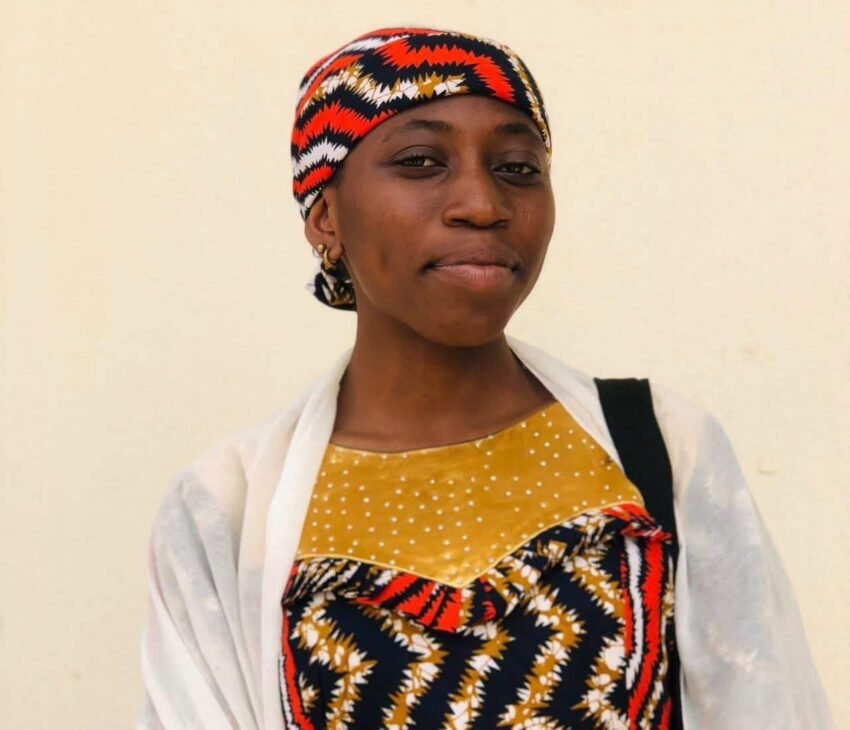
On Tuesday, October 20, 2026, the reported ordeal of 23-year-old Farida Isiak, a reporter with Nagarta Radio in Kaduna, brought this concern into sharp focus.
According to reports, the matter began with a dispute involving ₦100 change from a charcoal sale between her mother and a neighbour. Her mother was reportedly arrested, and when her father went to secure her bail, he too was detained. Their reported detention allegedly compelled Farida to present herself at the police station.
She was subsequently accused of defaming the police in a Facebook post criticising the reported treatment of her parents. Although she reportedly deleted the post and apologised, she remained in detention. She was later taken before a court in Kawo and reportedly sentenced to four years’ imprisonment or a fine of ₦1.75 million for defamation.
The development raised troubling questions about the circumstances surrounding her arrest, the handling of the complaint and the fairness of the judicial process.
Fortunately, the intervention of some lawyers following the summary trial prevented Farida from being taken to a correctional centre to begin serving the reported sentence. She was subsequently granted bail, and the case is scheduled for retrial on November 3.
Her release on bail is a welcome development. However, it does not bring the matter to a close. The forthcoming retrial presents an opportunity for the issues surrounding the initial proceedings to receive proper judicial scrutiny, including the court’s jurisdiction, the fairness of the process and the legal basis for the reported sentence.
The intervention of the lawyers deserves recognition. Yet, we must ask ourselves why a young journalist should have to depend on such intervention to avoid being taken to a correctional centre following a summary trial.
Access to justice should never depend on the availability of a last-minute intervention.
If the reports surrounding Farida’s ordeal are accurate, they raise serious questions about the protection of fundamental rights and the proper exercise of public authority.
Section 39 of the Constitution of the Federal Republic of Nigeria 1999, as amended, guarantees freedom of expression, including the freedom to hold opinions and receive and impart ideas and information without interference, subject to the Constitution.
Section 35 protects personal liberty, while Section 36 guarantees the right to a fair hearing. These protections are fundamental to the administration of justice and the relationship between citizens and public institutions.
The Nigeria Police Act 2020 also contains provisions restricting the arrest of one person in place of another. The precise statutory provision should be considered alongside the facts established in Farida’s case.
These constitutional and legal safeguards are not privileges reserved for journalists, influential individuals or those who can afford expensive legal representation. They exist to protect every Nigerian.
The concerns reportedly raised by Amnesty International about Farida’s case also deserve serious attention.
The late American broadcaster Larry King once observed: “The First Amendment is not for the press; it is for the people.”
That statement captures an important democratic principle. Freedom of expression is not the exclusive privilege of journalists. It belongs to every citizen, the market trader who complains about misconduct, the student who questions wrongdoing, the worker who challenges an injustice and the mother who demands justice for her child.
Journalists do not own this freedom. They help defend it and amplify the voices of those who might otherwise go unheard.
If a young journalist can reportedly face imprisonment after criticising the treatment of her parents, what protection does an ordinary citizen have when confronted with similar circumstances?
This is the question that makes Farida’s case a matter of wider public interest.
Journalists are not above the law. Freedom of expression does not confer immunity from lawful consequences, and allegations of defamation must be addressed through appropriate legal procedures.
However, there is a fundamental distinction between holding someone accountable under the law and using the machinery of law enforcement in a manner that could intimidate citizens or discourage legitimate criticism.
Public institutions must be open to scrutiny. Police officers, like other public officials, exercise authority on behalf of the people and must be prepared to answer legitimate questions about their conduct.
Criticism of public institutions should not automatically be treated as an attack that warrants punitive action. Equally, any allegation of wrongdoing must be investigated fairly, with due regard for the rights of everyone involved.
The authorities must therefore ensure that the circumstances surrounding Farida’s arrest and the reported detention of her parents receive an impartial examination.
I appeal to the Kaduna State Commissioner of Police to ensure that any outstanding questions about the police’s conduct in this matter are investigated fairly and transparently.
I also urge the Chief Judge of Kaduna State to ensure that the judicial process receives appropriate scrutiny within the law, particularly regarding the court’s jurisdiction, the fairness of the initial proceedings and the legal basis for the reported sentence.
The retrial scheduled for November 3 must be approached with the seriousness it deserves. Farida must have a fair opportunity to present her defence, and the proceedings must be conducted impartially, without intimidation or prejudice.
The Nigeria Union of Journalists (NUJ), both at the national level and in Kaduna State, must equally provide Farida with the legal assistance and institutional support she needs throughout the proceedings.
As a former National Secretary of the NUJ, I believe strongly that no young journalist should be left to face such a challenge alone.
The union’s responsibility extends beyond issuing statements whenever journalists are threatened or detained. It must also help ensure that affected members have access to legal representation, institutional support and appropriate professional solidarity.
The legal community, civil society organisations and human rights advocates also have an important role to play. Their intervention in cases such as Farida’s can help ensure that questions of fundamental rights receive the attention they deserve.
Nevertheless, the responsibility to defend freedom of expression does not rest with journalists and lawyers alone. Every Nigerian who believes in justice and accountability has a stake in protecting this fundamental freedom.
Dele Giwa paid the ultimate price in 1986. His murder remains a painful reminder of the dangers journalists can face when their work challenges powerful interests.
Farida’s circumstances are different, and the two cases should not be equated. Yet, both compel us to reflect on the conditions under which journalists can perform their duties without fear and on society’s responsibility to protect the freedom to speak.
Nearly four decades after Giwa’s death, we must ask ourselves: have we learnt enough to protect those who dare to speak out?
We cannot rewrite history, but we can determine what lessons we draw from it.
We must build a society where public institutions welcome accountability, the courts uphold justice, and citizens can express their concerns without fear of unlawful punishment.
Farida’s release on bail is encouraging, but it must not mark the end of public attention to her case. The forthcoming retrial deserves careful scrutiny, and she must be allowed to pursue her defence in accordance with the law.
Protecting Farida is about more than protecting one journalist. It is about defending every Nigerian’s right to question authority, demand accountability and seek justice without fear.
History will judge us not only by the injustices we condemn, but also by the people we choose to defend when their rights are threatened.
If we fail to protect the young journalist today, who will be left to speak for us tomorrow?
Leman is a former National Secretary of Nigeria Union of Journalists- NUJ