

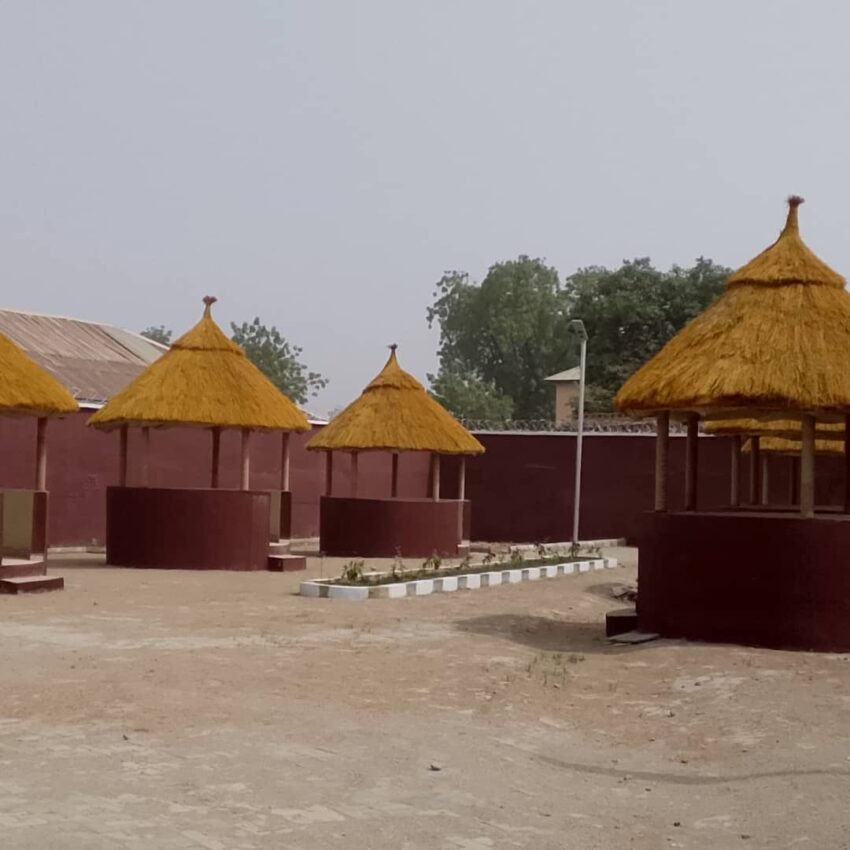
By Sama’ila Lawan, Ali Umar, Victo Thomas Dan Taro, Eunice Y Maida, Babale Adam Musa Muhammad and Hassan Kasim
National Museum Gombe Africa is a home of impressive biodiversity, wildlife and cultural treasures from ancient and modern times.
Because of these diversity, therefore, the continent is endowed with a vast potential human and natural resources that are untapped, unprotected and above all, poorly managed.
Some of these resources are tourist location which includes wildlife parks, unpolluted beaches, hills and mountain ranges, waterfalls and warm springs we also have in addition to these a rich cultural heritage as expressed in our exotic arts and crafts songs and folklores painting and architecture as well as in our exotic cuisines and numerous historic relics and monuments.
The vision and mission statement of the commission is to have stable system which ensures the preservation and integration of the Nigeria cultural and natural heritage resources within the local and national development process and the world heritage network.
The systematic collection, preservation, study and interpretation of the material evidence of man (tangible and intangible) for the development of the people of Nigeria and Nigerians in diaspora.
The topic seek to look at the place or value, diversity, vulnerability, preservation (protection) and conservation of our rich cultural heritage for sustainable tourism.
The place or value of our cultural heritage if properly harnessed cannot be quantified in terms of monetary gain etc. our rich cultural heritage is our source of substantial foreign exchange earner, education, peaceful co-existence, empowerment in terms of income ( financial gain ) re enforce the sense of place of the local populace ( recognition ) cultural exchange in the currency of cultural tourism and infrastructural development.
Therefore the saying is true that tourism would not exist without culture because it is culture that is one of the principal motivations for the movement of people.
Tourism allows people to directly appreciate the diversity of cultures, lifestyles and natural environment. It provides useful inter cultural exchange for growing generation.
Over the years, tourism has evolved as the largest and one of the fastest growing industry of the world this implies that hundreds millions of the people will travel around the globe making use of the earth’s resource. Recent studies from the world tourism organization ( WTO ) revealed that with increasing disposable income and cheaper transport fares, more and more people travel for business, pleasure, education etc.
Among the world’s top fifteen tourism destination between 1999-2000 France recorded 73.0 to 75.5 ( million ) about 3.4 % increase in international tourism arrivals, USA has 48.5 and 50.9 ( million ) about 4.9% increase, Spain recorded 46.8 and 48,2 ( million ) about 3 % increase ( WTO august, 2001 )
The world top ten tourism earners ( international tourist receipts ) USA, Spain and France had in 1999 to 2000 recorded an income of 74.7 and 85.2 US $ billion (-5.1%) WTO August 2001, respectively Africa was one of the host spots for tourism last year (2007). It’s 7.8% growth rate in arrival nearly doubled the world’s average.
However, tourism in this region is still polarized towards the north and south.
The best performing countries are Zambia (26%), morocco (18%),Zimbabwe (11.4%), south Africa (6%) and Tunisia (3.4%) Considering the diverse wealth of tourism potential, one would have expected Nigeria to feature prominently in this tourism roll call form Africa, if not in the list of the top fifteen tourism destination of the world, but bad governance leading to poor economic performance, internal insecurity, over dependence on oil has combine to deprive us not only of the opportunity to develop our tourism industry but has made our cultural heritage, the sources of sustainable tourism vulnerable.
We are however left instead with a huge burden of foreign debts.A new type of tourism is needed which supports ecologically sustainable development and encourages host countries to reaffirm their cultural identities to make their culture and environment better Known, cared for and appreciated by visitors. At the same time, a real inter-cultural dialogue, mutual respect and solidarity need to be established.
Tourism can contribute to qualitative and sustainable development if it is based on the commitment and participation of the local population, who must be involved in its conception and execution, and if the natural and cultural resource upon which tourism is based are preserved on a long term basis.
Mass tourism can have serous effects on the maintenance and conservation of cultural Sites (deterioration due to high number of visitors) and natural Sites e.g.
Introduction of foreign species by tourists siting of tourist resorts on fragile coastlines, Pollution from tourist refuse. Each heritage Sites particularly World Heritage Sites (WHS) have to be properly managed.In conclusion, our common heritage is our shared past and our shared future.
Together we hold great responsibility in protecting and appreciating it. We can appreciate and see all these Sites because our fore fathers preserved them for us and in turn, it is our duty to preserve these for our children, so they too can appreciate them and inspired by them.