

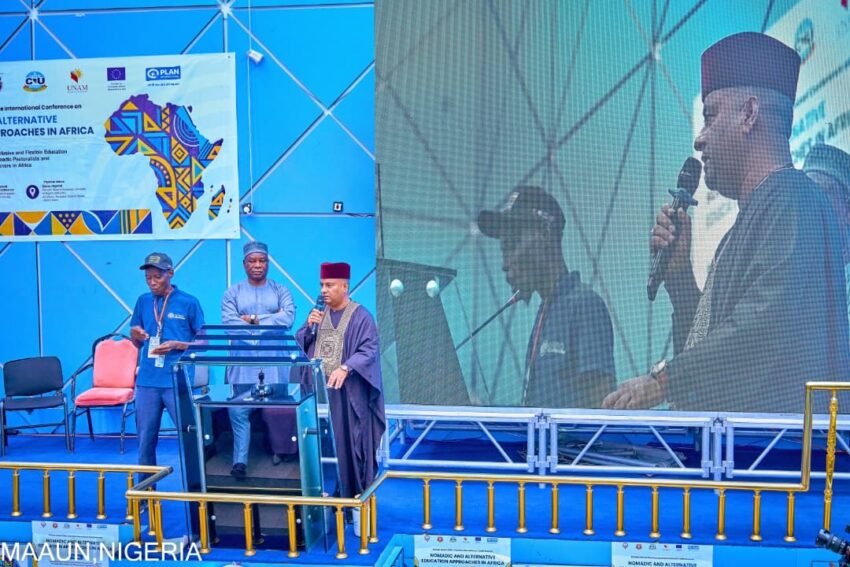
Maryam Abacha American University of Nigeria (MAAUN), has called on participants at the just concluded International Conference on Nomadic and Alternative Education to make the best use of discussions made during the conference with a view to advancing education in Africa.
The President of MAAUN, Prof. (Dr.) Mohammad Israr, gave the charge while delivering his closing remarks on Thursday in Kano, Nigeria.
He said MAAUN would continue to partner with other universities across the African continent so as to boost nomadic education in Africa as the university is committed to advancing education in the continent.
Prof. Israr appreciated the African Institute for Solutions and Development (AISD), the development arm of MAAUN and the three universities that participated in the conference for their commitment to work together to address common educational and developmental challenges.
He also charged international donor agencies not to hesitate to use the university campus as a venue for conducting future international conferences.
Also in their separate vote of thanks, the representatives of the three universities expressed profound gratitude to Maryam Abacha American University of Nigeria for hosting the event.
The conference provided participants an important platform to exchange knowledge, share experiences, discuss practical solutions, and develop strategies for improving educational access particularly among nomadic and underserved children.
The three-day International Conference organised by MAAUN in collaboration with three other African universities, was held at the Abubakar Adamu Rasheed Twin Theatre between Tuesday, 3rd October 2026 and Thursday, 5th October 2026.
The conference was convened as part of renewed effort by the four African Universities to address the various challenges bedeviling nomadic education in Africa with a view to finding lasting solutions to the problems.
The three other institutions that participated in the conference were Capital University of Somalia, the Catholic University of Eastern Africa in Kenya, and the University of Namibia.
The conference, themed “Strengthening Inclusive and Flexible Education Pathways for Nomadic Pastoralists and Marginalized Learners in Africa”, brought together researchers, educators, policymakers, government agencies, development partners, civil society organisations and representatives of nomadic and marginalised communities.
It also discussed various factors affecting access, participation, retention and learning among nomadic children and underserved communities among others.
The three-day conference focused on strengthening policy dialogue, sharing research and practical experiences, and identifying sustainable ways to integrate flexible education models into national education systems.