

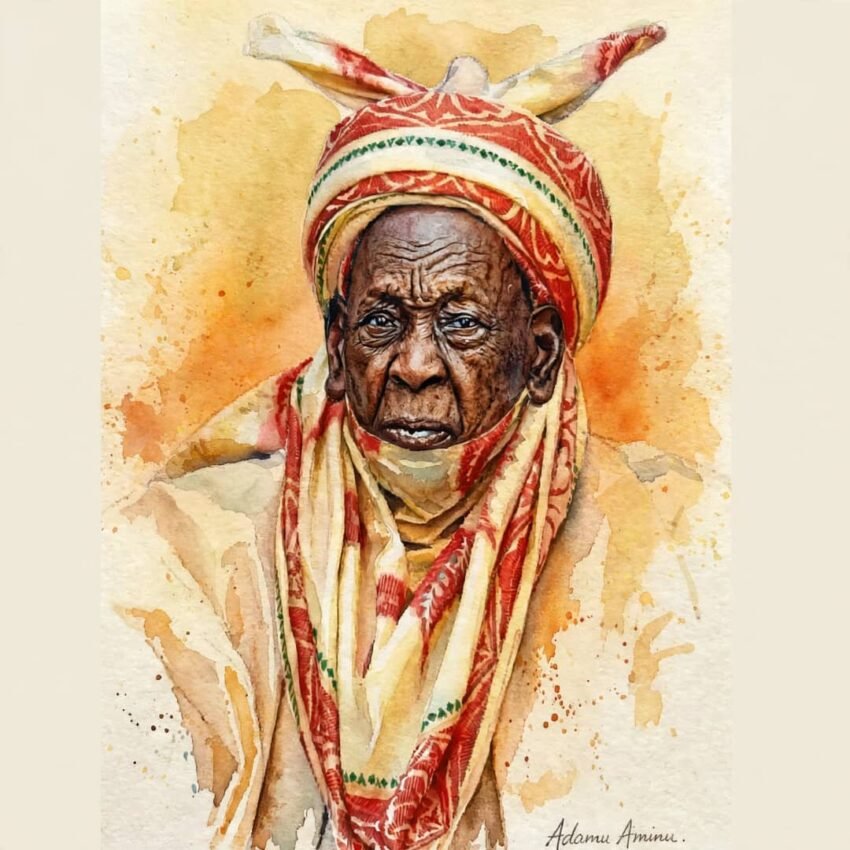
When A Scandal Comes, We Speak Too Quickly
By Adamu Aminu
I have observed a pattern that troubles me, and I write this not as an accusation against my people, but as a personal reflection on how we now respond to misfortune.
In the North, when an unfortunate event happens to a celebrity, a governor, or a traditional institution, the response on social media is often immediate. A person with no training, no access to facts, and no responsibility for verification can become, overnight, a commentator on the matter.
The story is shared before it is corroborated. The joke is made before the facts are established. The verdict is passed before any investigation has begun.
This, in my view, is not accountability. It is noise presented as accountability.
What concerns me further is the imbalance. A public figure may perform a thousand good deeds, and those deeds may receive little or no repeated publicity. Yet a single scandal, often a controversial and unverified issue, may receive extensive and sustained social media attention.
The good is treated as ordinary. The bad is treated as exceptional. The result is a distorted public memory, in which a lifetime of service is eclipsed by a single moment of alleged failure.
I wish to be clear on my position. I am not opposed to investigation. I am not opposed to redress. If a matter deserves to be investigated, it should be investigated thoroughly. If a person deserves to be prosecuted, the law should take its course, both to provide redress and to serve as a deterrent to others. Accountability is necessary, and no institution should be above it.
My concern is with the manner of that accountability.
There are issues that, by their nature, require redress in a covert or discreet mode. A traditional institution, for example, may require internal verification, quiet counsel, and careful handling before a public conclusion is reached.
In the South, it appears to me, such matters are often handled in this way. Discussion is deferred to the council. Public comment is restrained until facts are clearer. The institution is protected while investigation proceeds.
In the North, it often appears to be the reverse. The matter is exposed first, mocked first, and investigated afterwards, if at all. The process that should be discreet becomes public spectacle. The process that should be corrective becomes punitive.
I do not suggest that the Southern approach is without its own risks.
Restraint without investigation can become concealment. Silence without follow-up can become protection for wrongdoing. Both regions, in my judgment, must insist on investigation. The difference lies in the sequence.
I believe we must learn to pause. To verify before we share. To investigate before we mock. To preserve dignity while we seek truth.
An institution is not strengthened when we rush to expose it.
It is strengthened when we are disciplined enough to establish the facts first, and courageous enough to act on them afterwards.
Adamu Aminu writes from Kano.