

By Mariya Shuaibu Suleiman
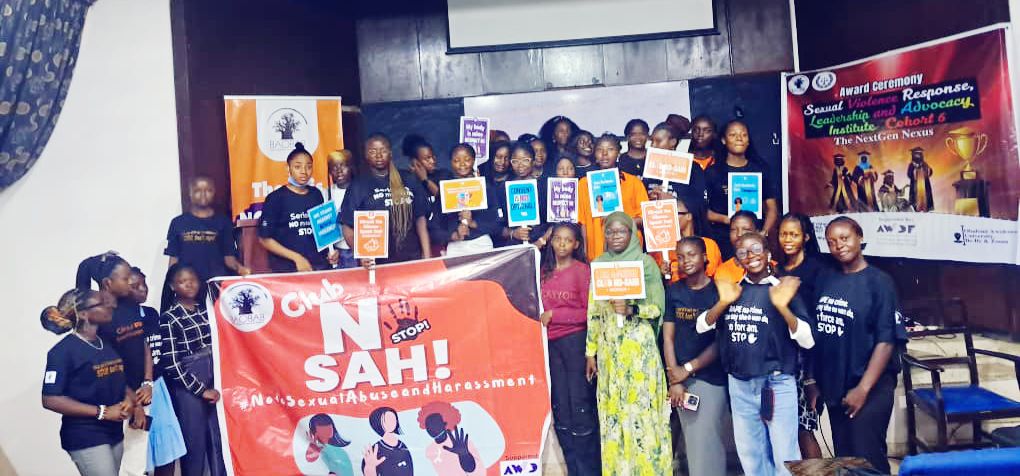
Baobab for Women’s Human Rights held an award ceremony to mark the graduation of the sixth cohort of its Sexual Violence Response, Leadership and Advocacy Institute (SVRLA) under the NextGen Nexus program. The event concluded an intensive eight-week training designed to equip young women with skills to combat sexual violence, promote justice, and drive advocacy on campuses and in communities across Nigeria.
The program, supported by the African Women’s Development Fund (AWDF) through the KASA initiative and implemented in partnership with the Clinic for Human Rights at Obafemi Awolowo University, is part of Baobab’s broader Raising Champions of Change (RCC) project.
The event was moderated by SVRLA Coordinator Unimashi Ugbe.
In her opening remarks, Baobab Project Officer for the SVRLA program, Chisom Akwue, highlighted the dedication and commitment of the participants throughout the training.
“These young women have demonstrated consistency and dedication over the past eight weeks,” she said.
The Executive Director of Baobab for Women Human Rights, Yèyé Bunmi Dipo-Salami, addressed the graduates, stressing the urgency of tackling sexual violence on campuses and the importance of sustained advocacy.
“Feminist leadership demands solidarity, survivor-centered advocacy, and a commitment to continue the work beyond the classroom,” she said.
Representing AWDF’s KASA! initiative, Joyce Renée Ago Djané, AWDF programme officer, described the cohort as “clear evidence of what intentional investment in feminist leadership can achieve” and reaffirmed the organization’s commitment to strengthening survivor-centered systems and amplifying young women’s voices.
Also, Oluwanifemi Oladele from the Clinic for Human Rights at Obafemi Awolowo University highlighted the Institute’s transformative impact on students and communities. He urged graduates to remain fearless in confronting injustice and to continue advocating for policy reforms.
The ceremony also acknowledged facilitators, luminaries, and partners whose contributions made the program possible, particularly AWDF for its sustained KASA! funding.
Meanwhile, graduates showcased their final advocacy projects, demonstrating innovation, survivor-centered approaches, and active engagement with campus communities.
Group 1 focused on Consent Education & Awareness through the FRIES model—Freely Given, Reversible, Informed, Enthusiastic, and Specific. Their outreach included videos, visual storytelling, and campus interactions. Facilitators commended the group for strong research, multimedia creativity, and clear explanations of consent and gender-based violence, while noting the need for stronger institutional follow-up for students seeking support.
Group 2 presented the Campus Safety for Women Initiative, addressing harassment, unsafe campus environments, and gaps in reporting systems. Their project included an awareness campaign, a temporary survivor support phone line, and a survey highlighting widespread insecurity among female students. Facilitators praised the evidence-based insights and recommended establishing a dedicated helpline instead of personal numbers, as well as enhancing social media engagement through QR codes and interactive content.
Group 3 showcased the digital advocacy campaign “Silence Protects No One; Safe Space Gives You a Voice” with the flagship project “Unboxing the Silence.” The initiative featured infographics, awareness videos, a webinar with experts, and a virtual safe-space session held on November 27, in collaboration with student groups such as Bash Goe. Facilitators commended the data-driven approach and advised greater use of Nigeria-specific data, proper citation of all images and materials, and consistent hosting of webinars to foster a supportive online community.
The ceremony concluded with the induction of graduates into Club NO SAH! (No to Sexual Abuse and Harassment), Baobab’s alumni platform for continued advocacy. Led by Instructor, Anne Lawal, the induction emphasized sustainability, cross-cohort collaboration, peer learning, and participation in campaigns such as the 16 Days of Activism. Graduates expressed gratitude to Baobab, AWDF, facilitators, luminaries, and the Clinic for Human Rights for nurturing their leadership and advocacy skills.
Certificates were presented to attendees, with Baobab pledging to deliver certificates to those absent.
However, the graduates are expected to continue the campus outreach on consent, gender-based violence awareness, and anti-catcalling campaigns; maintaining support lines; participating in Club NO SAH! activities; collaborating with campus-based organizations such as Bash Goe; and using posters, QR codes, Instagram campaigns, and webinars for ongoing visibility as part of the next steps.
Group 2 will also acquire a dedicated helpline and strengthen Instagram engagement, while Group 3 will host monthly webinars and virtual safe-space sessions, use more Nigeria-based data sources, and properly credit digital content. Baobab will continue mentoring alumni, providing resources, and delivering certificates to absent graduates.
The award ceremony reaffirmed the strength of the NextGen Nexus cohort—young feminist leaders equipped with survivor-centered, rights-based, and community-driven strategies to prevent and respond to sexual violence. Through AWDF’s KASA! funding and Baobab’s Raising Champions of Change framework, the Institute continues to nurture a network of advocates committed to safer campuses and just communities across Nigeria.