
By Mustapha Salisu
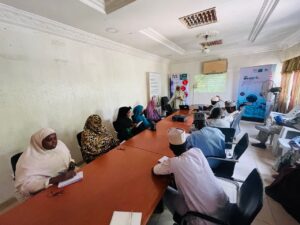
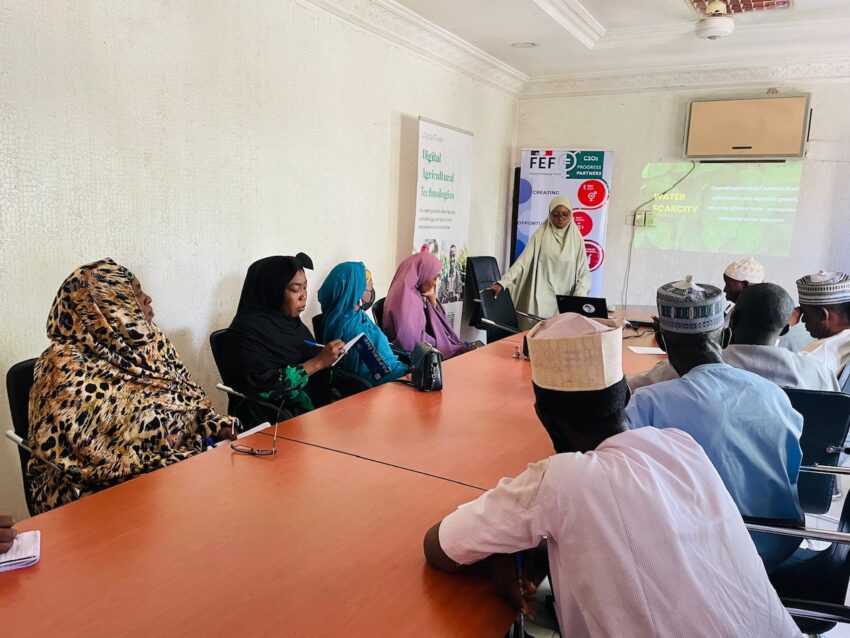
Bridge Connect Africa Initiative (BCAI) has organized a two-day capacity strengthening workshop for extension officers of the Kano State Agricultural and Rural Development Authority (KNARDA) on gender-responsive climate-smart agricultural extension services in Kano.
Supported by the French Embassy for Civil Society Funds in partnership with AgrofixNG, the workshop was held between Thursday and Friday at the KNARDA office in Kano.
PRIME TIME NEWS gathered that the activity is implemented under the Women Against Violence Empowered Through Sustainability (WAVES) project and is aimed at improving the technical capacity of extension officers to deliver gender-responsive climate-smart agriculture (CSA) advisory services to women farmers across WAVES CSA clusters.
Speaking during the training, the Program Manager of Bridge Connect Africa Initiative, Rukayya Abdulhadi, said the workshop was designed to deepen extension workers’ knowledge on sustainable agronomic practices, gender inclusion, circular economy concepts and structured extension approaches.
She explained that over the past eight months, the organization has been working with women across eight clusters in Kano State including Tarauni, Kumbotso, Gwale, Minjibir, Dawakin Kudu, Tofa, Rimin Gado and Bichi Local Government Areas.
According to her, the women beneficiaries have been trained on climate-smart agriculture, gender-based violence awareness, business development, financial literacy and market linkage.
Abdulhadi noted that although the women have acquired basic knowledge, they still require professional support from agricultural extension officers within their communities.
She said the training therefore targeted 16 extension officers from the participating local government areas to strengthen collaboration with the women beneficiaries.
Also speaking, the Founder and Chief Executive Officer of AgrofixNG, Eric Andrew, said the training was part of efforts to integrate the WAVES project model into the broader agricultural support system in Kano State.
He explained that the project supports women, particularly survivors of gender-based violence, by creating an agricultural climate-economic model that helps them earn sustainable livelihoods.
According to him, climate-smart vegetable production was identified as a suitable option because it allows women to farm throughout the year and access local markets.
Andrew said the training also aims to help KNARDA extension agents understand the objectives of the WAVES project so they can continue supporting the women farmers within their communities.
He commended KNARDA for providing institutional support for the training, including the venue and participation of its extension officers.
Andrew urged the women beneficiaries to continue applying the knowledge they have gained and share it with others in their communities.
He also called on stakeholders and organizations to support and scale up the WAVES project, noting that it has the potential to address economic challenges that contribute to violence against women while promoting climate-resilient agriculture.