

By Mustapha Salisu
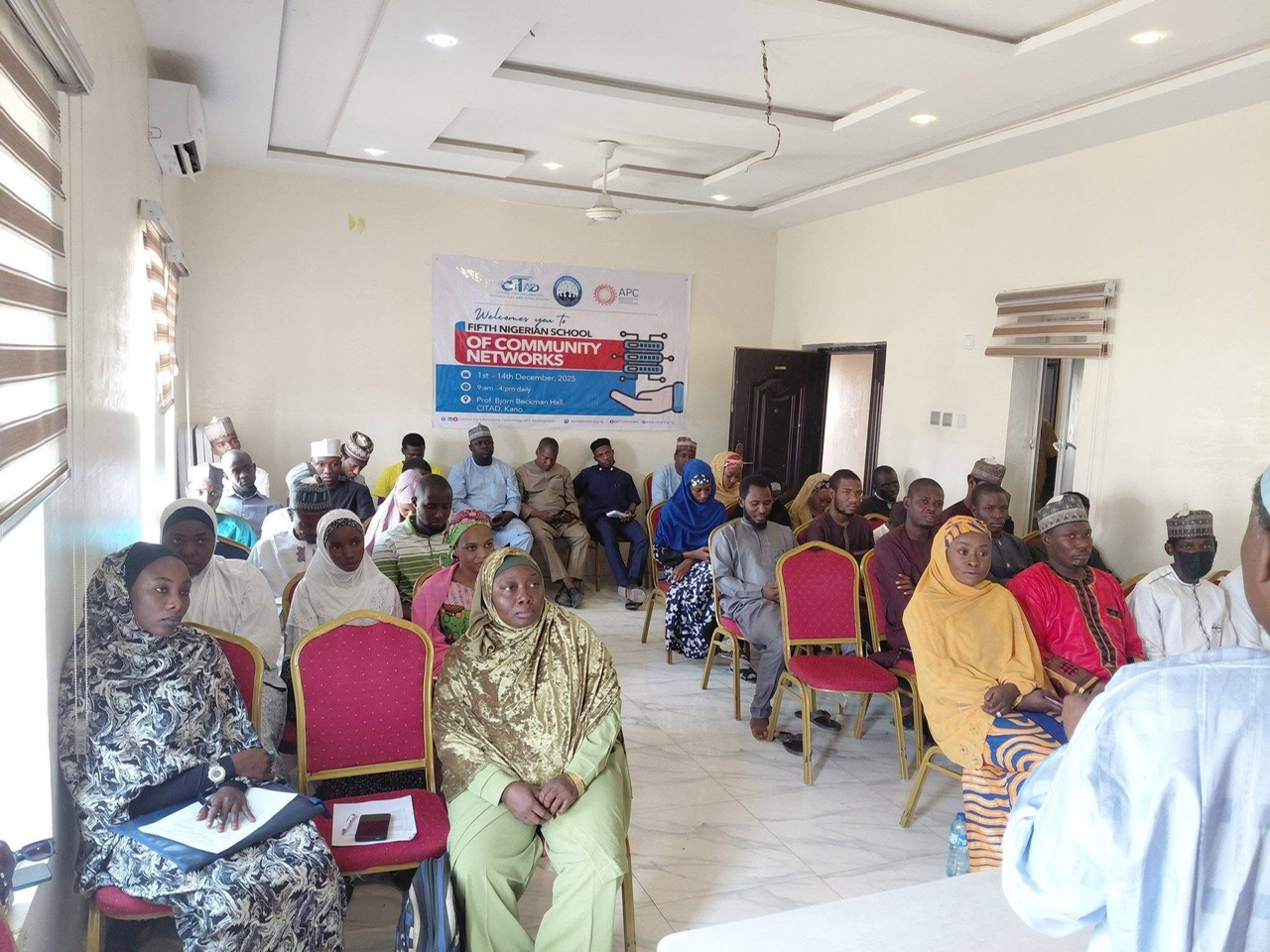
The Centre for Information Technology and Development (CITAD) in collaboration with the Association for Progressive Communication (APC), has officially opened the Fifth Nigerian School of Community Networks (5NSCN).
The project which is an annual capacity-building programme aimed at empowering young Nigerians with the technical and managerial skills to design, manage, and sustain community-owned digital networks.
Speaking during the opening ceremony, held at CITAD’s Kano Office today, the Coordinator of the Nigerian School of Community Networks, Adamu Haruna Hadejia, said the two-week intensive training would equip the 35 shortlisted participants with practical and theoretical knowledge to develop locally-driven connectivity solutions in their communities.
According to Hadejia, the school which received 195 applications from across Nigeria, selected the most promising 35 candidates, most of whom are from the northern region due to proximity and affordability challenges.
“They are here to acquire the necessary skills to build and manage their own connectivity solutions when they return to their communities,” he said.
He explained that the training covers a wide range of modules including the fundamentals of community networks, artificial intelligence, network design, and equipment handling, such as the use of routers and inverters.
Participants will also be taught how to identify and utilize local resources to sustain digital hubs without over-reliance on donor funding.
“We want them to understand that they can mobilize local materials and knowledge to maintain these networks. Many communities have the resources they just need the right skills and awareness to use them effectively,” he added.

Hadejia emphasized that the programme’s long-term goal is to build a sustainable network of community digital champions who will “step down” their knowledge and extend the impact to underserved and unserved areas across Nigeria.
Reflecting on past successes, he recounted one of the inspiring stories from the Fourth Nigerian School of Community Networks, where a participant from Jama’are community used the skills learned to establish a local digital hub.
“She overcame her fear of technology and was later able to confidently take her computer-based examinations after gaining digital literacy through the hub,” he said.
On the overall impact, the coordinator noted that while the networks are deployed in about five main communities, each of these serves several surrounding hamlets extending digital access to nearly 50 smaller settlements.
“Each cluster network connects multiple nearby villages. So, though we talk about five communities, the reach is much wider,” he explained.
Hadejia expressed optimism that the fifth cohort of trainees will replicate the successes of previous sessions and contribute to bridging Nigeria’s digital divide through innovation, collaboration, and community empowerment.