

By Mustapha Salisu
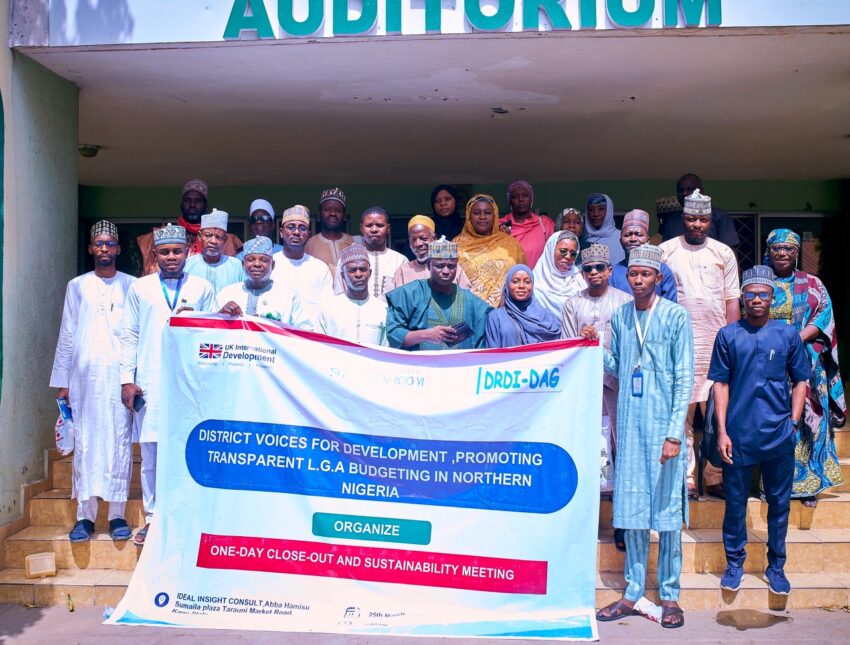
The Dispute Resolution and Development Initiative (DRDI) has organized a one-day close-out and sustainability meeting for stakeholders from Kano and Jigawa States under its “District Voices and Development: Promoting Transparent LGA Budgeting in Nigeria” project.
The event, in partnership with the Nigeria Civil Society Situation Room and supported by Uk International Development, marked end of the eight-month project and was held today at Mambayya House in Kano.
In his welcome address, the Executive Director of DRDI, Dr. Muhammad Mustapha Yayaha, expressed gratitude to Allah for granting the organisation the opportunity to witness the successful completion of the project, which began about eight months ago.
He emphasized that the close-out does not signify the end of the initiative, urging stakeholders to sustain engagement through continuous reporting within their respective communities.
“This is not the end of the project. We want to see continuous reporting from stakeholders for sustained engagement,” he said.
Dr. Mustapha further noted that meaningful development can only be achieved through collective effort, stressing that communities must take responsibility for addressing their challenges.
“No one will solve our problems unless we do it ourselves. All that we are doing is geared towards having better Local Government Areas, as they remain the grassroots tier closest to the people. Cities have become congested due to neglect of youth and infrastructural development in LGAs outside the metropolis,” he added.
Earlier, the Project Manager of DRDI, Abdulbaki Muhammad, took participants through the project journey, highlighting its objectives, key activities, achievements, challenges, lessons learned, and recommendations.
He listed key activities carried out during the project to include district mapping and stakeholder engagement, participatory planning meetings, LGA budget analysis, media roundtable and advocacy launch, media publicity, rapid response on LGA financial autonomy, as well as promotion of citizen participation and reporting.
According to him, the project recorded notable achievements such as increased citizen engagement, strengthened stakeholder collaboration, and improved public awareness.
He, however, identified challenges encountered during implementation to include limited access to data, initial low awareness, and logistical constraints.
On lessons learned, Abdulbaki emphasized the importance of stakeholder engagement, the critical role of the media in advocacy, and the need for continuous capacity building.
He further recommended improved access to financial data, institutionalization of citizen participation, and strengthening of media partnerships.
The Project Manager appreciated donors, partners, stakeholders, government agencies, and community members for their contributions to the success of the project, expressing optimism for sustained collaboration to ensure its long-term impact.