

By Hadiza Musa
Female journalists in Northern Nigeria have raised concern over increasing cases of gender-based harassment, intimidation, and violence they face while covering elections, warning that the situation could affect effective reporting in the 2027 general elections.
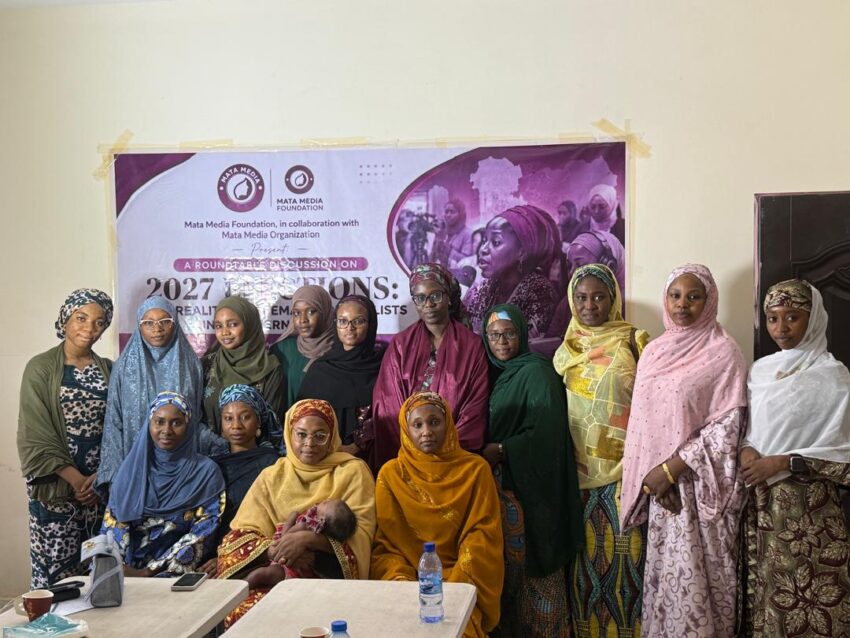
The concerns were raised on Saturday at a roundtable discussion organised by Mata Media under the Mata Media Foundation, held at the Centre for Information Technology and Development (CITAD) in Kano.
Facilitator of the session and Editor of Mata Media, Hafsat Bello, said the engagement was created to give women journalists a safe space to share their experiences and prepare for election coverage.
“We wanted a safe environment where women journalists can openly talk about what they go through and how best to prepare for election reporting,” she said.
Representing the Mata Media Foundation, Fauxiya Kabir Tukur said the organisation remains committed to supporting journalists, especially women, through training and capacity-building ahead of the polls.
A journalist, Samira Zakirai revealed that female journalists are often subjected to gender-based discrimination, harassment and intimidation that affect their work and mental wellbeing.
“Women journalists face constant harassment especially while covering elections. They face four threats: harassment, gender bias, discrimination and intimidation,” she said.
Another participant, Zainab Mai Agogo of Kakaki 24, alleged that some female reporters also experience inappropriate behaviour from political actors while on assignment, a situation she said discourages families from allowing women into journalism.
Hajiya Maimuna, who joined virtually from Niger State, said many female journalists avoid election coverage due to fear of violence and insecurity in volatile areas.
Participants also noted growing threats of online harassment and lack of legal action against perpetrators, describing it as a rising danger for women in the media space.
To address the challenges, they called for regular safety training, stronger institutional support, and improved digital security awareness for journalists.
They also recommended practical safety steps such as early deployment planning, avoiding marked press vehicles, using separate communication lines, and creating emergency response groups for reporters in the field.
The Mata Media Foundation was also urged to expand support through training programmes, election reporting grants, and stronger networking opportunities for female journalists across the region.
The meeting brought together 17 participants, including 14 women and three men from different states.