
Freedom Of Speech,Not Freedom From Consequence:A Citizen’s Call For Responsible Public Commentary
By Nworisa Michael
Coordinator, Inter-tribe Community Support Forum
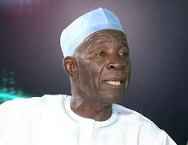
I have followed, with careful and sustained attention, the recent public exchanges involving Alhaji Buba Galadima and the Kano State Government, particularly the attempt to draw a direct link between His Excellency, Governor Abba Kabir Yusuf, and the Director of the Department of State Services (DSS) in Kano State, over allegations that opposition voices are being suppressed. As someone who has observed and engaged with political developments in Kano State closely and over a considerable period of time, I feel both compelled to offer this reflection.
With the greatest respect to Mallam Galadima, whose long years of political engagement command acknowledgement, I believe there is a fundamental error at the heart of his public narrative: the conflation of two constitutionally separate and institutionally distinct entities.
The Kano State Government and the Department of State Services are not the same body, do not share the same authority, and do not operate under the same legal and constitutional framework. The DSS is a federal agency, established under federal law, reporting to federal authority, and mandated to carry out its responsibilities within the architecture of national security legislation. Its operational decisions are not, and cannot legitimately be, directed by a state governor.
To suggest, without concrete and verifiable evidence, that the Governor of Kano State exercises direct political control over the operational decisions of a federal security agency is not merely constitutionally inaccurate. It risks seriously misinforming the public, distorting the institutional understanding of citizens, and weakening the very trust in democratic structures that all of us who care about governance have a duty to protect.
In a democracy, the right to hold public officials accountable is not merely a privilege. It is a civic responsibility. The Nigerian Constitution guarantees freedom of expression, and that guarantee must be defended vigorously, consistently, and without selectivity. I am not here to argue that Mallam Galadima, or any other citizen, should be silenced. Quite the contrary.
However, it is equally important to understand that constitutional freedom of expression is not an absolute or unconditional right. It carries boundaries, particularly where public statements border on defamation, incitement to public disorder, or the propagation of allegations that are not anchored in verifiable fact.
The law, in Nigeria as in every serious democratic jurisdiction, draws a clear distinction between the exercise of legitimate political speech and the making of claims that may cause unjustified harm to individuals, institutions, or public order. That distinction is not a technicality. It is a foundational principle of responsible democratic engagement.
I do not offer this reflection from the comfort of detached observation. I speak from lived experience as an active participant in Kano’s public discourse. My experience suggests that the democratic space in Kano, as in Nigeria broadly, does accommodate dissent, criticism, and vigorous public engagement, provided that engagement remains within the boundaries of responsible expression.
There is a meaningful and important distinction between being outspoken and being reckless. Constructive criticism, even when sharp, even when uncomfortable for those in power, serves democracy. It holds leaders accountable, informs public debate, and strengthens the institutions of governance by subjecting them to scrutiny. Reckless commentary, by contrast, sacrifices accuracy for sensation, prioritises impact over truth, and in doing so, does not strengthen democratic culture. It corrodes it.
Mallam Galadima is not a newcomer to Nigerian politics. He is a figure of considerable experience, with a long history of political involvement at the highest levels of national affairs. That experience confers not only credibility but also responsibility. Public figures of his standing carry weight. Their words do not merely enter a conversation and disappear. They shape narratives. They influence perceptions. They move people. And when those words are not sufficiently grounded in verifiable fact, the narratives they create can inflame tensions, deepen divisions, and generate consequences that no one intended but that everyone must live with.
I therefore urge Mallam Galadima, with the fullest respect for his political legacy and his right to engage in public discourse, to exercise the kind of measured, evidence-grounded commentary that his stature demands.
Kano’s political environment is one that requires maturity and restraint, most especially from elder statesmen whose voices command the attention and, in many cases, the trust of large communities of citizens.
I commend security agencies for carrying out their lawful duties within the boundaries of their constitutional mandates. I equally affirm the right of every Nigerian, regardless of political affiliation or personal circumstance, to express their views and engage with public affairs without fear of unjust reprisal. These two positions are not in contradiction. They are, in fact, complementary pillars of the democratic order we all claim to value.
But democracy does not thrive on freedom alone. It thrives on responsible freedom. It thrives when citizens, commentators, and public figures understand that the same constitution that protects their right to speak also places upon them the obligation to speak truthfully, fairly, and with due regard for the consequences of their words.
Let us defend our freedoms with passion and conviction. But let us exercise them with wisdom, with evidence, and with the kind of civic seriousness that Kano State, Northern Nigeria, and the Nigerian democracy deserve from all of us who claim to love them.
The views expressed in this article are those of the author alone and do not represent the position of any organization or institution.