

By Babayola M. Toungo
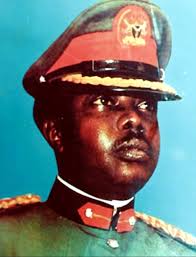
Fifty years after General Murtala Mohammed thundered that “Africa has come of age,” Nigeria now risks advertising to the world that it has come of dependence. The distance between those two moments is not just measured in years, but in courage, clarity, and conviction. The Nigeria that once looked global powers in the eye and spoke the language of dignity now too often whispers the language of alignment, accommodation, and quiet submission.
Murtala’s doctrine was simple but radical: Nigeria was not a pawn on anyone’s chessboard. It was a force, a standard-bearer, a country that believed its size, history, and sacrifice in Africa’s liberation earned it a voice that could not be rented or bullied. That Nigeria funded liberation movements, defied Western pressure, and shaped continental politics with sheer moral authority. It did not beg for relevance; it commanded it. Its foreign policy was not perfect, but it was unmistakably self-directed.
Today, critics fear we are watching the slow burial of that doctrine – not with a bang, but with policy communiqués, defence agreements, and carefully worded diplomatic language that masks a steady erosion of strategic autonomy.
The so-called defence cooperation pact with the United States has become a symbol of this drift. The problem is not cooperation – sovereign nations cooperate all the time. The problem is secrecy, imbalance, and the creeping normalization of foreign military presence without robust public scrutiny. When a government cannot plainly tell its citizens how many foreign troops are arriving, under what legal framework they operate, what their rules of engagement are, and how long they intend to stay, it creates the impression of a deal made above the heads of the people.
And when deals affecting national security are made without deep parliamentary debate, civic transparency, or clear timelines, they begin to look less like partnerships and more like quiet concessions. Sovereignty does not always collapse dramatically; sometimes it is negotiated away in technical language and buried in defence jargon. Sovereignty dies in silence before it dies in law.
The geography of deployment raises even sharper questions. If this partnership is truly about counterterrorism and national stability, Nigerians are justified in interrogating the logic behind deployment choices. Security deployment is never politically neutral – it signals priorities, perceptions, and sometimes geopolitical messaging.
Why certain northern corridors and not a broader, publicly justified national framework? Why selective visibility? Why the absence of a clearly articulated threat map shared with citizens?
The South East presents a complicated but undeniable security landscape linked to the activities of the proscribed IPOB and its militant splinter elements. The region has seen targeted attacks on security formations, political symbols, and civilians accused of non-compliance with sit-at-home directives. Economic life has repeatedly been disrupted. Interstate mobility has been affected. Local populations live with a mixture of fear, fatigue, and political alienation.
If the federal government argues that foreign cooperation is essential to combat violent non-state actors, then citizens will logically ask why such logic is not applied consistently across all theatres of instability. Is the threat assessment uniform, or selectively emphasized? Are some crises internationalized while others are domesticated for political sensitivity? These are not sectional questions – they are national ones. Because uneven security logic breeds sectional resentment, and sectional resentment is the raw material of national fragmentation.
So citizens will naturally ask: Is the deployment strategy threat-driven, or politics-driven?
Is it based on objective security metrics, or diplomatic convenience? Is Nigeria defining its own priorities, or inheriting someone else’s map? Is foreign military cooperation becoming a substitute for fixing internal intelligence, policing, and governance failures? When such questions are met with silence, suspicion becomes inevitable. And suspicion, once seeded, grows faster than trust.
A state that externalizes too much of its security architecture risks weakening its internal legitimacy. Security is not only about neutralizing threats; it is about preserving the psychological contract between state and citizen. Citizens must believe their country can protect them – not merely subcontract their protection.
If Nigerians begin to feel that their safety depends more on foreign boots than national institutions, then the soul of sovereignty has already been compromised. A powerful nation cannot outsource the core symbol of its authority – the monopoly of force – without diluting its own statehood.
There is also a historical irony that should sting. Nigeria once rebuffed American pressure when it conflicted with African interests. It once carried itself as the diplomatic capital of Black dignity. It once made global powers uncomfortable by insisting that African liberation was non-negotiable. It once defined non-alignment not as passivity but as principled independence.
Today, the fear among critics is that the same country now calibrates its steps to avoid offending powerful friends, even when national pride or continental leadership should demand a firmer stance. Influence has been replaced by access; leadership by alignment. No nation is truly respected when it is seen as strategically pliable. Power respects clarity, not compliance.
This is not an argument for isolationism or hostility to the West. It is an argument for balance, transparency, and national self-respect. Strong nations have allies; weak nations have patrons. The difference lies in who sets the terms, who controls the narrative, and who can say “no” without fear. Partnerships must be entered from a position of confidence, not quiet desperation. Allies should complement Nigeria’s strength, not substitute for it. Foreign policy should project agency, not anxiety.
The ghost of Murtala’s proclamation still lingers over Nigeria’s history. The question is whether today’s leadership hears it as an echo to honor – or a memory to outgrow. If “Africa has come of age” is to mean anything in our time, it must mean the courage to cooperate without kneeling, to partner without surrendering agency, and to secure the nation without outsourcing its pride.
A country of Nigeria’s stature should not look like a satellite in anyone’s orbit. It should look like what it once was: a center of gravity, a country whose decisions radiate influence rather than dependence.
History will ask a hard question:
Did Nigeria adjust to a changing world – or slowly negotiate away the very autonomy that once made it great?