Galadima’s Allegations Against Governor Yusuf,The DSS: Politically Motivated, Essentially Baseless, Institutionally Dangerous
By Najeeb Nasir Ibrahim
National Director-General, The Unifier Project
Abuja
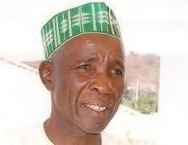
The Unifier Project, a national civic organization committed to democratic accountability, responsible public discourse, and peaceful coexistence, has taken note of the recent media interview by Alhaji Buba Galadima, in which he advanced allegations against His Excellency, Governor Abba Kabir Yusuf of Kano State, and the Department of State Services (DSS) in Kano. He alleged, without verifiable evidence, that opposition voices in Kano State are being suppressed through the instrumentality of federal security agencies.
After a thorough review of the substance, context, and timing of these claims, the Unifier Project states unequivocally that the allegations are devoid of credible foundation and are driven by narrow political considerations rather than genuine democratic concern. We make this statement because the deployment of unsubstantiated allegations against public institutions carries measurable consequences for the stability of our democratic order, social cohesion, and public confidence in institutions.
The Unifier Project has examined Alhaji Galadima’s claims with the seriousness they demand. Our conclusion is unambiguous: not a single allegation is supported by documentary evidence, sworn testimony, or any verifiable account that could withstand independent scrutiny. What has been placed before the Nigerian public is a collection of assertions coloured by personal grievance, political frustration, and the rhetoric of a man whose relationship with the current political order in Kano has undergone a well-documented deterioration.
Allegations of political interference in a federal security institution such as the DSS are extraordinarily serious. They implicate constitutional principles, the rule of law, and citizens’ fundamental rights. Precisely because they are so serious, they demand an equally serious evidentiary standard. A press interview saturated with political animus and bereft of supporting documentation does not meet that standard. The Unifier Project calls on the public, the media, and the political community to treat these claims with the scepticism they deserve, and to resist amplifying unverified allegations simply because they are confidently stated.
No responsible analysis can proceed without examining context. It is public record that Alhaji Galadima was recently removed from the board of Kano State Polytechnic. It is equally public record that these intensified allegations emerged immediately after that removal, and against the backdrop of Governor Yusuf’s association with the APC.
The Unifier Project does not suggest that political disappointment forfeits the right to speak. Every citizen retains constitutional freedom of expression, unconditioned by political loyalty. However, when a public figure who has suffered an identifiable political setback immediately turns to making sweeping, institution-threatening allegations against those who administered that setback, the burden of proof rises sharply, and the public’s obligation to interrogate motive rises with it.
The pattern of timing is neither subtle nor coincidental. It is the familiar architecture of a grievance campaign dressed in the language of democratic concern. The Unifier Project calls it by its proper name.
The DSS is a constitutionally established institution charged with protecting Nigeria’s internal security. To allege, without evidence, that it is being weaponised for partisan purposes in Kano is not merely to criticise a governor. It is to invite the public to regard a pillar of national security as corrupt and undeserving of trust.
The consequences are not abstract. Citizens who distrust security institutions cooperate less with them, report fewer threats, and become more susceptible to criminal, extremist, or vigilante alternatives that fill the resulting vacuum. In a state as significant as Kano, with its population density, economic centrality to Northern Nigeria, and historical vulnerabilities, the erosion of institutional confidence is not a political game. It is a security hazard.
The Unifier Project calls upon Alhaji Galadima and all who have amplified these allegations to reflect on their consequences, and to consider whether any personal or partisan interest is worth the institutional damage they risk inflicting on the Nigerian state.
The Unifier Project affirms without qualification that freedom of expression is a democratic value we defend, including when exercised by those whose motives we question. We do not seek to silence Alhaji Galadima or any citizen with grievances against authority.
However, freedom of expression has never been a licence for evidence-free, potentially defamatory targeting of individuals and institutions.
The Nigerian Constitution, the African Charter on Human and Peoples’ Rights, and international democratic standards all recognise that expression carries responsibilities of accuracy, fairness, and proportionality. Public commentary making serious allegations without factual grounding risks crossing into defamation, with all the legal consequences that entails.
We call upon political actors, commentators, social media influencers, and media organisations to uphold responsible communication. Verify before you amplify. Question the motive behind the message. The coordinated spread of unverified allegations through digital platforms is information warfare with real victims, real consequences, and real costs to our democracy.
Alhaji Galadima’s allegations did not emerge in isolation. They are part of a pattern of coordinated negative messaging that has intensified following recent political developments in Kano State. Across Facebook, X, WhatsApp, and TikTok, a campaign of narrative warfare has been waged against the person, record, and administration of Governor Yusuf, drawing on fabricated claims, decontextualised information, emotional manipulation, and strategic amplification of partisan voices.
This is the architecture of a disinformation operation. Its goal is not to inform but to destabilise, manufacturing a political reality so saturated with negativity that truth becomes difficult to locate and public confidence impossible to sustain. The Unifier Project calls on regulatory bodies, civil society, and responsible media to take a stronger, coordinated stand against the weaponisation of digital platforms for political disinformation.
The Unifier Project calls upon political actors of all affiliations to commit to evidence-based communication and refrain from making or endorsing unsubstantiated allegations. We call upon the media, traditional and digital, to apply rigorous editorial standards to politically charged claims, demand evidence before amplification, and uphold their responsibility as gatekeepers of the public information environment.
We call upon civil society, religious leaders, traditional rulers, and community influencers across Kano State and Northern Nigeria to resist divisive narratives and serve as anchors of reason and social cohesion. We call upon citizens to engage critically with political information, ask who benefits from the narratives placed before them, and demand the same standard of evidence from political actors that they would demand from any other party.
The future of Nigerian democracy will be determined not only by the quality of its leaders, but by the quality of its public discourse. That discourse is under sustained attack. The Unifier Project is committed to defending it, and we invite every Nigerian of goodwill to stand with us.