

By Mustapha Salisu
The Civil Society Coalition on Security, Peace and Conflict Resolution in Jigawa State has thrown its weight behind the state government’s recent decision to construct 1,000 commercial shops at the Farm Centre in Kano, a project estimated at over N3.5 billion.
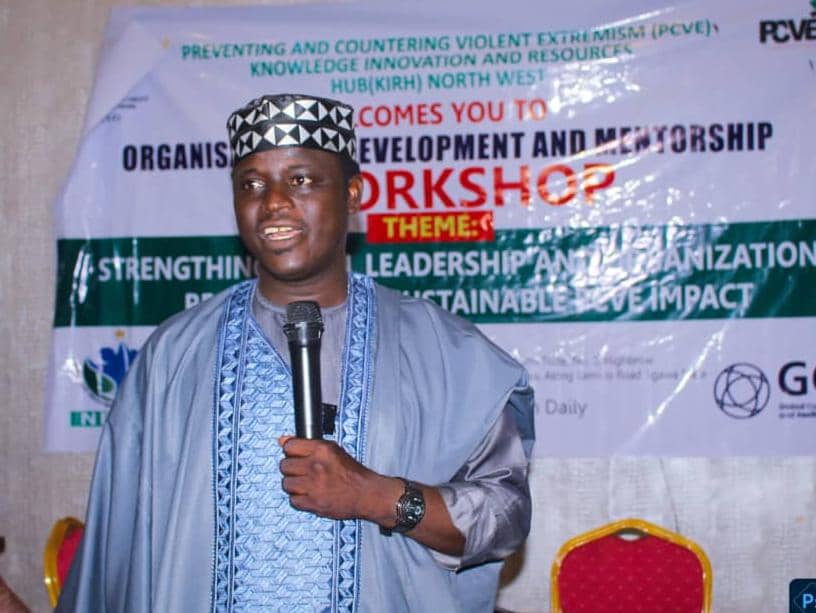
This was disclosed by President of the Coalition, Muhammad Musbahu Basirka, during a press conference held on Friday at the Nigeria Union of Journalists (NUJ) Secretariat in Dutse.
He auded the initiative, describing it as a strategic move aimed at boosting Jigawa’s Internally Generated Revenue (IGR) and ensuring long-term economic sustainability.
According to Basirka, the project approved by the Jigawa State Executive Council at a cost of N3,542,092,535.51 will see the development of commercial properties on a piece of land owned by Jigawa State within Kano’s bustling Farm Centre market area, popularly known for its mobile phone businesses.
“This land was inherited by Jigawa State following the 1991 creation of the state from the old Kano State. It was also identified and handed over by the Economic and Financial Crimes Commission (EFCC) after a thorough recovery process” he said,
Basirka acknowledged the mixed reactions surrounding the project but emphasized that the decision was made after wide consultations with experts, community leaders, and stakeholders.
He said financial analysts have projected that the shops, once completed, would yield significant and sustainable revenue for the state.
“In a time where federal allocations are unreliable, diversifying our revenue base is not just wise it’s necessary, this development is a golden opportunity to build financial independence for Jigawa State” he noted.
The civil society leader appealed to all Jigawa citizens and political actors to rally behind the initiative and avoid politicizing what he described as a “bold and forward-thinking” move by the government.
He further assured that civil society organizations will closely monitor the execution of the project to ensure transparency, quality delivery, and accountability.
“We welcome constructive engagement and invite suggestions from citizens on how to maximize the impact of this investment,” he concluded.