

By Mustapha Salisu
Stakeholders in Kano State’s health sector have reaffirmed their commitment to strengthening cancer prevention and treatment, as efforts intensify toward the approval of a comprehensive cancer control framework.
The renewed commitment followed a high-level strategic meeting involving representatives of the Nigeria Cancer Society (NCS), civil society organisations, and relevant government agencies.
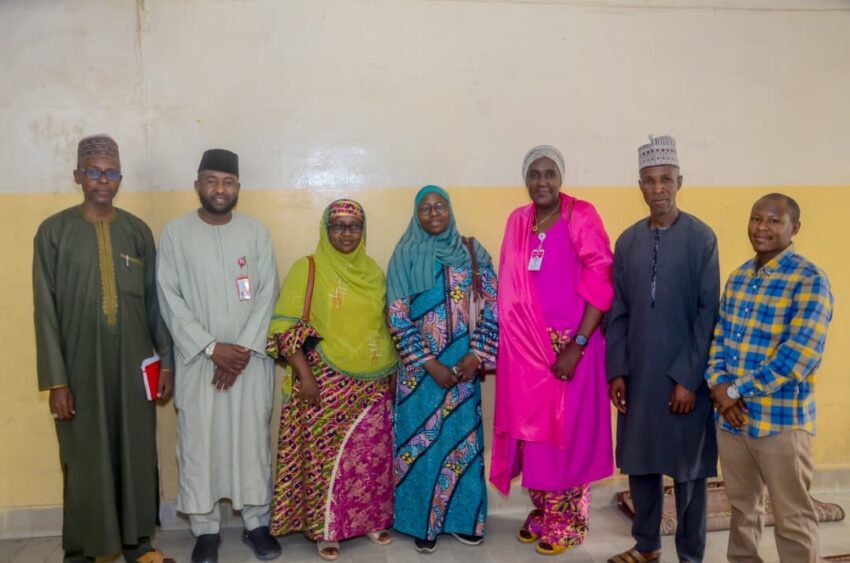
Prime Time News gathered that participants at the meeting included the Chairman of NCS Kano, Mallam Salisu Yusuf; Secretary, Hauwa Kakudi; Halisa Mohammed of Women for Cancer; Mohammed Salisu Abdullahi of AMG Foundation; Mubarak Baba Ahmad of YOSPIS; Dr. Bashir Yusuf, the Cancer Desk Officer; Zainab Abubakar of Hamdala Hope and Harmony Foundation; and Saad Aminu Musa, Tobacco Desk Officer of NCS.
Speaking at the meeting, Mallam Salisu Yusuf said the engagement was aimed at identifying practical strategies for implementing the cancer control framework and mobilising partnerships to support interventions across the state. He stressed the need for clear and actionable steps to ensure effective execution.
In his remarks, Dr. Bashir Yusuf disclosed that cancer has now been formally recognised as a priority health concern in Kano State. He revealed that the framework had been approved by the Commissioner for Health and is currently awaiting final approval from the state governor.
Dr. Yusuf further stated that about ₦1 billion is expected to be mobilised from multiple sources, including philanthropists, the National Health Insurance Authority (NHIA), the Kano State Contributory Healthcare Management Agency (KCHMA), and government budgetary allocations.
He explained that the framework is structured around key pillars such as awareness, research, prevention, and treatment, with specific funding allocations to be determined upon final approval.
To ensure transparency and efficiency, a dedicated account will be created for cancer-related interventions, while the Kano chapter of the Nigeria Cancer Society will be integrated into the technical working group as an independent body. He added that a tiered approval system is being developed to facilitate prompt decision-making and effective fund management.
Stakeholders at the meeting emphasised the need for an agile governance structure to address the urgency of cancer care. Mallam Yusuf proposed the establishment of a committee under the Ministry of Health and the Cancer Desk to fast-track critical decisions.
On her part, Halisa Mohammed highlighted the high cost of cancer treatment, citing essential drugs such as Herceptin, which costs about ₦572,000 per dose. She called for government-led bulk procurement to make treatment more affordable. Dr. Yusuf confirmed that provisions for bulk purchasing of such drugs are captured in the framework.
Participants also expressed concern over the shortage of oncology specialists, which continues to delay treatment for patients. They called for increased investment in capacity building, recruitment of specialists, and sustained public awareness campaigns.
The meeting also recommended expanding advocacy to include traditional medicine practitioners and key health institutions such as the Kano State Ministry of Health, KCHMA, NHIA, Murtala Mohammed Specialist Hospital, the Private Health Institutions Management Agency (PHIMA), the State House of Assembly Health Committee, Kano Cancer Treatment Centre, and Aminu Kano Teaching Hospital.
As part of the framework, selected public and private health facilities, as well as tertiary institutions, have been identified to support service delivery, research, and training.
Private facilities listed include Expert Alliance, Accord Surgery, KMC, Silver Crest, and Best Choice Specialist Hospital, while public institutions include Murtala Mohammed General Hospital, Abubakar Imam Urology Centre, Sir Muhammad Sanusi Hospital, and Muhammad Abdullahi Wase Specialist Hospital. Tertiary institutions include the National Orthopaedic Hospital, Dala; Federal Neuropsychiatric Hospital, Dawanau; and Aminu Kano Teaching Hospital.
Hauwa Kakudi underscored the importance of engaging traditional healers, noting that many patients, particularly women, often seek initial care from them due to the high cost of hospital treatment. She said their involvement could help improve early referrals and reduce late presentation of cases.
Dr. Yusuf also disclosed that discussions are ongoing with the Fortis Institute to strengthen the management of complex cancer cases through strategic collaboration.
With final approval of the framework expected soon, stakeholders expressed optimism that its implementation would significantly improve access to quality cancer care and strengthen Kano State’s response to non-communicable diseases.