

By Ali Abare
Every four years, like clockwork, the political machinery of Dr. Rabiu Musa Kwankwaso roars back to life. The banners go up. The red caps flood the streets. The crowds gather. And for a few weeks, it feels as though the entire country is watching Kano.
But when the dust settles and the votes are counted, a familiar pattern emerges. Kwankwaso wins Kano, or at least contests it fiercely, and that is largely where his political reach ends. The rest of Nigeria watches, applauds perhaps, but does not follow.
This is the central contradiction at the heart of Kwankwaso’s political career: a man of genuine local dominance who has spent years projecting the image of a national leader, yet whose influence rarely travels beyond the borders of the state he once governed.
It is important to acknowledge what Kwankwaso has built in Kano, because it is real and it is remarkable. Over decades of political activity, he has cultivated a movement, the Kwankwasiyya, that commands fierce loyalty among a large segment of Kano’s population.
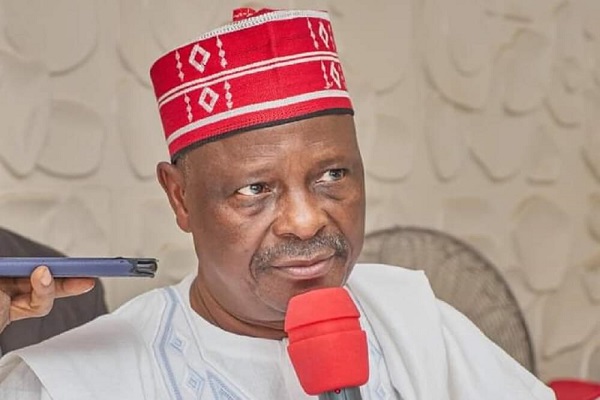
He has invested in young people through scholarships, built infrastructure, and created a personal brand so powerful that his signature red cap has become a political symbol in its own right.
No serious political conversation about Kano can happen without his name coming up. In that sense, Kwankwaso deserves his place in the history of the state and, to some extent, the history of northern politics.
But there is a difference between being a force in one state and being a national figure. Kwankwaso has contested for the presidency of Nigeria more than once, and each time, the result has told the same story.
Outside Kano and communities of Kano citizens living in other parts of the country, the enthusiasm for his candidacy thins out considerably.
The coalition he needs to be truly competitive at the national level has never materialised. Other geopolitical zones have not warmed to him in the numbers required. His presidential bids, however loud at the starting line, have not translated into the broad-based national appeal that genuine presidential contenders need.
This is not a personal failing so much as a political reality that his admirers seem reluctant to confront honestly.
Part of the reason for this gap between image and reality is the nature of the Kwankwasiyya movement itself. It is deeply personal, built around devotion to one man rather than around a set of ideas or policies that can travel on their own.
That kind of followership is powerful within a specific geography and among a specific community, but it does not easily export. A voter in Anambra or Ekiti or Bayelsa does not feel the pull of the red cap the way a young man from Kano does.
National politics requires a politician to speak to concerns that cut across tribe, religion and region, and Kwankwaso has not convincingly made that transition.
Back home in Kano, however, the political ground is shifting in ways that deserve attention. His former political godson, Governor Abba Kabir Yusuf, who rode to power partly on the strength of Kwankwaso’s backing, has been finding his own feet as governor.
This was perhaps inevitable. There can never be two governors of Kano at the same time. A man elected to govern a state must, at some point, govern it as he sees fit, not as a satellite of his former patron.
As the Hausa proverb wisely puts it, it is only when the wall develops a crack that the lizard finds its way in. Governor Kabir Yusuf is asserting himself, as every leader must, and this has created the kind of tension that Kwankwaso’s camp has struggled to accept.
Rather than managing this transition gracefully, there are signs that Kwankwaso is choosing confrontation, mobilising his supporters against the very government his endorsement helped bring to power.
This is politically risky, not just for Kano’s stability, but for Kwankwaso’s own legacy. A leader who cannot allow his successors to grow without seeking to overshadow them eventually becomes a burden on the political space he once enriched. The image of a statesman requires knowing when to guide and when to step back.
For Governor Kabir Yusuf, for Dr. Abdullahi Umar Ganduje, and for the APC structure in Kano, the challenge ahead is both clear and difficult. Kwankwaso’s hold on a significant portion of Kano’s electorate is not something that can be wished away. It must be contested through hard political work, through service delivery, through grassroots organisation, and through the kind of patient coalition-building that wins hearts over time.
The advantage they hold, if they choose to use it well, is the power of incumbency and the resources of the state and federal government working together. If they can align their energies and put aside whatever internal differences exist among them, they have the tools to challenge Kwankwaso’s dominance in ways that have not been possible before.
There is also a broader point to be made about how elections are conducted in Kano. For too long, electoral outcomes in the state have been influenced by forces that have nothing to do with the free choices of voters.
Ballot box snatching, thuggery, intimidation at polling units and various forms of electoral manipulation have all played their part in determining who wins and who loses. When these practices are allowed to flourish, they distort the true picture of where political support actually lies.
Some politicians who appear to be giants at the polls are only as powerful as the disorder that surrounds the electoral process. The moment that process is cleaned up, the moment voters can walk to their polling units without fear and cast their ballots freely, the political landscape will look very different. Some of today’s celebrated political heavyweights may find that their real support is considerably thinner than it appears.
This is not to say that Kwankwaso’s following is entirely a product of manipulation. A significant portion of it is genuine. But it is reasonable to ask how much of his electoral dominance in recent years has depended on conditions that should not exist in a healthy democracy. Credible elections are the surest way to test the true weight of any politician’s influence.
Kwankwaso is not going anywhere immediately, and it would be foolish to underestimate him. But politics is not a permanent state of affairs. The loyalties of voters evolve. A younger generation is coming of age in Kano, one that will judge its leaders not by the memories of what was done years ago but by what is being done today.
Kwankwaso’s grip on Kano, strong as it is, is not written in stone. What is written in stone is that no politician lasts forever, and the ones who last longest are those who know how to read the times and adjust accordingly.
For now, the honest assessment is this: Kwankwaso is a Kano chieftain of the first order, a man whose influence within that state is deep and historically earned. But a national figure he is not, at least not yet, and possibly not ever, if the pattern of the past is any guide.
The sooner that reality is acknowledged, both by his opponents who fear him too much and by his supporters who credit him with too much, the more productive the conversation about Kano’s political future will become.
Abare is a Muck Rack journalist. He writes from Lafia, Nasarawa State