

By Mariya Shuaibu Suleiman
Nearly 40 percent of Nigerian children under five are stunted, raising concerns about the country’s long-term productivity and economic growth.
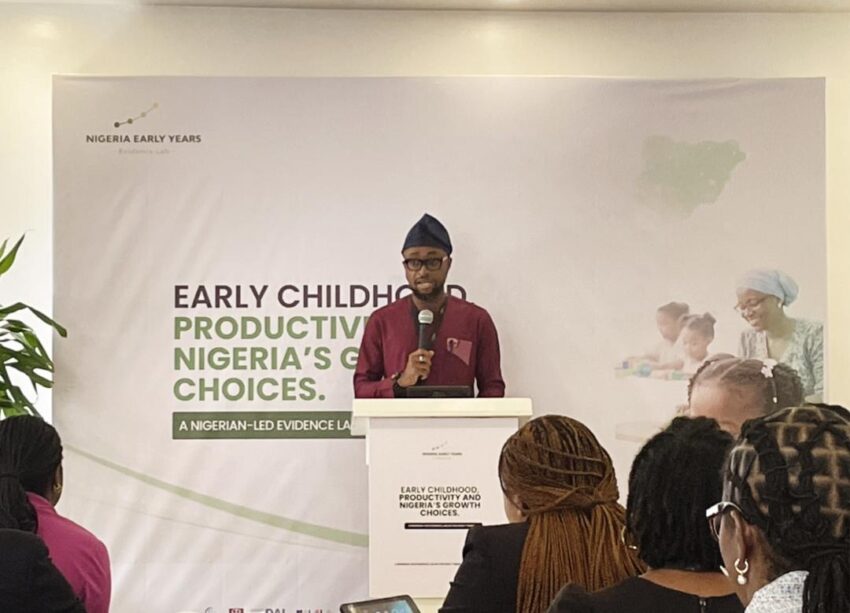
Experts gave the warning on Tuesday at the Early Childhood, Productivity and Nigeria’s Growth Choices dialogue organized by SBM Intelligence in collaboration with the World Bank.
Speaking at the event, the Managing Partner of SBM Intelligence, Ikemesit Effiong, said under-five mortality has declined to 110 deaths per 1,000 live births from 132 in 2018, but neonatal deaths remain high at about 41 per 1,000 live births.
“In plain language, almost half of the children we lose before age five die in the first month of life,” he said.
Mr Effiong described early childhood deprivation as a productivity crisis, linking it to lower educational attainment, reduced earnings, and higher adult poverty.
“Addressing early childhood requires thinking beyond clinics and classrooms to include caregiving, sanitation, nutrition, and institutional coordination,” he added.
Experts raise alarm
Joe Abah, Country Director of DAI Global LLC, highlighted that poor nutrition and inadequate healthcare affect children’s brain development from a very young age.
“When children do not receive adequate nutrition, proper healthcare, responsible caregiving, and protection from harm, we are essentially raising a generation of young people who are already disadvantaged at the very start of their lives. That is the challenge we are dealing with. It is a very serious problem,” he said.
Abah warned that Nigeria risks a demographic disaster if early childhood is neglected.
“A country’s most important resource is its people. If you have a young, developing country where the majority of the population are children, then you either have the potential for a demographic dividend or you are heading toward a demographic disaster if you fail to invest in them,” he warns.
Also, Tosin Olorunmoteni highlighted the critical role of the first 1,000 days of life.
“When children receive good health, adequate nutrition, responsive caregiving, early learning opportunities, and a safe and secure environment consistently, their brains and bodies are supported to develop optimally. But when these are lacking, it can lead to long-term consequences for learning, behavior, and overall life outcomes,” she said.
The Deputy Country Director of BudgIT, Vahyala Kwaga, noted that inadequate spending and weak transparency in public finances impede progress.
“If you cannot clearly track where funds are allocated, how they are released, and how they are ultimately utilized, it becomes nearly impossible to make a strong, evidence-based argument for increased or better-targeted investment,” he said.
Experts call for urgent action
The experts stressed that urgent intervention is required to address malnutrition, improve early learning, and strengthen caregiving systems, warning that Nigeria’s future economic potential hinges on the health and development of its youngest citizens.
“Investment in early childhood is not just a social responsibility; it is an economic imperative,” Mr Abah said.