

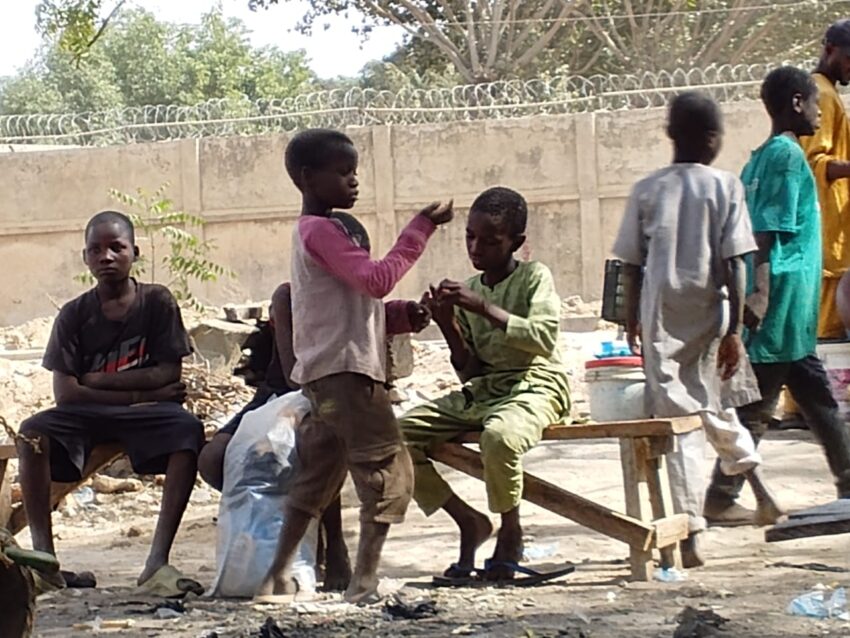
Over 2 Million Street Urchins Sleep In Unsafe Environment In Kano – NGO
By Abdullahi Yusuf
A NonGovernmental Organization(NGO), the Global Improvement of Less Privileged Persons Initiative (GIOPPINI), says over two million Street Urchins now sleep in unsafe and unhygienic environment in Kano, everyday.
The Executive Director of the group, Mohammed Ali Mashi,who sounded the alarm in an interview with Journalists,said the estimate was realized through an investigation conducted by GIOPPINI.
Mashi said the street children were found to be dwelling several locations across Kano metropolis, including Race Course, Central Hotel, Railway Station, Nassarawa Hospital Road, Dangi Bridge, Zoo Road, Lado Bridge, New Road in Sabon Gari, Mariri Park, and Kofar Ruwa Park.
He described the situation as alarming and called on government agencies, community leaders, religious institutions and Civil Society Organizations(CSOs) to join hands in tackling the escalating crisis.
The executive director explained that many of the street children migrated from neighboring states or rural communities under the pretext of seeking Quranic education.
However, he noted, due to hunger and lack of proper care, they abandoned their schools in search of food and survival, noting that over time, they become disconnected from education entirely and are drawn into street life, which exposes them to crime, exploitation and eventual conflict with the law.
Mashi warned that if urgent steps are not taken, Kano risks becoming a “powder keg,” as the unchecked activities of these street children could lead to widespread insecurity and social unrest.
He emphasized that the issue is not only a humanitarian concern but also a threat to peace and stability in the state.
He urged stakeholders to prioritize the rehabilitation and reintegration of these children through structured programmes that provide shelter, food, healthcare, and education.
The executive director also stressed the importance of strengthening family support systems and addressing poverty in rural areas, which often drives children into the streets in the first place.
Again,he emphasized the role of religious leaders in sensitizing parents and guardians on the dangers of neglecting their children.
“While the pursuit of Quranic knowledge is noble, it must be balanced with proper welfare and supervision to prevent children from drifting into destitution,” he noted.
Mashi then called for a coordinated government policy framework that would regulate the movement of children across states, ensure accountability among school proprietors, and provide sustainable opportunities for vulnerable families.
“Without such measures, the cycle of poverty, neglect, and crime will continue to expand, leaving Kano and its people in a precarious situation,” he warned.