

By Aminu Abdullahi Ibrahim
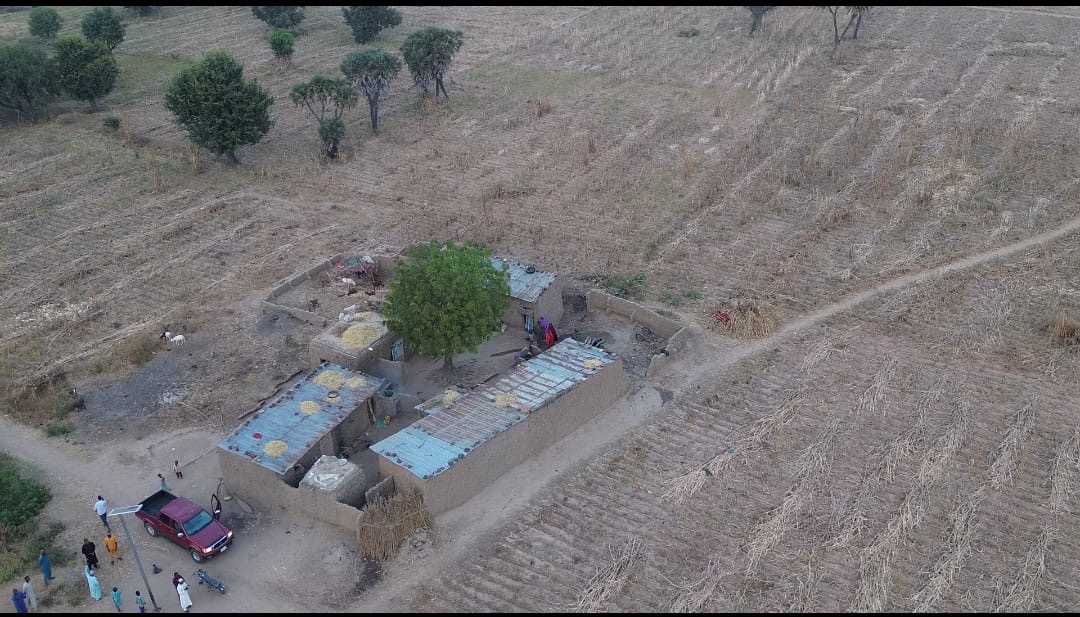
Residents of several rural communities in the Northern part of Kano State, daily life has become a painful struggle shaped by fear, isolation, and neglect. Poor road infrastructure is not only worsening insecurity but is also cutting communities off from healthcare, education, and timely security response—leaving thousands exposed to violence and deepening humanitarian hardship.
In Tsanyawa Local Government Area, villages such as Biresawa, Sundu, and Masaurari, located close to the Katsina State border, have repeatedly come under attack by armed bandits who take advantage of the difficult terrain and lack of motorable roads. Community members say the absence of accessible roads has turned their villages into easy targets and delayed lifesaving interventions.
Residents spoke with visible pain, breaking them down in tears, as they recounted how security forces often arrive too late—not due to lack of effort, but because there are no simply roads for vehicles to pass through.
A Growing Rural Crisis
On November 24, 2025, armed groups attacked several villages in Tsanyawa Local Government Area, abducting about 20 people, according to local accounts. The affected communities lie nearly 40 kilometres from Tsanyawa town, along Nigeria’s northwestern corridor—an area increasingly plagued by banditry and rural insecurity.
The bandits also carried out another deadly attack on November 29, 2025, in Yankamaye town, located in Tsanyawa Local Government Area, during which one woman was shot and four people were abducted.
Despite the dangers and harsh terrain, journalists reached the communities through alternative routes near the Katsina State border to document the unfolding crisis.
What is happening in Tsanyawa reflects a wider reality across parts of northern Nigeria, where weak infrastructure, persistent insecurity, and limited public services continue to fuel a cycle of humanitarian suffering and underdevelopment in rural areas.
Kidnappings and Delayed Security Response
For Abubakar Ishaq, a 35-year-old farmer from Biresawa village, the crisis is deeply personal. With a trembling voice, he recounted how armed men stormed his community and abducted his 24-year-old wife and four-year-old daughter.
“That night changed my life forever,” he said. “It has become a nightmare that I may never wake up from.”
He explained that the community immediately alerted security agencies, but help did not arrive in time.
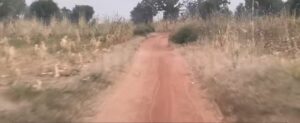
“We called for help, but because there are no proper roads, the security forces could not reach us before the attackers escaped,” he said bitterly.
As of the time of this interview, his wife and daughter remain in captivity.
Another resident, Abubakar Audu, described a similar attack on the same night. He said there is no direct road connecting Biresawa to nearby towns, forcing security personnel to take long, difficult routes that give attackers enough time to flee.
Residents say kidnappings have become more frequent, with bandits exploiting the poor terrain and lack of infrastructure to operate freely.
Maternal Deaths Linked to Poor Access to Healthcare
Beyond insecurity, the lack of road access has had deadly consequences for healthcare. A resident who requested anonymity for security reasons said his wife died in 2024 while being transported to a hospital during childbirth.
“There is no hospital in our village,” he said quietly. “The nearest health centre is poorly equipped and does not meet basic standards for childbirth. There are not enough health workers to care for us.”
Recalling the painful memory, he added, “My wife struggled to give birth—not because she was weak, but because the health system failed her. When emergencies happen here, we travel long distances, sometimes all the way to Kano city. Many do not survive the journey.”
In Masaurari village, residents say the absence of any healthcare facility has forced them to rely on traditional medicine. Abdulsalam Abdullahi, 75, said many elderly people and children now depend on self-medication and herbal remedies, which sometimes lead to severe complications.
Children Missing School
For children, the crisis is quietly stealing their future. Hassan Hussaini, a community member, said there is no school in his village, forcing children to walk more than 10 kilometers to the nearest primary school.
“Many parents have withdrawn their children because the journey is too long and unsafe,” he said. “Some of these children are now working on farms instead of learning.”
Sahabi Ibrahim, a resident of Biresawa community, has raised concerns over the absence of basic healthcare and road infrastructure in the area, saying the community has neither a hospital nor a health center.
He explained that the situation worsens during the rainy season, when vehicles are unable to access the village particularly when diseases are more rampant which might led to outbreak.
According to him, even motorcycles can only enter the community with great difficulty, and in some cases cannot enter at all once it rains.
Ibrahim noted that, the lack of access roads makes it extremely difficult for residents to seek medical care, especially during suspected disease outbreaks. He said the community often suffers severe hardship in reaching hospitals, a situation that has sometimes resulted in deaths caused by illnesses such as severe fever, vomiting, and diarrhea.
He appealed to government authorities to intervene by providing healthcare facilities and constructing roads to enable residents to access emergency medical services.
According to him, residents sometimes find it easier to seek medical treatment in neighboring Katsina State rather than in Kano State, where the community is located, due to the poor state of road access.
In addition, the insecurity and poor infrastructure have caused declining school attendance, especially among girls, who are considered more vulnerable along unsafe routes.
Communities Cut Off
The district head of Yancibi Malam Muhammadu Shamsuddeni, confirmed that poor road access continues to delay security response, isolate communities, and hinder economic activities.
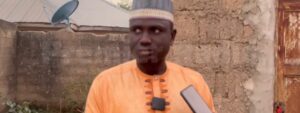
“When we heard the attackers approaching, I immediately informed the Divisional Police Officer and the army commander,” he said. “But by the time they arrived, the gunmen had already left us with unforgettable memories.
However, lack of roads has made it extremely difficult to transport patients, move agricultural produce, and carry out daily activities.
“We are suffering and we are calling on the authorities to rescue us—from the bandits and from this isolation—by providing us with roads.”
Furthermore , we have repeatedly lodge complaints with politicians in Tsanyawa Local Government Area over the years.
Unfortunately , No meaningful action has been taken to address the community’s challenges.
Malam Muhammadu Shamsuddini express that we have formally appealed to the Kano State and Federal Governments to treat road construction in Tsanyawa as an emergency security intervention, stressing that without access roads, efforts to improve security, healthcare, and economic stability will remain ineffective.
Call to Action:
Residents of Biresawa Abubakar ishaqa call on the federal and state governments to urgently improve road access to their communities, deploy rapid-response security units, and intensify rescue efforts for abducted victims.
In addition, without immediate intervention, more families will continue to suffer irreversible losses, he said
Another resident by named, Abubakar Audu urged security agencies to establish forward-operating security posts closer to vulnerable villages and to work with local vigilante groups who understand the terrain, while long-term road construction plans are implemented.
Malam Kabiru Usman bitterly appeal to health authorities to urgently establish functional primary healthcare centers within their communities, equip them for maternal and emergency care, and provide ambulances that can operate in rural terrain to prevent avoidable deaths.
Moreover, Malam Abdulsalam Abdullahi call on the government and humanitarian partners to deploy mobile clinics and regular medical outreach programs to rural settlements cut off from formal healthcare.
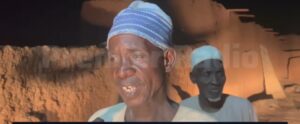
He urged education authorities to construct primary schools closer to rural settlements and to provide safe learning environments, warning that continued neglect risks creating a generation denied basic education.
Government Response
While bridging the gaps between the government and Tsayawa residents, the Kano State Centre for Disease Control (KNCDC), under the supervision of its Director-General, Professor Muhammad Adamu Abbas, said his agency is working tirelessly to tackle disease out break in the state expecially at communnies remote local Government villages.
However, the state government has begun upgrading primary healthcare centers to deliver more comprehensive services in rural areas.
Prof Abbas said, plans are also underway to deploy vehicles to transport patients from remote communities to health facilities for effective health services in the state.
Efforts to obtain a response from the Chairman of Tsanyawa Local Government, Abdullahi Ishaq ‘Yan Awaki, were unsuccessful, as his phone line remained unreachable and he did not respond to text messages.
Furthermore, on 18 December 2025, the Kano State Executive Council approved approximately ₦16 billion for the construction of a road linking Gwarzo, Shanono, and Tsanyawa—a development resident’s hope will finally bring security, access, and dignity back to their communities.