

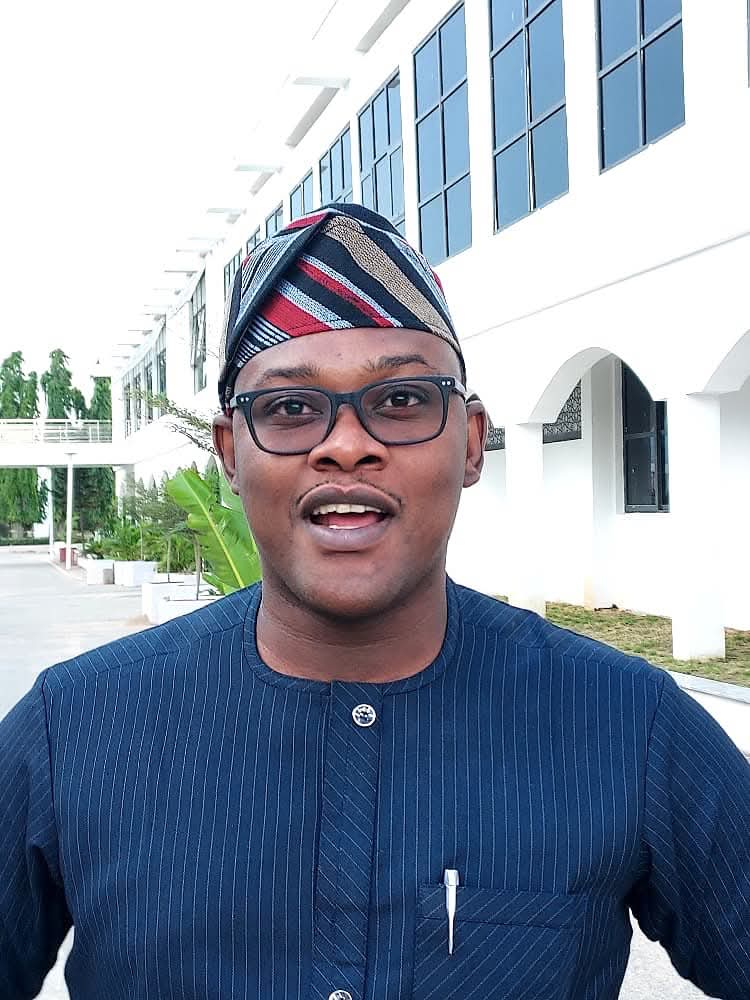
By Hassan Sani Tukur
Public discourse thrives when it is guided by respect, clarity, and a shared commitment to the public good. In this light, the rejoinder by Mallam Muhammad Garba merits engagement. As a former commissioner and a public servant with substantial experience in government and political communication, his views naturally form part of Kano’s ongoing political conversation, and addressing them thoughtfully is both appropriate and necessary for healthy democratic debate.
That said, it is equally important to gently clarify where his response to my earlier article may have travelled a different route from the issues that I originally raised.
My initial write up was not an attempt to personalise Kano’s political history, nor was it a commentary on who controls whom in government. It was, rather, a reflection on policy direction, ideological consistency, and governance outcomes, and how these elements help us understand the present moment in Kano politics.
At the heart of that article was a simple, basic argument: the disagreement between Senator Rabiu Musa Kwankwaso and Dr. Abdullahi Umar Ganduje was largely rooted in divergent approaches to governance, particularly the place of people-centred social programmes in state policy. This was not presented as a moral judgment on personalities, but as a political reality shaped by decisions taken in office.
In responding, Mallam Muhammad understandably drew from his own experience in the said administration and chose to frame the debate around autonomy, constitutional authority, and the dangers of overbearing political influence. These are valid concerns and, in truth, no serious observer of Nigerian politics would dismiss them. However, that framing subtly shifted the discussion away from the central question my original piece, which was not about subordination or control, but about continuity and departure in public policy.
The issue raised was straightforward: many programmes that defined a people-centered governance model, particularly in education, healthcare, human capital development, and grassroots infrastructure were discontinued after 2015. Whether those decisions were taken for administrative, financial, or procedural reasons is a separate debate. What is undeniable is that their discontinuation had visible social consequences, and that reality shaped public perception and political loyalty in Kano.
It was within this context that Governor Abba Kabir Yusuf’s administration was discussed not as an extension of any individual’s authority, but as a government that has consciously chosen to restore and expand social programmes that directly impact ordinary citizens.
Since assuming office, Governor Yusuf has made his priorities clear through action rather than rhetoric. Declaring a state of emergency in education and allocating about a third of the state budget to the sector was not a symbolic gesture. It has translated into the reconstruction of classrooms, recruitment of teachers, provision of free learning materials, and the revival of girl-child education initiatives. These are measurable outcomes, not ideological slogans.
In healthcare, the restoration of free services, the renovation of major hospitals, the upgrading of primary healthcare centres across the 44 local governments, and the enrolment of hundreds of thousands of residents into a free health insurance scheme under the Abba Care Initiative speak to a deliberate policy choice. These interventions are visible to the average Kano resident, irrespective of political affiliation.
Similarly, in infrastructure, the ongoing reconstruction of major urban roads under the urban renewal programme, rural access roads, flyovers, and the transition to solar-powered street lighting reflect a government actively investing in both economic mobility and quality of life. Kano today, by any fair assessment, is a hive of construction activity.
None of these achievements diminish the experience or contributions of past administrations, including that of Dr. Ganduje, under whom several important projects were completed. Governance is cumulative, and progress is rarely the product of one era alone. Acknowledging this continuity does not weaken the argument being made; rather, it strengthens it by situating the current administration within a broader historical trajectory.
Where the discussion perhaps needs recalibration is in the tendency to treat ideology as inherently manipulative or irrelevant. In practice, what many refer to as ideology in Kano has often manifested as a preference for certain policy choices, social investment over austerity, grassroots infrastructure over elite projects, and welfare-oriented programmes over purely market-driven approaches. One may disagree with the label, but the policies themselves are real, and their impact is tangible.
On the question of political realignment, the point raised was not one of inevitability or opportunism, but of strategic foresight. Nigerian political history has repeatedly shown that legal and structural vulnerabilities can undo electoral victories. Recognising this reality and discussing it openly should not be mistaken for disloyalty or ideological confusion. It is, rather, part of responsible political planning.
Throughout all of this, Governor Abba Kabir Yusuf has consistently demonstrated a commitment to good governance, accountability, and service delivery. His administration’s focus on restoring trust in public institutions, investing in human capital, and addressing long-neglected social needs reflects a leadership style that is responsive to the people’s expectations.
Kano’s political discourse is best served when differing perspectives engage each other on the strength of ideas rather than stature. Experience like Malam Muhammad Garba’s undoubtedly enriches debate, just as fresh perspectives like mine sharpen it. What ultimately matters, however, is not who speaks, but what is being said and how it connects to the lived realities of the people. Kano is larger than any individual, movement, or slogan, but it is shaped decisively by the policy choices governments make and the values that guide those choices.
If this exchange contributes, even modestly, to a more nuanced understanding of governance in Kano, one that prioritises results over rhetoric, then it would have served its purpose.
Hassan Sani Tukur is the Senior Special Assistant on New Media to HE Governor Abba Kabir Yusuf