

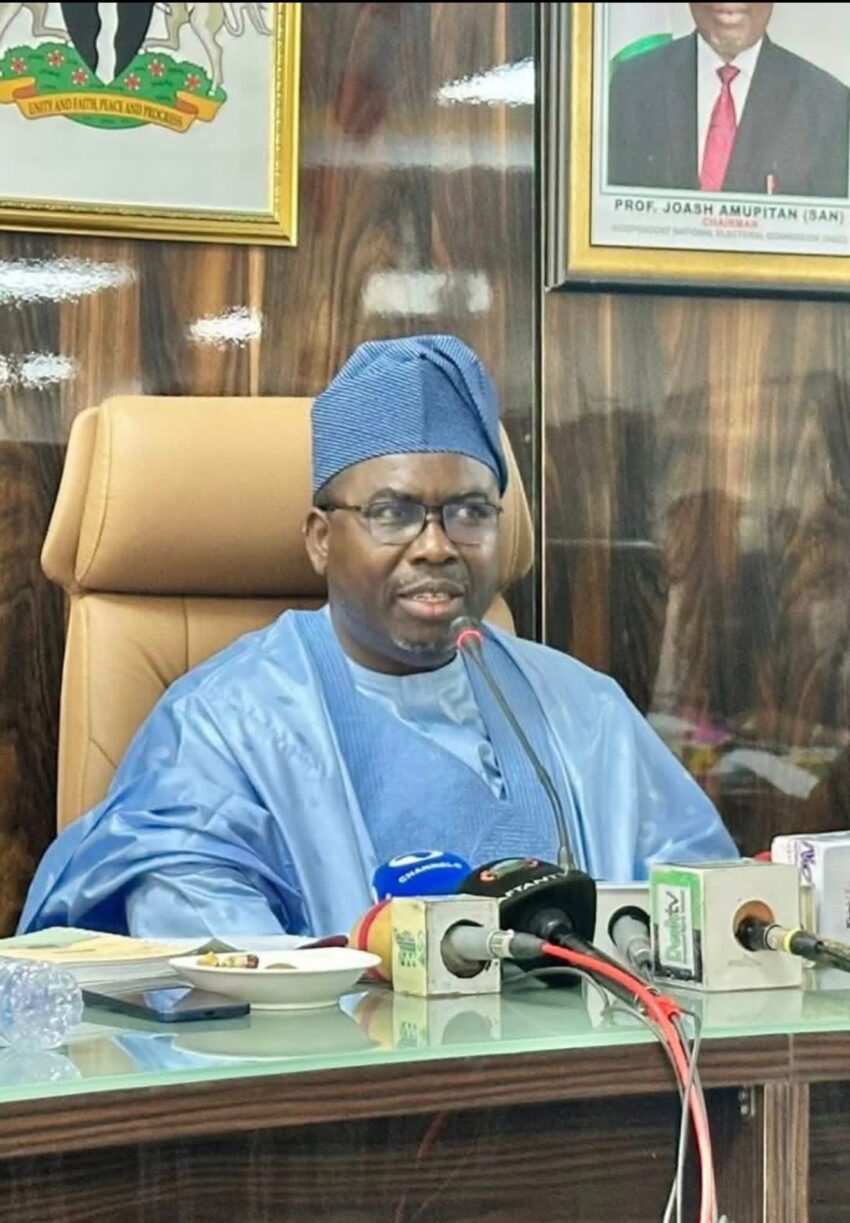
The Supreme Council for Shariah in Nigeria (SCSN) has issued a clarification regarding its recent call for the removal and prosecution of the Chairman of the Independent National Electoral Commission (INEC), Prof. Joash Ojo Amupitan, stating that the position is not religiously motivated but rooted in concerns over national integrity and institutional credibility.
In a statement signed by its Secretary General, Nafi’u Baba Ahmad, mni, the Council explained that the resolution emerged from its Annual Pre-Ramadan Conference and General Assembly held on January 28, 2026, in Abuja. The Council noted that while the communiqué touched on several national issues—ranging from security to economic reforms—the section calling for Amupitan’s removal had been “amplified out of context and grossly misconstrued.”
According to the statement, SCSN’s stance stems from “grave concerns relating to national cohesion, institutional integrity, constitutionalism, sovereignty, and the dangerous trajectory trailing the Chairman’s antecedents,” not from sectarian sentiments.
Tracing Nigeria’s electoral history, the Council highlighted that since independence, only two Muslims—Prof. Attahiru Jega and Prof. Mahmood Yakubu—had led the country’s electoral bodies, adding that religion had never been a factor in accepting or rejecting any chairman.
The Council alleged that Prof. Amupitan authored a 2020 legal brief containing “provocative and prejudicial assertions” against Nigerian Muslims and Northern Nigeria. It expressed concern over what it described as attempts in the document to link insecurity in the North to the 19th-century Jihad of Sheikh Uthman bin Fodio, describing such claims as “historically inaccurate and destabilising.”
The statement also accused the INEC boss of presenting these claims to foreign actors, thereby “portraying Nigeria as a theatre of religious extermination” and causing diplomatic tension and reputational damage to the country.
SCSN maintained that credible reports and humanitarian data refute the notion of a “Christian genocide,” stressing that violence in Northern Nigeria is complex and has affected both Muslims and Christians, with Muslims being the majority of victims in most northern states.
The Council further stated that Prof. Amupitan’s failure to publicly deny or retract the alleged statements undermines his credibility, adding that the government’s reported efforts to counter the fallout through foreign lobbyists underscore the seriousness of the issue.
Reaffirming its commitment to justice and inclusivity, the SCSN said its call for Amupitan’s removal was “based strictly on character, conduct, and credibility, not religion.”
It urged Christian leaders not to be swayed by divisive narratives, emphasizing that the Muslim Ummah remains committed to peaceful coexistence, mutual respect, and the unity of Nigeria.