

By Aisha Habib Maigiwa
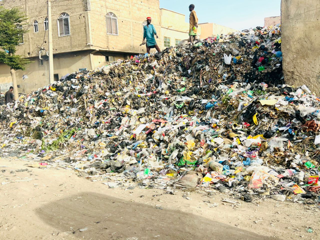
From a small waste skip to a towering heap of refuse, residents of Sheka Yar Kasuwa in Kumbotso Local Government Area of Kano State are witnessing the steady transformation of their once clean environment into a heavily polluted zone.
A visit to the area reveals a disturbing scene of environmental degradation. Flies buzz persistently around heaps of decaying waste, while broken glass and rotting food substances litter the surroundings. The pungent odour hanging in the air makes it difficult for residents and visitors alike to breathe comfortably.
The dumpsite, which has now become a visible landmark in the community, continues to attract young boys aged between six and sixteen. The children transport waste from neighbouring communities such as Medile and Rafin Kuka, trekking long distances to dispose of refuse at the site. For them, the activity serves as a source of livelihood, despite the obvious health and environmental risks.
“This is the closest place to dump waste around here. We don’t know of any other place. My friends and I come all the way from Medile and Rafin Kuka every day to dispose of waste materials. It is a lucrative business as it provides us with something to put on the table,” one of the boys said.
Sheka Market, located within the area, serves as both a residential and commercial hub, known for its busy and vibrant nature. Residents recall that as of the early 2000s, the community was largely habitable, with a functional waste management system in place. Two large waste disposal skips were regularly evacuated every two days, ensuring a relatively clean environment.
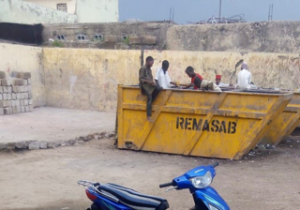
However, over time, the situation deteriorated following the destruction of these waste disposal facilities. The absence of proper infrastructure has led to uncontrolled dumping, resulting in the accumulation of massive heaps of refuse across the area.
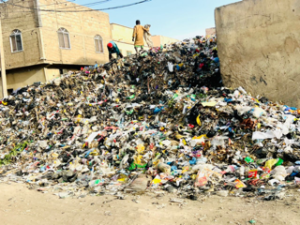
Environmental pollution, experts note, has far-reaching consequences for human health and ecosystems. These include water contamination, soil degradation, loss of biodiversity, increased healthcare costs, and reduced agricultural productivity. Poor waste management also contributes to blocked drainage systems, which heighten the risk of flooding.
Recent reports indicate that Kano State is facing worsening environmental pollution, largely driven by industrial activities, rising air contamination, and inadequate waste management systems, despite ongoing government efforts to strengthen environmental regulations.
For residents living close to the dumpsite, the impact is both immediate and severe.
Mallama Safiyya, a mother of six whose home is situated near the dumpsite, expressed deep concern over the conditions.
“The odour is unbearable. We have been living here for 23 years, but our drainage systems are now blocked, and the gutters remain stagnant. The house is always dirty because of the waste. There has been no development, and I wish the dumpsite could be relocated completely,” she said.
Another resident, Hajiya Hafsat, who has lived in the area for over 17 years, described the situation as distressing.
“Worms have become part of our daily life. We cannot allow our children to go far outside. Sometimes they go out without our knowledge and return dirty and smelling. I worry constantly, especially when my three-year-old falls sick, as it is often diarrhoea. Rats are everywhere, and the odour is unbearable, especially during waste evacuation,” she said.
She further noted that the dumpsite has encroached on access roads, making movement difficult.
“The roads have become so narrow that vehicles can barely pass. We can no longer park in our compound. Complaints have been made repeatedly, but nothing has changed,” she added.
A trader in the area, Malam Nasir, recalled how the dumpsite used to be manageable.
“I have been here since 1985. The dumpsite was small and did not disturb anyone. Today, over 300 carts of waste are brought here daily. It has even become a defecation site for some children. I sweep my shop several times a day, yet the dirt keeps coming. Business is suffering,” he said.
Health experts warn that prolonged exposure to polluted environments can lead to diseases such as cholera, tetanus, respiratory complications, and skin infections. Residents also reported frequent cases of allergies and persistent diarrhoea within their households.
“I often experience allergies and skin rashes due to the environment. I am constantly on medication, which is costly,” a female resident said.
Business owners in the area say the environmental condition has significantly reduced customer patronage.
“Most customers avoid coming here. I cannot display my goods properly because people no longer pass by,” another trader, Abdulganiyu Muhammad, lamented.
In 2023, the Kano State Government, through the then Commissioner for Environment, Dr. Kabiru Ibrahim Getso, stated that there were 52 legal dumping sites across the metropolis, with regular evacuation of refuse.
However, the Director of Special Duties at the Refuse Management and Sanitation Board (REMASAB), Muhammad Sidi Abubakar, disclosed that the number has increased to 107 approved dumping sites, including Sheka Yar Kasuwa.
“We are aware of the situation at Sheka Yar Kasuwa. The site fills up quickly, but we are making efforts to clear it regularly. Plans are underway to reintroduce waste disposal facilities to control indiscriminate dumping,” he said.
He explained that private waste collection services have been introduced in some areas, but many residents cannot afford the cost.
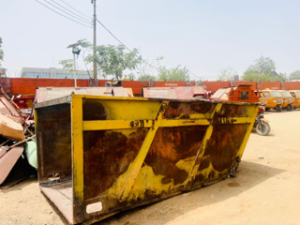
“This system works better in government residential areas. In places like Sheka Yar Kasuwa, residents rely on informal waste collectors who charge minimal fees,” he added.
Abubakar also cited limited resources as a major challenge in providing sufficient waste disposal infrastructure, noting that the agency is currently recycling old equipment to meet demand.
He emphasized the importance of community engagement and public awareness in improving waste disposal practices.
A 20-year-old resident, Annur, who grew up in the area, described how the situation has worsened over time.
“I was born here, and it was not like this before. The road is now completely blocked. My father has to park his car far away from home. During the rainy season, the situation becomes worse as drainage systems are blocked, leading to stagnant water,” he said.
For many residents, the issue goes beyond environmental pollution. It has become a daily struggle affecting their health, safety, and quality of life, highlighting the urgent need for sustained government intervention and improved waste management systems.