

From Mariya Shuaibu Suleiman, Jos
Abstract: The initiative aims to improve public understanding of taxation, encourage compliance, and foster accountability in the management of public resources through multi-stakeholder engagement.
Civil society organisations, government representatives, and policy advocates on Wednesday inaugurated the Plateau State chapter of the Tax Justice and Governance Platform (TJGP), in a move aimed at strengthening citizen engagement and accountability in tax administration.
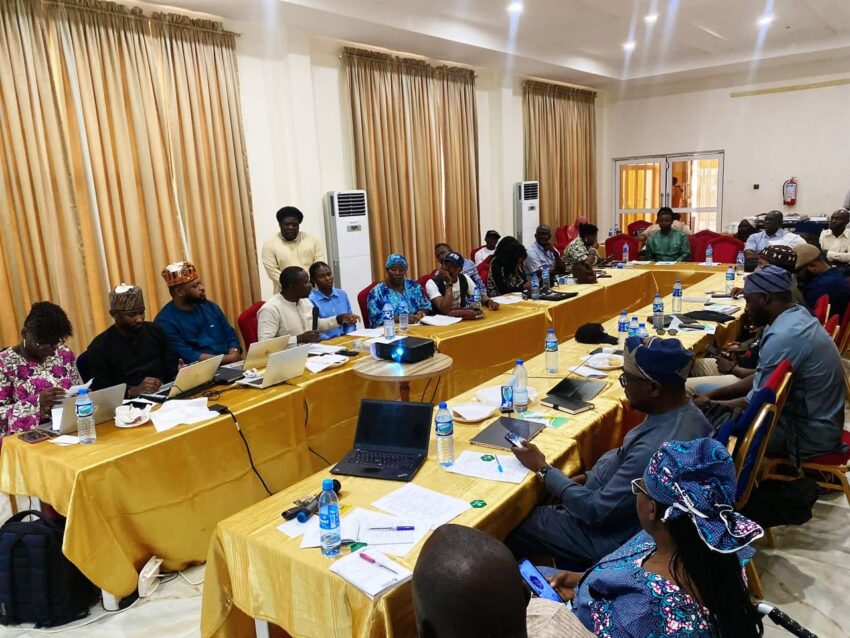
The platform was unveiled at the end of a two-day onboarding engagement for the establishment of the state chapter, held on 24 and 25 March in Jos, where participants examined Nigeria’s evolving tax system and its implications for citizens.
The engagement, supported by the Civil Society Legislative Advocacy Centre (CISLAC) and Christian Aid, brought together stakeholders from across sectors to build a coordinated framework for advancing tax justice in the state.
Speaking during the engagement, Sadiq Muhammad Mustapha, Kano State lead of the platform, described the inauguration as a significant milestone, noting that it expands the initiative’s presence to 21 states nationwide. Drawing from experiences in Kano, Kaduna, and Jigawa.
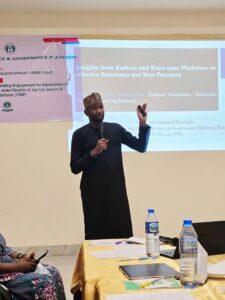
Mr Mustapha highlighted the importance of coalition building and stressed that tax systems must reflect the realities of citizens most affected by fiscal policies.
He also underscored the need to prioritise listening to the public, particularly those directly impacted by taxation.
In a related development, Olatunde Simeon, the Kaduna State lead of the platform emphasised that advocacy should go beyond revenue collection, stressing that tax systems must ensure that public funds translate into tangible services that improve citizens’ lives.
He encouraged journalists to frame tax issues constructively, helping the public understand governance processes without creating unnecessary confrontation.
Chinedu Bassey, a national member of the platform, noted that the initiative would provide a structured channel for engagement between citizens and government, particularly on issues of tax equity and service delivery.
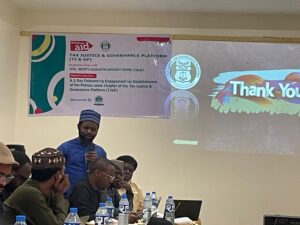
He noted that the platform creates opportunities for citizens to contribute meaningfully to policy conversations and demand accountability.
On his part, Ugochukwu Munachi of Christian Aid for West and Central Africa highlighted that tax reforms are often poorly understood, underscoring the need for sustained public engagement to improve clarity and trust. In the same vein, Asaolu Dolapo Dorcas of CISLAC noted that Plateau was selected for the intervention based on existing engagements and the need to deepen participation in tax governance at the state level.
At the close of deliberations, Albert Pam of the Women and Children in Collaboration Initiative (WOCCI) emerged as the state coordinator following a consensus-driven process. Participants also agreed on the need to constitute additional executives and a steering committee to guide the platform’s operations.
Discussions during the sessions focused on the fundamentals of taxation, voluntary compliance, and advocacy strategies, alongside a review of key aspects of Nigeria’s tax framework. A working document was developed to guide the implementation of the platform’s objectives.
Participants emphasised the importance of collaboration among civil society, government institutions, and other stakeholders in promoting transparency and fairness in the management of public resources.
With its formal inauguration, the Plateau TJGP is now open to individuals and organisations interested in advancing tax justice and public accountability, with stakeholders expressing optimism that the initiative will strengthen public understanding and ensure tax policies better serve the public interest.