

By Kadaria Ahmed
Let us start with what we know.
Mallam Nasir El-Rufai, former governor of Kaduna State, former FCT Minister under President Olusegun Obasanjo, and one-time Director-General of the Bureau of Public Enterprises, is under arrest. He is facing allegations of corruption and accusations under the Cybercrimes Act, including claims that he facilitated the tapping of the phone of the National Security Adviser, Mallam Nuhu Ribadu. He has denied all wrongdoing. He says this is political persecution, punishment for criticising a government he helped bring to power.
The courts will determine the legal truth.
But politics is rarely only about what is written in a charge sheet.
This story is not simply about El-Rufai. It is about power. It is about loyalty. And it is about a region in crisis whose leaders appear unable to rise above themselves.
Because this is not just any defendant.
This is a man who once stood shoulder to shoulder with Mallam Nuhu Ribadu during President Obasanjo’s time in charge. As Elrufa’i was reshaping Abuja as FCT Minister, Ribadu was holding people accountable at the Economic and Financial Crimes Commission, the EFCC. They were close. Close enough by many accounts, for Ribadu to name his son Nasir, after El’Rufa’i. Close enough for the two to share political exile during the presidency of Umaru Musa Yar’Adua.
Today they are on opposite sides of state power.
Then there is Mallam Uba Sani, El-Rufai’s political protégé and successor in Kaduna. A man who has publicly acknowledged the former governor’s role in building his career. Their relationship is now, at best, strained, but is more likely shattered.
All northerners. All influential. All fractured.
And that is the real story.
The North Is Not Well
Let us speak plainly.
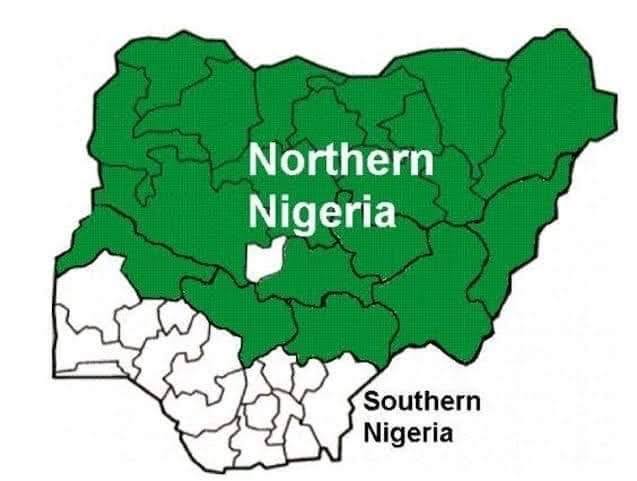
Northern Nigeria is in trouble.
In the North-West, terrorist bandits have evolved into a parallel authority structure. Villages in Zamfara, Katsina, Sokoto and Kaduna pay taxes to armed groups or flee entirely. Kidnappings and killings are no longer shocking, they are routine!
In the North-East, insurgency persists in altered forms. The violence that began over a decade ago has splintered, but it has not ended, instead it has spread, knocking on doors and entering into homes in the neighbouring Northcentral region. Across the Arewa, communities are living with death, trauma, uncertainty and with hunger.
Poverty statistics are not abstract numbers; they are lived reality. Multidimensional poverty is highest in the region.
The economy of Arewa once vibrant and strong is under severe structural strain. Widespread insecurity has crippled agriculture, pastoralism and rural commerce. Low educational attainment has put limits on productivity, while weak industrialisation and heavy fiscal dependence on federal allocations add to the milieu of problems.
This is the reality of Arewa today
The majority of Nigeria’s out-of-school children are northern. Maternal and child mortality rates remain very high. Youth unemployment fuels despair, drug use and recruitment.
And pressure from the impact of climate change worsens everything. Competition for land ignites more farmer-herder conflicts. Livelihoods collapse, social cohesion has frayed and in some places is non-existent.
Even symbols of continuity are under strain. In Kano, the Emirate is in crisis, brothers have become rival claimants, federal involvement and political overtones have turned a centuries-old institution into a battlefield.
This is not a stable region.
This is a region facing trouble of gigantic proportions.
So Why Are Its Leaders Fighting?
There was a time when northern political elites understood the value of strategic cohesion. Under Sir Ahmadu Bello, disagreements existed, but there was a unifying doctrine, protect the region’s long-term interests. Today, the instinct seems reversed.
Instead of a minimum common agenda on security, education and economic revival, we see fragmentation. Instead of coordination, we see camps. Instead of strategy, we see in-fighting and retaliation.
It would be naïve to pretend power is sentimental.
Power will always do what it has always done, grow itself and consolidate using whatever means necessary.
That is not a moral judgment. It is an observation.
The question for the leaders of Arewa and its politicians, both those inside the current power structure and those trying to replace it, is whether the gains of power will continue to accrue only to them as individuals, or if some of it will be used to improve the lives of their communities and save Arewa from complete collapse?
Because while politicians are politicking, farmers are being displaced and pastoralists are losing their livelihoods. Children are out of school and young men are being radicalised. Entire local economies are collapsing and thousands are getting killed.
And there is no visible, coordinated northern response.
Accountability, Yes…and
Let us also be honest about El-Rufai.
He is not a victim archetype.
His years in Kaduna were marked by ambitious reforms, urban restructuring, public service reforms, controversial religious and educational policies. Admirers called him courageous. Critics called him ruthless. Many felt unheard.
So yes, there are people who feel no sympathy for him now.
But sympathy is irrelevant.
The issue is this, can a region facing an existential crisis afford to cannibalise its most experienced political actors without building something stronger in their place?
In Kano, the north’s ancient city and commercial power house of the north, former Central Bank Governor and intellectual giant, Emir Muhammadu Sanusi 11, is no longer focused on the ambitious reforms he started on family law, early marriage and education during his first coming, but is instead distracted with holding unto a contested throne.
In the same state, Mallam Rabiu Musa Kwankwasso, one of the norths leading politicians has fallen out with his protegees, people who he groomed and helped get into high political office: the former governor of the state, Mallam Abdullahi Umar Ganjude and the current Governor of Kano State, Mallam Abba Yusuf, who also happens to be his son in law.
The outcome on the politically volatile state in the forthcoming election is best not imagined.
Across the north, prominent Arewa politicians are turning on each other with no discernible benefit from these battles accruing to the ordinary citizens they are supposed to represent. Yusuf Tuggar/Bala Muhammed, Bello Matawalle/ Dauda Lawal, and the list goes on and on.
The Larger Failure
The tragedy here is bigger than one arrest, bigger than political ‘Godfathers’ fighting their protégées, bigger than two blood brothers turning on each other.
Where is the bi-partisan cooperation that puts the survival of the people of Arewa over and above personal political gains?
Where is the summit of ALL northern leaders on the security crisis?
Where is the region-wide education emergency plan?
Where is the regionally coordinated agricultural and pastoral transformation and strategy?
Where is the unified push for fiscal and policy reforms tailored to northern realities?
Across party lines?
Instead, what the public sees is estrangement.
Across Maishayi stalls in Sokoto and markets in Kaduna and Bauchi, a narrative is forming: that Arewa is weakening itself, that its elite are more invested in proximity to federal power than in proximity to their people’s pain.Whether that narrative is fair or exaggerated almost does not matter. What matters is that it is spreading.
History Will Ask
History is unforgiving of leaders who mistake consolidation for legacy.
Arewa does not lack intelligence. It does not lack influence. It does not lack political experience.
It lacks alignment.
The North is bleeding, economically, socially, psychologically. It needs mature leadership capable of disagreement without destruction, of competition without implosion.
If its most powerful sons and daughters cannot find a minimum common purpose in this moment, then future generations will not remember who won which feud.
They will remember that when the region stood at the edge, its leaders chose to fight each other.
And that choice may prove far more consequential than any single charge sheet, political party or election.