

By Umar Dankano, Yola
No fewer than 156 participants, including teachers, adolescents, tailors, Village Health Promoters (VHPs), Local Government Water, Sanitation and Hygiene (WASH) units, and government officials, have been trained on menstrual health and hygiene management across schools and communities in Adamawa State.
The training, which utilized the Improved Menstrual Health and Hygiene Management (MHHM) Manual for Schools and Communities, was organized through a collaboration between the Adamawa State Government and UNICEF, with funding support from the Government of the Netherlands under the Accelerating Sanitation and Water for All (ASWA III) Programme.
The initiative aims to improve menstrual health awareness and equip young people, particularly girls, with the knowledge and skills needed to manage their personal hygiene with confidence and dignity.
Some beneficiaries, including teachers and pupils, said the training had significantly enhanced their understanding of menstrual health and hygiene, enabling them to better manage menstruation, especially during school hours.
A teacher at Kiri Pilot Primary School in Shelleng Local Government Area, Mrs. Janet Jibril, said the programme had transformed participants’ perceptions by providing practical knowledge and professional methods for educating pupils.
According to her, the awareness campaign has contributed to a noticeable reduction in absenteeism among adolescent girls in the school.
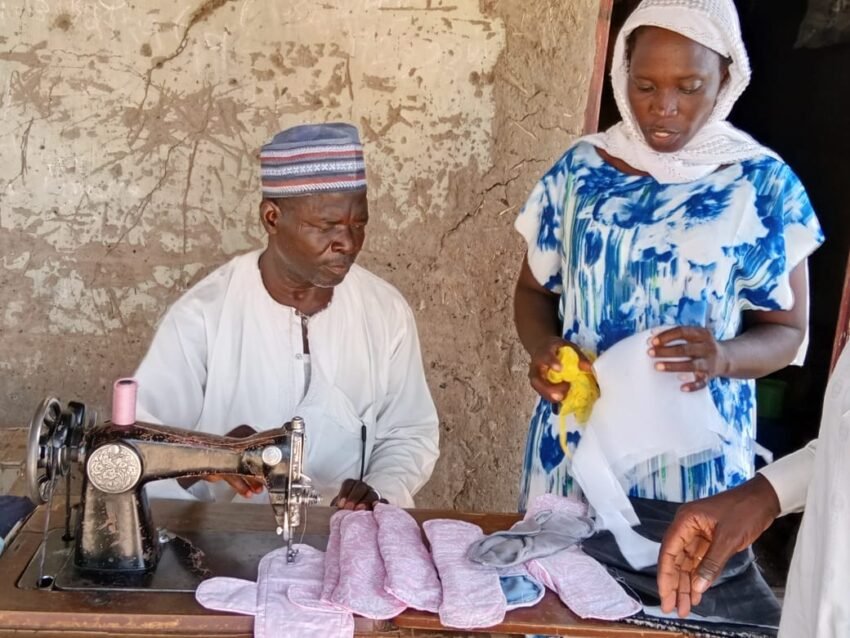
Another teacher, Usman Hassan, said many pupils can now produce reusable sanitary pads locally, a skill acquired during the training. He commended UNICEF and its ASWA III Programme for the intervention.
Hassan added that the school has established a sanitary pad bank stocked with locally produced reusable pads to support girls during emergencies.
A tailor and participant, Musa Halilu, described the training as innovative, noting that it had expanded his business opportunities. He explained that the school engaged him to sew reusable sanitary pads using locally sourced materials.
Halilu said demand for the pads has increased significantly among women in the community, with some customers placing orders in advance.
Speaking on the impact of the programme, the General Manager of the Adamawa State Rural Water Supply and Sanitation Agency (RUWASSA), Emmanuel Essey, and UNICEF WASH Officer, Nanbam Michael, expressed optimism that sustained awareness activities in schools and communities across Ganye and Shelleng Local Government Areas had improved confidence, health outcomes, and dignity among beneficiaries.
They noted that men’s attitudes toward menstrual health and hygiene management had also improved considerably as a result of the awareness campaigns.
For pupils such as Edith Meshach and Ampeni Nakomushi of Kiri Pilot Primary School, the training was an eye-opener. They pledged to share the knowledge gained with their peers and members of their communities.
The experts urged participants to continue spreading awareness on menstrual health and hygiene, emphasizing that the intervention is a joint effort of the Adamawa State Government and the ASWA III Programme, funded by the Government of the Netherlands.