
2027: How Tinubu Won Before The Poll
By Law Mefor
It is both strange and sad how today’s opposition has refused to learn from history. All Progressives Congress, APC, proved this in 2023 by amalgamating five opposition legacy political blocks with Muhammadu as a single candidate to unseat PDPs President Goodluck Jonathan.
History teaches one unchanging lesson about how an opposition wrestles power from an incumbent: it starts with a united front and a joint candidate. Even a joint candidate is no guarantee against incumbency around here.
Yet what we have today is not a united opposition but a splintered and headless one. Everyone wants to be President. Atiku wants to be President. Peter Obi wants to be President. Kwankwaso and Makinde want to be President. Amaechi and El-Rufai want to be President. No one wants to step down for anyone except those forced out by fate. They cannot all be running and hope to win with their votes multiply divided.
Nowhere in history has a divided opposition ever upstaged a determined incumbent. It has never happened in Nigeria, and it does not happen in any serious presidential democracy. Yet this scattered opposition believes it can unseat President Bola Ahmed Tinubu – a man who won even when a sitting President, the Central Bank Governor, and much of the powers-that-be did not want him to win.
Now Tinubu is President. He controls the levers of power. As the Igbo proverb says, ijide dike na ani, inataro ya mma, obu mgbe okwuru oto — if you fail to wrestle a machete from a strong man when he is on the ground, you cannot do it when he is standing.
To understand why 2027 is already decided, we must look at the dozen factors that actually produce Nigeria’s President. These factors are more powerful than social media noise.
1. The Mood of the Nation and Rotation
The first and most powerful factor is the mood of the nation. Even under the military, the mood of the nation dictated where power went. That mood produced an unwritten but binding law: power must rotate between North and South for the sake of stability and equity. It is not written into the 1999 Constitution, but Nigerians have accepted it as sacred. When there was an attempt to produce a northern successor to President Muhammadu Buhari in 2023, it was northern APC governors who resisted it and insisted power must go South. That same mood will define 2027. The South would have done only four years under Tinubu.
The national consensus will be that the South must complete its eight years, just as the North completed its eight under Buhari. Any candidate who attempts to truncate this will be fighting the entire South and the majority of fair-minded northerners. Ask Goodluck Jonathan what happened in 2015. He was seen to have breached the understanding that he would do only one term after completing Yar’Adua’s term. The nation revolted. The same revolt awaits anyone who tries to stop the South in 2027.
2. Ethnicity
The second factor is ethnicity. Our cleavages are real. We have not evolved beyond primordial sentiments. Everyone wants their own to be President. But no ethnic group alone can produce a President. To win, you need four of the six geopolitical zones united behind you. That is the only route to securing 25% in 24 states as required by the Constitution for the production of President. Tinubu in 2023 proved he could get those numbers across North-West, South-West, North-Central and parts of South-South.
No opposition candidate today can boast of four zones. Peter Obi is strong in the South-East and pockets of urban South-South. Atiku is strong in parts of the North-East. Kwankwaso holds Kano, which will benefit his joint ticket with Obi. None has the national spread of President Tinubu.
3. Religion
The third factor is religion. For reasons of primitivism, religion still governs our lives, and religious and political leaders know and heavily exploit it. They deploy religion during elections and 2027 will not be different. Call it spiritual blackmail if you like, but it works.
The Muslim-Muslim ticket that many thought would fail in 2023 because Christian votes were divided has now been normalized by Tinubu’s victory and the opposition groups working in silos. The religious weapon that was used against Tinubu has lost its potency because it is exactly the same pattern that is at play. He cannot be blackmailed with it again.
4. Party Platform
The fourth factor is party platform. This is decisive. An election is not won on Twitter. A presidential election is won at 176,200 polling units. At each polling unit, INEC issues Form EC8A, the primary result sheet. It is the political party and its agents who receive it, defend it, and use it at the tribunal that is actually in the race; others simply make up the numbers. A party that cannot field agents in all 176,200 polling units has no business claiming it was rigged. You cannot defend what you did not cover.
APC has structures in every ward in Nigeria. PDP has structures but is now factionalized into at least three warring groups. NDC has no structures beyond urban centres. The much-touted ADC coalition has no structures at all. It is still holding press conferences in Abuja.
5. Money
Then comes the almighty factor: money, more money and much more money. A presidential candidate needs money to pay at least 176,200 polling unit agents, plus ward, local government and state collation agents. He needs money for logistics, rallies, transport, feeding, mobilization and litigation.
Without money, you cannot win because you cannot defend your votes even if you win. This is why governors are critical. Today, 32 or more governors are backing Tinubu. That means 32 state logistics supports, 32 party structures, hundreds of National Assembly members and thousands of state assembly members working for one candidate. The opposition cannot even agree on pulling resources together.
6. Personality and Incumbency
Finally, the personality of the candidate matters, but it sits below the other factors. Tinubu is no longer the candidate who ran from Bourdillon. He is now the incumbent President. He has federal appointments to give, federal projects to commission, and the capacity to create political realities that favour him before the election.
Weighed against all these crucial factors – national mood, rotation, ethnicity, religion, party platform, money, and incumbency – no opposition candidate poses any serious threat.
In 2023, Tinubu won when he had no incumbency, when naira redesign and fuel scarcity were weaponized against him, when he had to fight his own party’s government. How much easier will it be now that he holds all the cards?
2027 is therefore won and lost before the first vote is cast unless they are hoping on X Factor. As an apostle of the two-party system, my honest advice to the opposition is to cut their losses, come together, and start building for 2031. Otherwise, the APC will not only win in 2027, it will remain in power long after Tinubu.
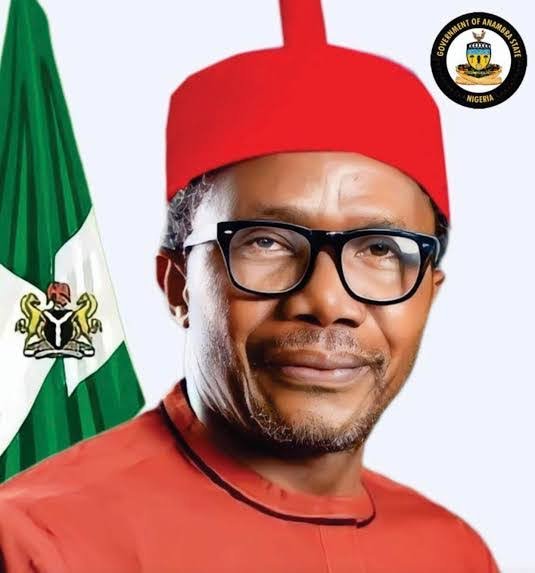
Dr. Law Mefor is Anambra’s Commissioner for Information and Value Reformation.