

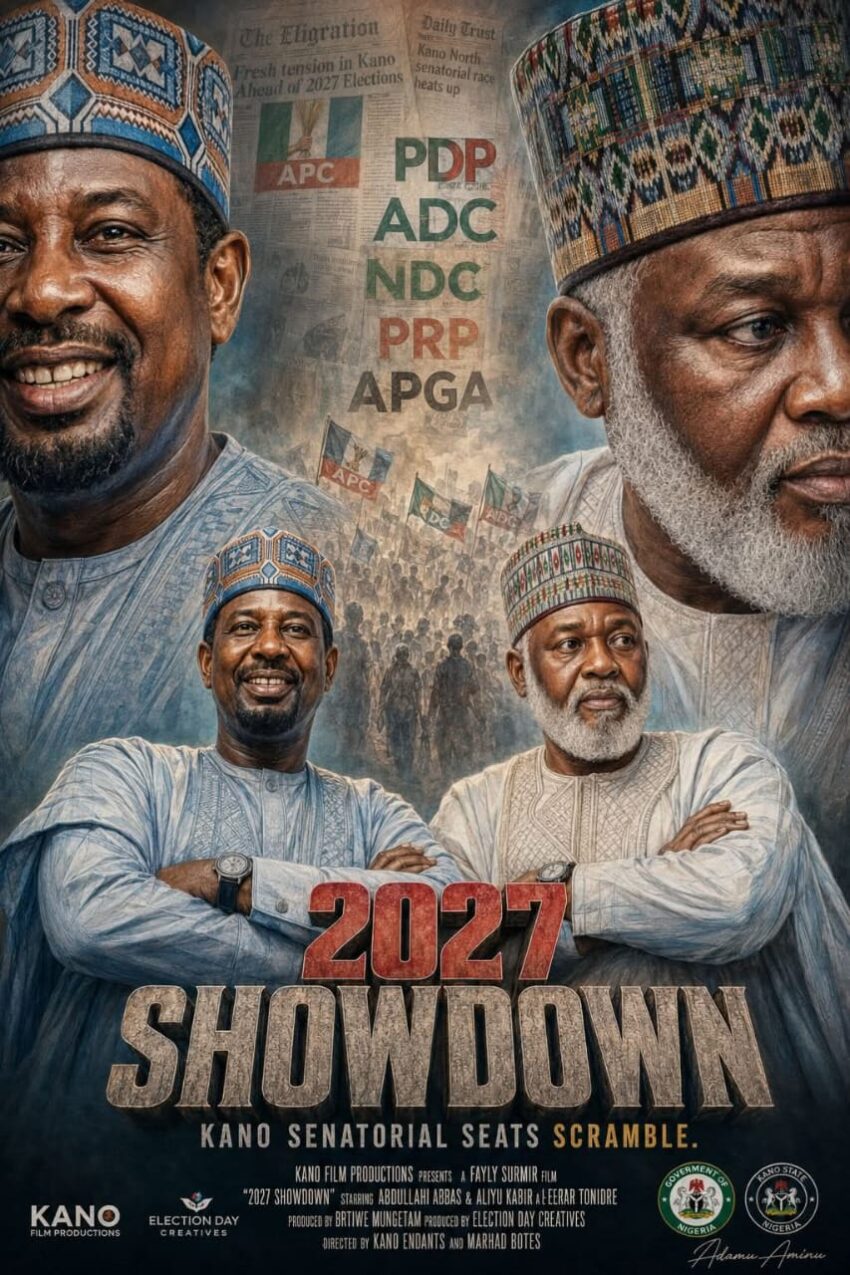
2027:The Scramble For Kano Senatorial Seats Begins
By Adamu Aminu.
As Nigeria’s 2027 general elections approach, political activity in Kano State is intensifying.
The contest for the three senatorial zones — Kano South, Kano North, and Kano Central — has drawn significant attention. While each district shapes the state’s representation in the National Assembly, the contest in Kano North and Kano Central is attracting the most interest, given the profiles of the leading contenders.
In Kano North, Deputy Senate President Barau Jibrin of the All Progressives Congress (APC) is seeking re-election. A veteran legislator, he faces both support and scrutiny as he manages competing interests within the party and the state.
In Kano Central, former Deputy Governor Nasiru Gawuna has moved from the APC to the New Democratic Congress (NDC), which is associated with Rabiu Musa Kwankwaso. The defection has altered calculations in the zone and introduced new dynamics to the race.
Gawuna had previously sought the Kano governorship, but the re-election of Governor Abba Kabir Yusuf in 2023 shifted the political landscape and affected that ambition.
Both men reflect key currents in Kano’s political evolution. Barau Jibrin is emphasizing legislative experience and continuity within the APC structure. His campaign focuses on institutional stability and sustained representation for the zone. Gawuna, by joining the NDC, is aligning with a different political base and attempting to build a new platform beyond the APC.
The race in both zones will test how Kano voters weigh experience against realignment, and continuity against change. Public attention is high, and party structures remain fluid.
The 2027 senatorial contest in Kano is therefore more than a personal rivalry.
It reflects a wider question for the state: how to balance established leadership with emerging political forces.
For Barau Jibrin, the path ahead depends on managing internal opposition within the APC that questions his trajectory in both Kano and national politics. Success will require consolidating support while addressing dissent.
For Gawuna, the outcome hinges on whether his move to the NDC translates into electoral acceptance. If he succeeds, it marks a shift in his political trajectory. If not, it tests the limits of realignment as a strategy in Kano Central.
Voters will decide which approach best represents their interests.
Adamu Aminu writes from Kano